Grasse
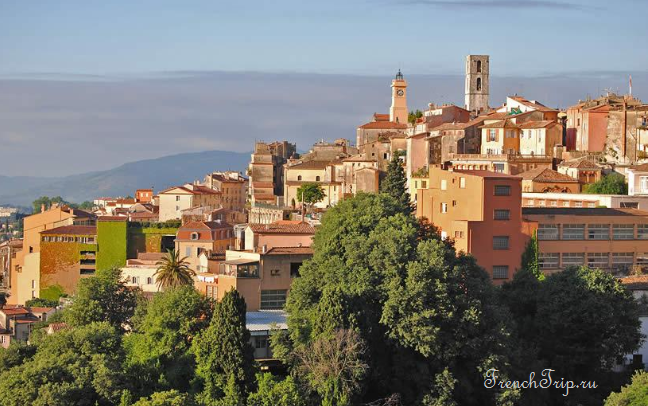
Grasse is the perfume capital of the world, and unlike most such claims this one is quantifiable: two thirds of France’s natural aromatics are produced here, an industry worth well over half a billion euros a year to a town of fifty thousand people.
It sits in the hills 20 km behind Cannes — high enough to escape the sea wind, warm enough for flowers, and with enough water to irrigate them. That combination is the whole reason for the place.
Grasse holds the Ville d’Art et d’Histoire label, and it is where Patrick Süskind set Perfume.
How a tannery town started making scent
Grasse spent the Middle Ages trading leather with Genoa and Pisa. The leather was good and it smelled terrible — a problem above all for the perfumed classes who wore it as gloves. In the sixteenth century a Grasse tanner named Galimard had the idea of scenting them, and presented a pair to Catherine de’ Medici. The court took them up, scented gloves became a fashion, and the seventeenth century belonged to the gantiers-parfumeurs, the glove-perfumers.
Then taxes on hides rose and Nice took the leather trade, and what was left was the scent. Lavender, myrtle, jasmine, rose, orange blossom and wild mimosa grew on the hills around; the glove-makers became perfumers outright, and stayed.
Jasmine — brought to southern France by the Moors in the sixteenth century — is the emblem of it. Around 27 tonnes are still picked here each year, at dawn, when the scent is strongest.
The perfume houses
Three historic houses are open to visitors, all in or just below the old town:
- Fragonard — 20 boulevard Fragonard. The easiest to visit: free guided tours of the old factory in French and English (you may wait a little for a group to form), ending in the shop. Prices are moderate and there is free customer parking in front — arrive in the morning, because in high season it fills by eleven.
- Galimard — 73 route de Cannes, the oldest of them, descended from the tanner in the story above.
- Molinard — 60 boulevard Victor Hugo.
All three run workshops where you compose your own scent over an hour or two and take the bottle away — the most durable souvenir Grasse offers. See also souvenirs from Provence.
Museums
Musée International de la Parfumerie
2 boulevard du Jeu de Ballon. The serious account of the whole business — scent bottles going back to antiquity, the raw materials, the chemistry, and a greenhouse of the plants themselves. Entry around 6 € during temporary exhibitions, free under 18.
Villa-Musée Jean-Honoré Fragonard
23 boulevard Fragonard. Fragonard the painter was born in Grasse in 1732, and this late-seventeenth-century house holds his work and his followers’. The four canvases of The Progress of Love, painted for Madame du Barry, are here as excellent copies — the originals are in New York. Look at the trompe-l’œil by the staircase: his son painted it at thirteen.
Musée d’Art et d’Histoire de Provence
2 rue Mirabeau, in an eighteenth-century mansion that belonged to Mirabeau’s sister. Everyday life in eastern Provence from prehistory to the 1950s — furniture, pottery, clothing, santons. Free, by guided tour.
Cathédrale Notre-Dame-du-Puy
Eleventh-century, austere Romanesque, and disproportionately well hung: three paintings by Rubens and one by Fragonard.
Olive oil
The other local product. Huilerie Sainte-Anne (138 route de Draguignan) is the last traditional olive mill in the pays grassois, with free guided visits, tasting, and a shop selling oil, honey and olive soap. Moulins de la Brague at Opio is the other one worth the drive.
Getting to Grasse
- By train — Gare de Grasse is the end of a branch line, with direct regional trains from Nice (about 1 h 10), Cannes (35 min) and Antibes. See trains in Provence.
- By bus — bus 500 from Nice, buses 600 and 610 from Cannes; see buses in Provence.
- By air — Nice Côte d’Azur, about 40 minutes by road.
- By car — the station is well below the old town, which is steep and largely pedestrian. Park on Cours Honoré Cresp or use the Fragonard car park. See parking in France.
A tourist mini-train runs from Cours Honoré Cresp through the old town, the Place aux Aires and the cathedral from mid-April to mid-October, about 40 minutes, commentary in eight languages, 6.50 € (children 3.50 €).
Three routes through Grasse
The Route Napoléon
Napoleon landed at Golfe-Juan on 1 March 1815 after escaping from Elba and marched north through Provence towards Grenoble and Paris without a shot being fired. His proclamation to the people and the army was printed in Grasse, 15 km from the landing. He reached Grenoble on 7 March, Paris on 20 March, and Waterloo three months later. The road he took is now a marked scenic route.
The mimosa route
130 km in eight stages from Bormes-les-Mimosas to Grasse, through Sainte-Maxime, Saint-Raphaël, Mandelieu and Tanneron. It runs from January to March and peaks in February, when the hillsides go yellow.
The painters’ route
Côte d’Azur des Peintres marks the spots where Monet, Renoir, Dufy, Bonnard, Chagall and Cocteau set up their easels, with reproductions of the resulting paintings on site. It links Grasse to Antibes, Cagnes-sur-Mer, Le Cannet, Saint-Paul-de-Vence, Villefranche, Menton and Cannes. Grasse runs a three-hour guided version.
See thematic routes in Provence.
Festivals
The Fête du Jasmin, first held in August 1946, is the town’s own festival: floats banked with jasmine through the streets, flowers thrown into the crowd, fireworks and concerts over a weekend in early August. There is a Christmas market from mid-December to early January, and a rose festival in May.
What to eat
Provençal cooking with the hills rather than the sea behind it — lamb, goat cheese, olive oil, and everything the market supplies. Traditional markets are held on Tuesday and Wednesday mornings on the Place aux Aires.
La Bastide Saint-Antoine (48 avenue Henri Dunant) is Jacques Chibois’s two-star restaurant, in an olive grove above the town, with tasting menus from around 100 €. At the other end, Le 9 on the Place aux Aires is a small crêperie in the centre where a meal with wine and dessert runs to about 25 €; its tarte tatin is the thing to order. More in Provençal cuisine.
Around Grasse
- Gourdon — a village on a cliff edge 8 km away, one of the most beautiful villages in France
- Grottes de Saint-Cézaire — caves with red stalactites, 9 km
- Cannes — 14 km, and the sea
- Vence and Saint-Paul-de-Vence — the art villages east of here
- The lavender country — inland and north, in flower from late June
When to go
May and June for the roses and the jasmine coming on, early August for the jasmine harvest and the festival, February if you want the mimosa. Grasse is 350 m up and noticeably cooler than the coast in high summer, which makes it a good day out from Cannes or Nice when the beaches are unbearable.
Tourist office
Place de la Buanderie — paysdegrassetourisme.fr
Where to park in Grasse
| Car park | Spaces | Fee | From centre |
|---|---|---|---|
| Hôtel de Ville multi-storey | 82 | paid | 80 m |
| Parking La Roque multi-storey | 520 | paid | 210 m |
| Post | — | — | 220 m |
| Parking Notre-Dame des Fleurs multi-storey | 223 | paid | 230 m |
| Martelly multi-storey | — | paid | 230 m |
| Parking la Foux multi-storey | 200 | paid | 280 m |
| Parking du Cours Honoré Cresp | 300 | free | 390 m |
| Pôle intermodal de Grasse multi-storey | 245 | paid | 630 m |
Nearby
Other places on this site within easy reach, as the crow flies:
- Mouans-Sartoux — 6 km
- Biot — 15 km
- Fayence — 19 km
- Aéroport de Nice — 23 km
- Fréjus — 29 km
- Saint-Jean-Cap-Ferrat — 33 km
Weather in Grasse
| Month | Day | Night | Rainfall |
|---|---|---|---|
| January | +12° | +5° | 84 mm |
| February | +12° | +5° | 60 mm |
| March | +15° | +7° | 62 mm |
| April | +17° | +9° | 85 mm |
| May | +21° | +13° | 58 mm |
| June | +25° | +17° | 41 mm |
| July | +28° | +19° | 18 mm |
| August | +28° | +19° | 28 mm |
| September | +24° | +16° | 91 mm |
| October | +20° | +13° | 140 mm |
| November | +15° | +9° | 149 mm |
| December | +13° | +6° | 104 mm |
This page in Russian: Grasse (Грас)
Updated: