Paris
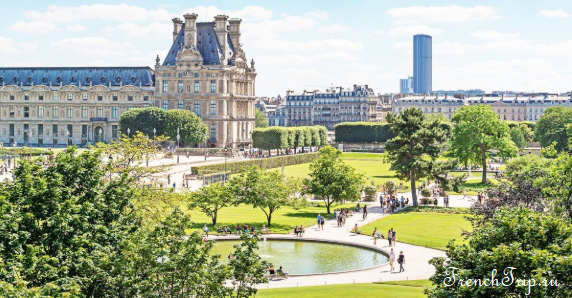
Paris needs no introduction, so this page skips the introduction and deals with the practical questions: which airport you land at and how to get out of it, how the city is laid out, what to see first, and what to do when you have seen it.
A few days is the minimum. A week is better. Nobody finishes Paris.
Getting to Paris
The airports
Charles de Gaulle (CDG) is the main international airport, 25 km north-east.
- RER B — the train into the centre, about 35 minutes to Gare du Nord and Châtelet. Cheapest and usually fastest.
- Roissybus — to Opéra, about an hour depending on traffic.
- Taxi — fixed flat fares to the Right and Left Banks, which removes the argument about the meter. Confirm the fare before you get in.
Orly (ORY) is 13 km south, used heavily by low-cost carriers. The Orlyval shuttle connects to RER B, and the tram and Orlybus serve the southern edge of the city.
Note that CDG and Orly are on opposite sides of Paris. Connecting between them takes well over an hour — do not book a tight self-transfer.
By train
Paris has six main-line stations, each serving a different direction: Gare du Nord for Britain, Belgium and the north; Gare de Lyon for the south-east and the Riviera; Montparnasse for the west and south-west; Gare de l’Est for Alsace and Germany; Austerlitz and Saint-Lazare for the rest.
Check which station you leave from — they are far apart. TGV services reach Marseille in about 3 hours, Lyon in 2, Bordeaux in just over 2. See TGV trains.
Getting around the city
The métro is the answer to almost everything: fourteen lines, trains every few minutes, and nowhere in the centre is far from a station. Buy a carnet or a day pass rather than single tickets. The RER covers longer distances and the suburbs, including Versailles and Disneyland.
Paris is also more walkable than it looks on the map — the centre is compact, and walking between neighbourhoods is how you actually see the city.
Driving is a mistake. Parking is scarce and expensive, the traffic is bad, and the low-emission zone rules catch out foreign cars. See parking in France if you must.
What to see first
Notre-Dame and the Île de la Cité
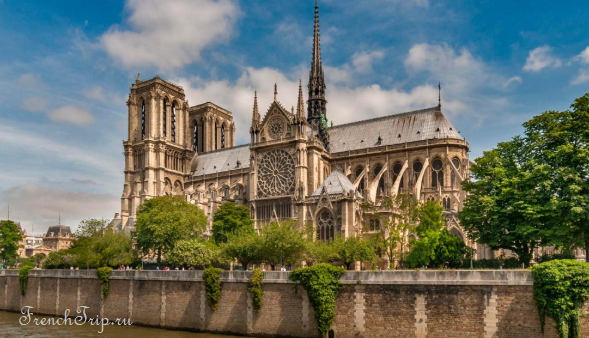
The island in the Seine where the city began. Notre-Dame reopened after the 2019 fire and the restoration; entry to the cathedral is free, though timed booking is advisable. Sainte-Chapelle is a few steps away and, for many people, the more astonishing of the two — a chapel that is essentially a cage of thirteenth-century stained glass.
The Conciergerie
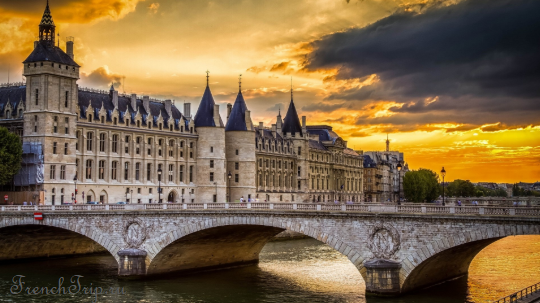
The medieval royal palace that became the revolutionary prison — Marie-Antoinette was held here before her execution. The vaulted Hall of the Men-at-Arms is one of the largest surviving medieval rooms in Europe.
The Louvre and the Tuileries
The largest art museum in the world, and impossible to do in a day. Pick a wing and accept that you will miss the rest. Booking a slot online is effectively required. The Tuileries garden in front is the place to sit afterwards.
Musée d’Orsay and the Orangerie
Orsay holds the Impressionists in a converted railway station; the Orangerie, at the far end of the Tuileries, has Monet’s Nymphéas in two oval rooms built for them. Between them they are the reason many people come to Paris at all, and both are far more manageable than the Louvre.
Champs-Élysées and the Arc de Triomphe
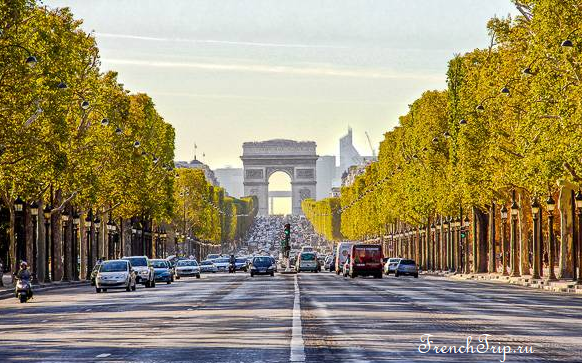
The avenue is now largely international chain stores, and Parisians will tell you so. The Arc de Triomphe at the top is worth the climb for the view down the twelve radiating avenues — the layout makes sense only from up there.
Opéra Garnier
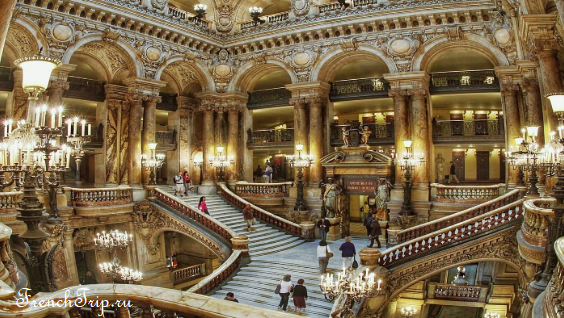
The nineteenth-century opera house, and the most extravagant building in the city — the grand staircase and the auditorium with Chagall’s ceiling are open to visitors when there is no rehearsal.
Montmartre and Sacré-Cœur
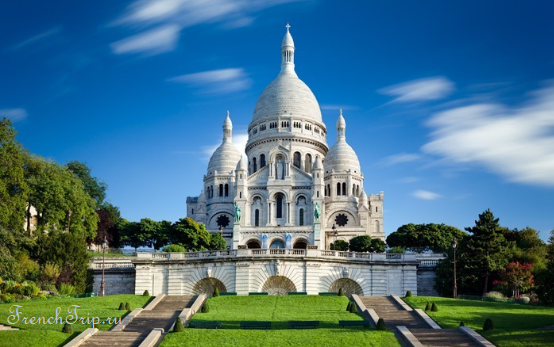
The hill north of the centre, with the white basilica on top and the view over the whole city from its steps. The village streets behind it are the part worth walking; the square with the portrait painters is not. Go early — by midday it is very full.
The Eiffel Tower
Book ahead if you want to go up; the queues without a ticket are long. Many people find the better view is from the Tour Montparnasse or the Arc de Triomphe, on the grounds that those views have the Eiffel Tower in them.
Neighbourhoods
Paris is divided into twenty arrondissements, spiralling out clockwise from the Louvre. Which ones matter to a visitor:
- 1st–4th — the historic centre, the Louvre, the islands, the Marais
- 5th–6th — the Latin Quarter and Saint-Germain, the old university city, bookshops and cafés
- 7th — the Eiffel Tower, Orsay, Invalides
- 8th — Champs-Élysées, the grand boulevards
- 18th — Montmartre
Staying in the 1st to 6th puts most things within walking distance; staying further out is cheaper and the métro makes it workable.
Eating in Paris
Some practical points that catch visitors out:
- Lunch runs roughly 12:00–14:00 and dinner from 19:30. Kitchens close between; outside those hours you are looking at cafés and brasseries.
- The formule or menu du jour at lunch is the same kitchen at a fraction of the evening price.
- Service is included by law. Rounding up is normal; a percentage tip is not expected.
- Restaurants immediately beside major monuments are, with few exceptions, the worst value in the city. Walk two streets.
See traditional dishes of France, the cooking of Île-de-France and what a French breakfast actually is.
Day trips
- Versailles — 40 minutes on RER C. Go early or book a timed entry; it is the busiest thing near Paris.
- Giverny — Monet’s garden and the water-lily pond, best from May to July
- Fontainebleau — the other royal palace, with a fraction of the crowd
- Chartres — an hour by train, for the cathedral glass
- Champagne — Reims is 45 minutes by TGV; see Grand Est
When to go
April to June and September to October are the best months — mild, long days, and the gardens at their best. July and August are hot and crowded, and many small restaurants close for the summer holidays. Winter is grey but the museums are empty and the city is cheaper.
See Île-de-France for the region around the city.
Where to park in Paris
| Car park | Spaces | Fee | From centre |
|---|---|---|---|
| Saint-Michel underground | — | paid | 360 m |
| Parking Hôtel de Ville underground | 505 | paid | 400 m |
| Q-Park Marais Lobau Notre Dame underground | — | paid | 470 m |
| Lobau Rivoli underground | — | paid | 530 m |
| Zenpark Saint-Michel underground | 50 | paid | 560 m |
| Pont Marie underground | — | paid | 580 m |
| Parking École de Médecine underground | 303 | paid | 620 m |
| Q-Park Rivoli Pont Neuf - Samaritaine | 18 | — | 740 m |
Weather in Paris
| Month | Day | Night | Rainfall |
|---|---|---|---|
| January | +8° | +4° | 51 mm |
| February | +10° | +4° | 45 mm |
| March | +14° | +6° | 46 mm |
| April | +18° | +8° | 49 mm |
| May | +21° | +11° | 75 mm |
| June | +24° | +14° | 55 mm |
| July | +27° | +16° | 57 mm |
| August | +27° | +16° | 59 mm |
| September | +23° | +13° | 49 mm |
| October | +18° | +10° | 57 mm |
| November | +12° | +7° | 58 mm |
| December | +9° | +4° | 67 mm |
Updated: