Antibes
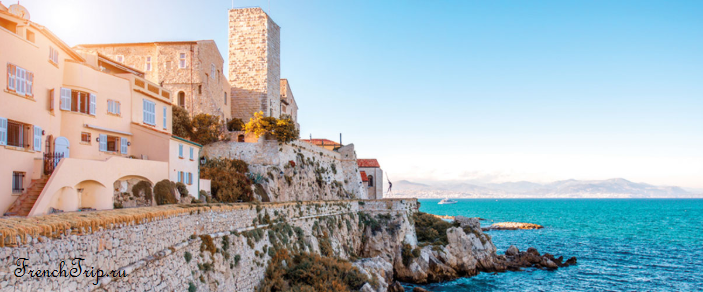
Antibes sits between Cannes and Nice and is the oldest town on this coast: the Greeks of Marseille founded Antipolis here in the fifth century BC. It has an ochre walled old town, the largest yacht harbour in the Mediterranean, a Picasso museum in a castle, and — on the cape south of it — some of the most expensive property in Europe.
It also works as a base in a way its neighbours do not: it is cheaper than Cannes, quieter than Nice, and twenty minutes by train from both.
The old town
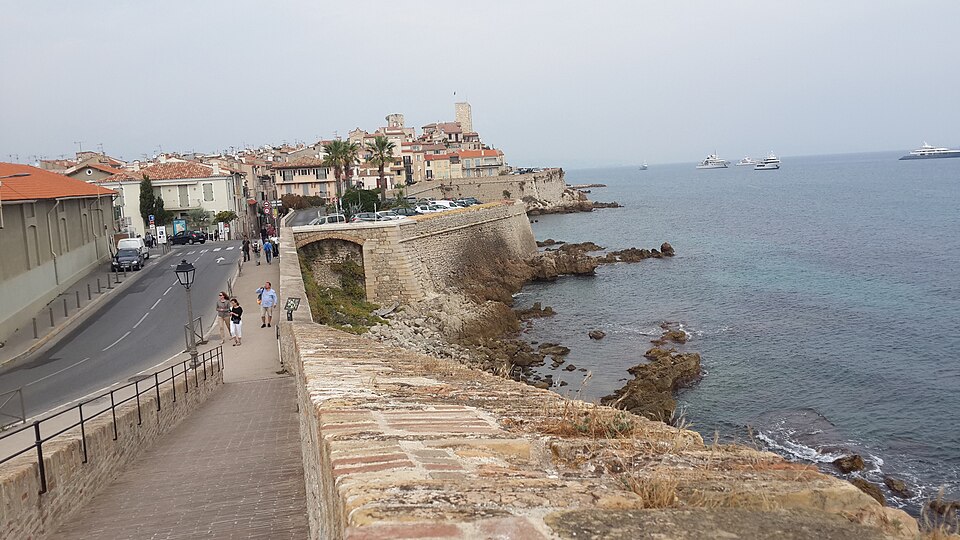
Vauban’s ramparts run along the sea, and the lanes behind them are narrow, shaded and full of shutters and washing. Walk the wall from the Porte Marine round to the castle: on one side the Mediterranean, on the other the roofs, and the Alps behind on a clear winter day.
Marché Provençal
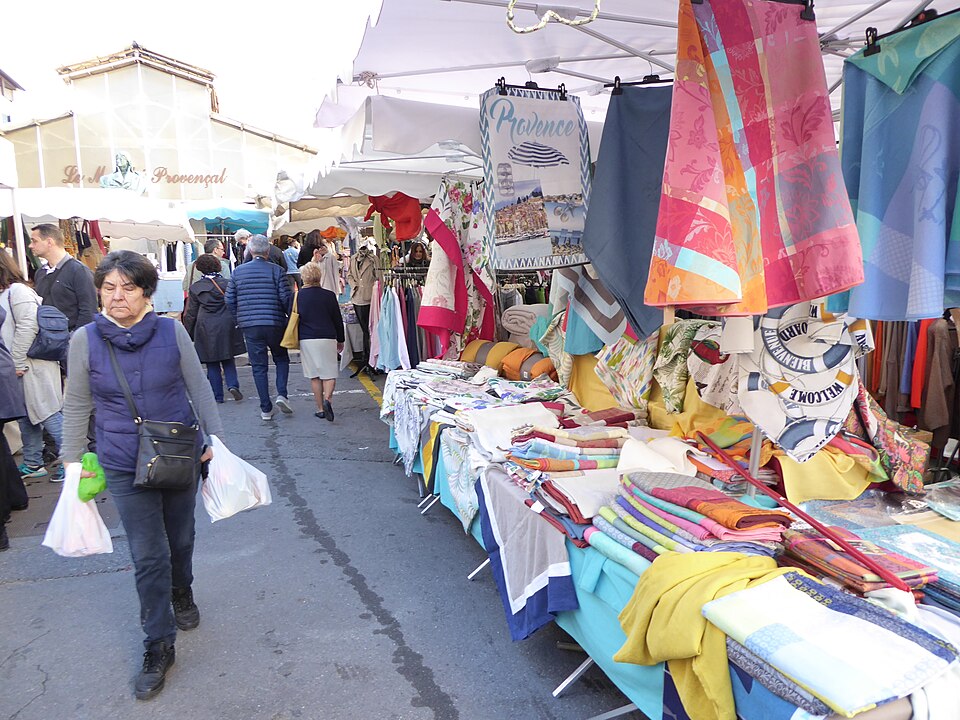
Under an iron roof on Cours Masséna, every morning except Monday out of season. Produce, olives, cheese, socca, flowers and the tablecloths — and it is a working market that locals actually shop at, not a tourist reconstruction. In the afternoons in summer it turns over to craft stalls.
Musée Picasso
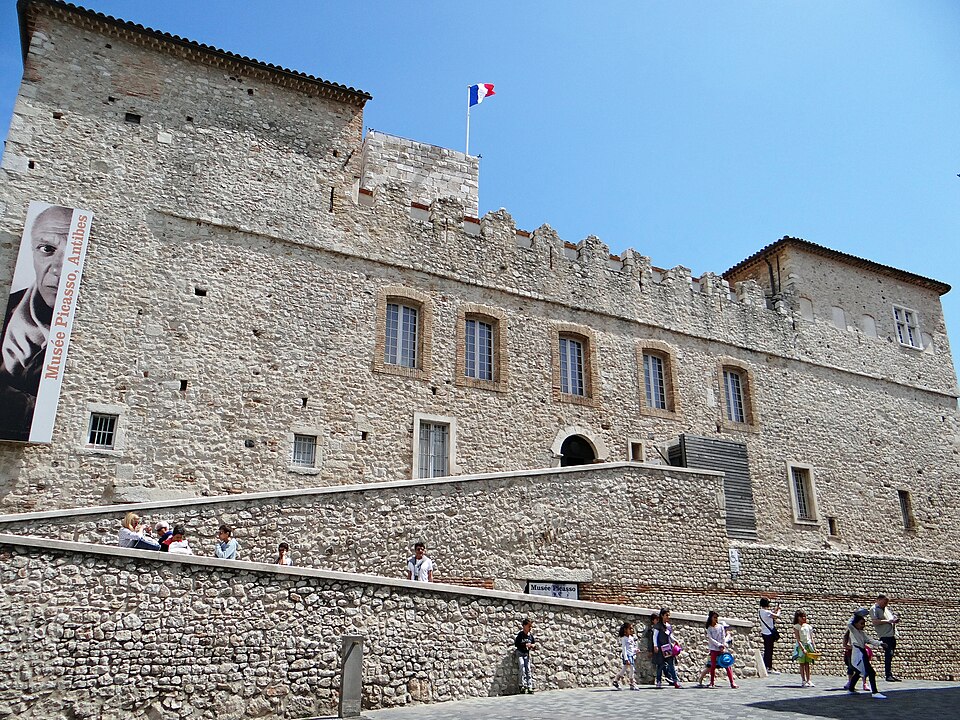
The Château Grimaldi on the ramparts was lent to Picasso as a studio in the autumn of 1946. He worked there for a few months, painting on whatever was to hand — fibre-cement panels, plywood — because canvas was scarce after the war, and left the lot to the town when he moved out.
The result is the first Picasso museum in the world, holding around 250 works in the rooms where several of them were made, including La Joie de Vivre. The terrace over the sea has sculpture by Germaine Richier and Miró. It is small, it takes an hour, and it is the best reason to come to Antibes.
Fort Carré
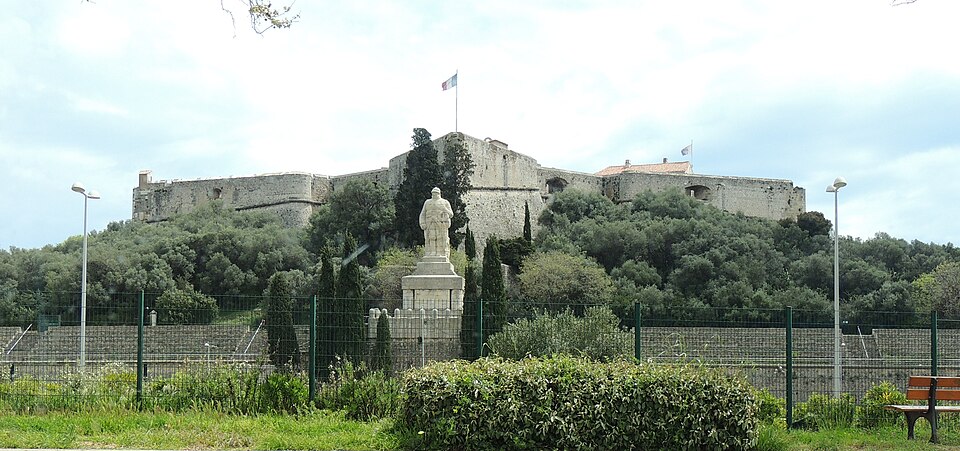
The sixteenth-century star fort on a rock north of the harbour, later reworked by Vauban. Napoleon was briefly imprisoned in it in 1794 after Robespierre fell. Visits are by guided tour; the walk round the outside and the view are free.
Port Vauban
The largest marina in the Mediterranean, with the Quai des Milliardaires at its far end where the largest private yachts in the world tie up. You can walk along and look, which is a spectacle of a particular kind, and the fishing boats are still in the same harbour at the other end.
Cap d’Antibes
The wooded headland south of the town, and one of the wealthiest addresses in the world.
- Sentier du Littoral — the coastal footpath round the tip of the cape, about an hour and a half, free, and the only way most people will ever see these gardens. Rocky and exposed; it closes in heavy seas.
- Villa Eilenroc — a Garnier villa with gardens open on certain days
- Jardin Thuret — a botanical garden run by the agricultural research institute since 1857, and the place many Mediterranean garden species were first acclimatised in France. Free.
- Notre-Dame de la Garoupe — the sailors’ chapel on the highest point, with ex-votos inside and the whole bay below
- Plage de la Garoupe — the sand beach on the eastern side
Juan-les-Pins
The other half of the commune, on the far side of the cape, and a completely different town: this is where the Riviera summer season was invented in the 1920s, and it is still nightlife, pine trees and a long sand beach. Jazz à Juan, running since 1960, is one of the oldest jazz festivals in Europe — Miles Davis, Ella Fitzgerald and Ray Charles all played under the pines here.
Beaches
Antibes has an unusual amount of sand for this coast: Plage de la Salis below the old town, La Gravette inside the ramparts, La Garoupe on the cape, and the long strand at Juan-les-Pins. See the best beaches in the region.
Getting to Antibes
- By train — on the coastal line, about 20 minutes from Nice, 15 from Cannes, and direct to Monaco and Menton. TGV services from Paris stop here. The station is a ten-minute walk from the old town.
- By bus — the coastal network, including the connection up to Grasse.
- By air — Nice Côte d’Azur, 20 minutes away.
- By car — the A8. Parking in the old town is metered and scarce; use the harbour car parks. See parking in France.
What to eat
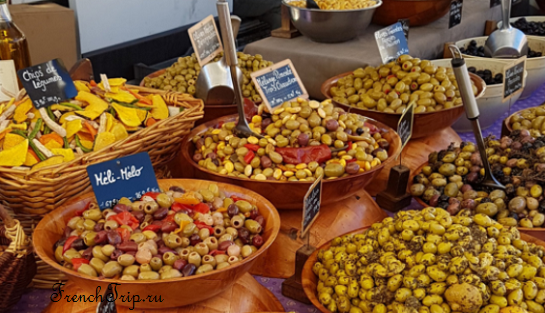
Niçois more than broadly Provençal — socca, pissaladière, stuffed vegetables, fish from the harbour. Buy lunch in the covered market and eat it on the ramparts; that is the best meal in Antibes and it costs very little. See Provençal cuisine.
Around Antibes
- Biot — a hill village 8 km north, known for glassblowing, with the Fernand Léger museum below it
- Cannes — 15 minutes by train
- Saint-Paul-de-Vence and Vence — the art villages inland
- Grasse — the perfume town, half an hour up
- Èze and Villefranche — east along the corniches
When to go
May, June and September. July and August fill the beaches and the Jazz à Juan crowd fills the hotels. Antibes is also one of the few Riviera towns that stays properly alive in winter — the yachting industry works all year, so the restaurants stay open.
Photo credits
Some photographs on this page come from Wikimedia Commons under free licences:
- The old town ramparts — Yair Haklai, CC BY-SA 4.0, via Wikimedia Commons
- Marché Provençal — Abxbay, CC BY-SA 4.0, via Wikimedia Commons
- Château Grimaldi / Picasso museum — MOSSOT, CC BY-SA 4.0, via Wikimedia Commons
- Fort Carré — Abxbay, CC BY-SA 3.0, via Wikimedia Commons


Where to park in Antibes
| Car park | Spaces | Fee | From centre |
|---|---|---|---|
| Parking de la Poste underground | 352 | paid | 80 m |
| Poirier underground | 278 | paid | 290 m |
| Pré aux Pêcheurs underground | 600 | paid | 300 m |
| Saint Roch | 237 | paid | 330 m |
| Parking des Frères Oliviers underground | 330 | paid | 400 m |
| Chaudon | 28 | free | 450 m |
| Effia underground | 186 | paid | 480 m |
| Châtaigniers | 33 | free | 550 m |
Weather in Antibes
| Month | Day | Night | Rainfall |
|---|---|---|---|
| January | +14° | +4° | 88 mm |
| February | +14° | +5° | 60 mm |
| March | +16° | +7° | 58 mm |
| April | +19° | +9° | 74 mm |
| May | +23° | +13° | 47 mm |
| June | +27° | +17° | 30 mm |
| July | +29° | +19° | 17 mm |
| August | +30° | +19° | 24 mm |
| September | +26° | +16° | 90 mm |
| October | +22° | +13° | 132 mm |
| November | +17° | +8° | 156 mm |
| December | +15° | +5° | 103 mm |
Updated: