Epernay
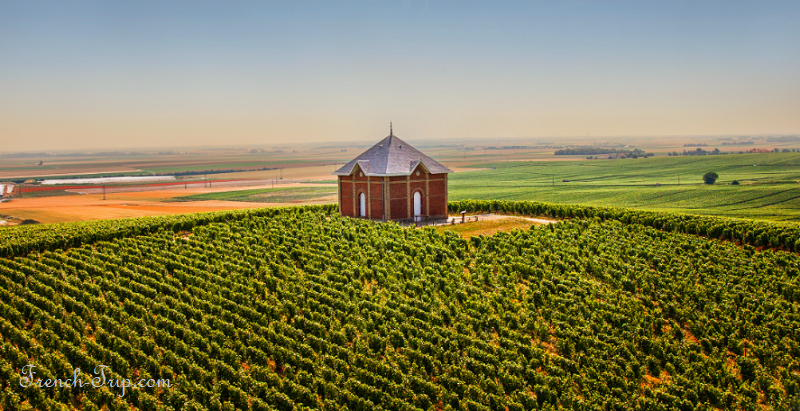
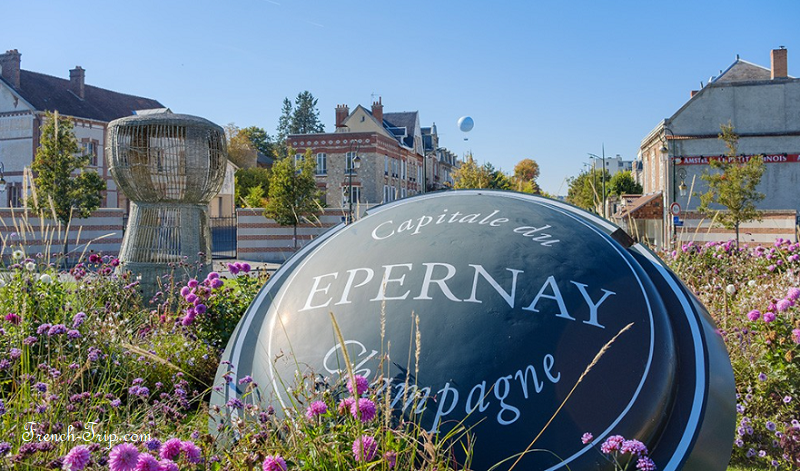
Épernay is a town of 22,000 on the Marne, half an hour south of Reims, and it calls itself the capital of champagne. Reims has the cathedral and the history; Épernay has the wine and very little else — which makes it the more single-minded of the two.
Underneath it run something like 110 km of cellars, cut into the chalk, holding several hundred million bottles.
History
Épernay’s history goes back to Roman times. The town suffered badly during the Hundred Years’ War, and did not find real stability until the early seventeenth century, when the Duke of Bouillon was made governor. Because of the repeated destruction, most of what stands today dates from the nineteenth and twentieth centuries, including a number of surviving nineteenth-century mansions.
Victor Hugo, passing through in 1842, put it plainly: “Épernay is a town of champagne wine — nothing more, nothing less.”
Avenue de Champagne
One straight kilometre, and it has been called the most expensive street in the world — not for the houses, but for what is stored beneath them. Along it, one after another:
- Moët & Chandon — the largest producer, founded 1743, with 28 km of cellars and a statue of Dom Pérignon outside the door
- Perrier-Jouët — with the Art Nouveau anemone bottle designed by Émile Gallé
- Pol Roger — Churchill’s house; he drank it daily for most of his life and they named a cuvée after him
- Mercier — where the tour runs on a small train through the cellars, and where a 200,000-bottle barrel built for the 1889 Paris exposition still sits
- De Castellane — with a tower you can climb for the view over the vineyards
- Boizel — a family house, also on the avenue
The avenue was UNESCO-listed in 2015 as part of the champagne hillsides, houses and cellars.
The avenue is lined with trees, and its paving is set with a pattern of bubbles. Inside De Castellane’s tower is a small museum with furniture and paintings from the house.
Visiting the cellars
- Book ahead — the big houses fill weeks out in season, and several take no walk-ins at all.
- Cellars are 10–12 °C all year and the tours run for a kilometre or more underground. Bring a layer even in August.
- Mercier and De Castellane are the easiest for a first visit — shorter, cheaper and less formal than Moët.
- Growers in the villages around make more interesting wine at a fraction of the price, and want no appointment.
See Champagne for how the wine is made and what the label means.
The rest of the town
Épernay was destroyed and rebuilt repeatedly — it changed hands more than twenty times in its history and was burned in 1918 — so the old centre is thin. What there is:
- Église Notre-Dame, neo-Gothic, with fifteenth-century glass saved from an earlier church
- The Thursday and Sunday markets on Place Auban-Moët
- Le Jardin de l’Hôtel de Ville, laid out by the Bühler brothers who did the Parc des Buttes-Chaumont
A memorial in the town remembers the dead of the First World War.
You come for the avenue and the cellars. Half a day covers the town.
Hautvillers
Six kilometres north, on the slope above the Marne: the abbey where Dom Pérignon was cellarer from 1668 to 1715 and where he is buried, in the church. He did not invent champagne — sparkling wine existed before him — but he worked out blending across parcels and pressing black grapes for white wine, which is most of what the method still rests on.
The village is small, hung with wrought-iron trade signs, and it looks over the whole valley.
The village is sometimes called the cradle of champagne. Dom Pérignon came from a well-off family and trained as a Benedictine monk before entering the abbey.
The vineyard routes
Épernay sits where three of them meet:
- Côte des Blancs — south, Chardonnay only, through Cramant, Avize and Le Mesnil-sur-Oger
- Vallée de la Marne — west along the river, Pinot Meunier, through Hautvillers and Aÿ
- Montagne de Reims — north, Pinot Noir, over the wooded ridge to Reims
Each is a marked circuit of 30–60 km, and all of them are better on a bicycle than in a car for the obvious reason.
Getting to Épernay
- By train — direct from Paris Est in about 1 h 15, and 20 minutes from Reims. The station is a five-minute walk from the Avenue de Champagne.
- By car — 90 minutes from Paris. And the standing warning: this is a tasting town. Take a driver who abstains, or use the train and walk the avenue.
See parking in France.
What to eat
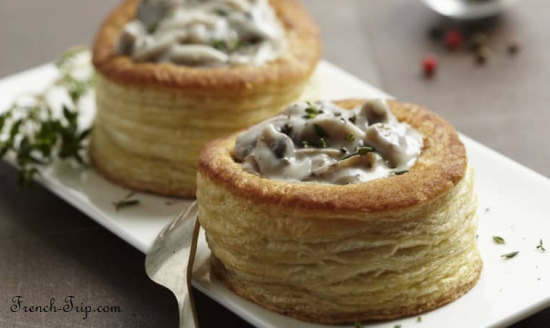
Regional Champenois cooking: bouchées à la reine — puff-pastry cases with a creamed filling — potée champenoise, ham cooked in champagne, and the cheeses chaource and langres. The still red wines of the Coteaux Champenois are worth trying where they appear.
See Cuisine of Champagne-Ardenne for the region’s food more broadly.
Around
- Reims — 30 minutes, for the cathedral and the other half of the trade
- Hautvillers — 6 km
- Châlons-en-Champagne — canals and two great churches, 35 km, and almost no visitors
- Troyes — an hour and a half south
- Château de Condé-en-Brie — a castle further down the Marne valley, with parks around it
When to go
May to October. September is the harvest — the villages are working and the atmosphere is at its best, though the growers have less time for visitors. The Habits de Lumière festival in mid-December lights the whole avenue for a weekend.
See Grand Est and French wines.
Weather in Épernay
| Month | Day | Night | Rainfall |
|---|---|---|---|
| January | +7° | +2° | 58 mm |
| February | +8° | +2° | 57 mm |
| March | +12° | +4° | 50 mm |
| April | +17° | +7° | 37 mm |
| May | +20° | +10° | 63 mm |
| June | +24° | +13° | 60 mm |
| July | +26° | +15° | 56 mm |
| August | +25° | +14° | 56 mm |
| September | +22° | +12° | 41 mm |
| October | +17° | +9° | 55 mm |
| November | +11° | +5° | 55 mm |
| December | +7° | +2° | 82 mm |
Updated: