Reims
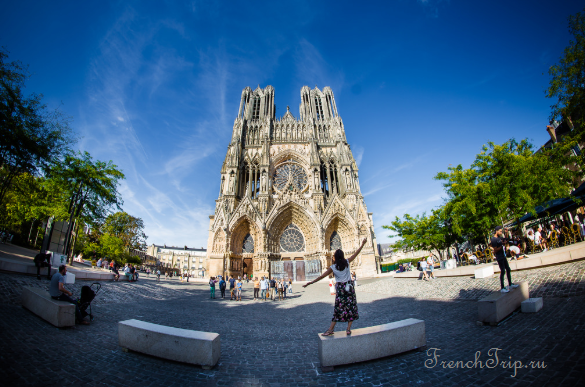
Reims is the largest city in Champagne — though not, as people assume, its capital. It has two things almost nowhere else has: the cathedral where thirty-three kings of France were crowned, and around 250 km of chalk cellars under the streets, full of champagne.
It holds four UNESCO World Heritage monuments, the Ville d’Art et d’Histoire label, and a good deal of Art Deco — because most of the old town was destroyed in the First World War and rebuilt in the 1920s.
The city of coronations
Saint Remigius baptised Clovis, king of the Franks, on this site in 498. That single event made Reims the coronation church of France: from Louis the Pious in 816 to Charles X in 1825, more than a thousand years of kings were crowned here — including Charles VII in 1429, with Joan of Arc standing beside him.
What to see
Notre-Dame de Reims
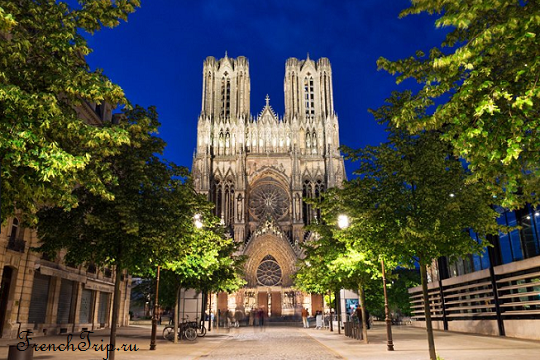
Thirteenth-century, and one of the great Gothic buildings of Europe. Its speciality is sculpture — over two thousand figures on the west front, including the Smiling Angel that became the city’s emblem. The nave is unusually bright, the thirteenth-century glass is largely original, and the axial chapel carries blue windows designed by Marc Chagall in 1974.
Go late in the afternoon, when the sun comes through the rose window. The cathedral was shelled and burned in 1914, and the restoration took decades — some of the statuary you see outside is a copy, with the originals in the Palais du Tau.
Palais du Tau
The archbishop’s palace next door, where the coronation banquets were held. It is now the cathedral’s museum: the treasury, the tapestries, and the original sculpture brought in from the facade.
Basilique Saint-Remi
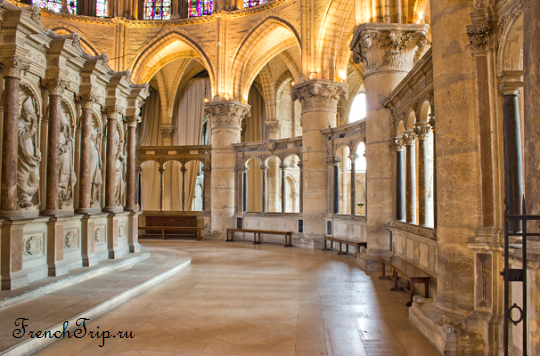
A kilometre from the cathedral and much less visited, which is a mistake — this is the older and in some ways the more moving building. Eleventh-century Romanesque nave with a Gothic choir grafted on, and the tomb of Saint Remigius behind the altar. The abbey buildings beside it hold the Musée Saint-Remi, covering the site from prehistory to the Middle Ages.
The rest of the centre
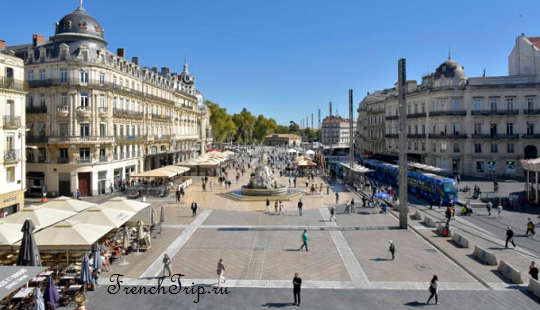
- Place Drouet-d’Erlon — the long café-and-restaurant street that is the city’s living room
- Place Royale — arcaded, eighteenth-century, with a statue of Louis XV
- Porte de Mars — a Roman triumphal arch, the widest surviving from the ancient world
- The Art Deco quarter — the Carnegie library, the Halles du Boulingrin market hall and a great deal of 1920s detail, once you start looking
- The Surrender Museum — the schoolroom that served as Eisenhower’s headquarters, where Germany signed its unconditional surrender on 7 May 1945, left exactly as it was
Champagne
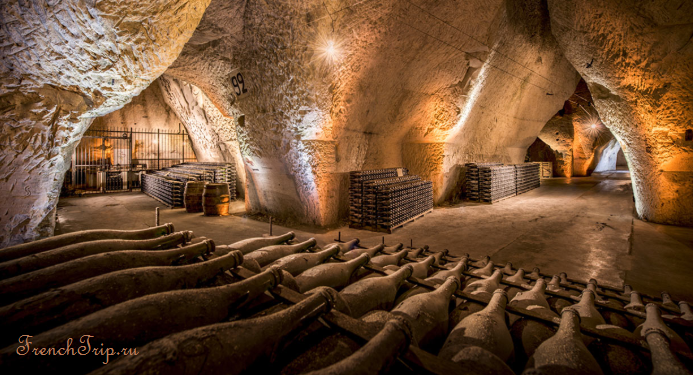
Reims and Épernay are the two business capitals of champagne. There are almost no vineyards inside the city — the houses own their vines out in the Montagne de Reims — but the cellars are here, cut into the chalk. Some of them are Roman quarries, worked for building stone two thousand years ago and inherited by the wine trade because chalk holds a constant cool temperature and steady humidity.
The grandes marques based in Reims include Veuve Clicquot, Krug, Ruinart, Taittinger, Pommery, Louis Roederer, Mumm, Piper-Heidsieck, Charles Heidsieck, Lanson, Henriot and others. Most run cellar tours ending in a tasting, and most want you to book ahead.
Two worth singling out: Ruinart, the oldest champagne house, founded 1729, whose crayères are the most spectacular of the Roman chalk pits; and Pommery, whose cellars are decorated with carved reliefs and used for contemporary art installations.
If you would rather not commit to a tour, several bars near the cathedral pour champagne by the glass, including old vintages you will not find in a shop.
What to eat
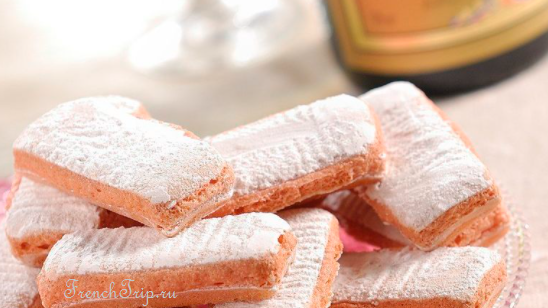
Two things are specifically from here:
- Biscuit rose de Reims — a dry pink sponge finger, made since the seventeenth century and designed to be dipped in champagne without falling apart. Fossier has been baking them since 1756 and still sells them in the city centre.
- Pain d’épices — spiced honey bread, shared with Dijon but taken seriously here
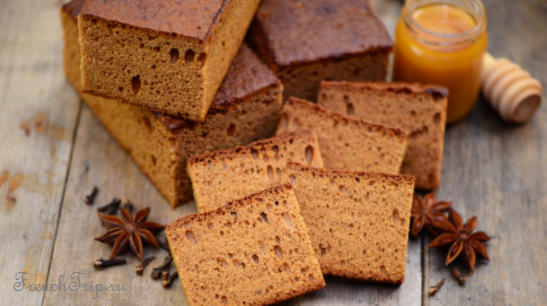
Beyond that: ham cooked in champagne, chaource and langres cheeses, and the still red wines of the Coteaux Champenois. Place Drouet-d’Erlon has the density of restaurants; the serious cooking is elsewhere, and Reims has held Michelin stars for a long time.
Getting to Reims
- By train — TGV from Paris Est in 45 minutes, which makes Reims a genuine day trip from Paris. Trains to other cities mostly leave from the separate Champagne-Ardenne TGV station outside town, linked to the centre by tram and local train. Check which station your ticket says: people miss trains over this regularly.
- By air — Paris Charles de Gaulle is 30 minutes away by road, with onward TGV connections south.
- By coach — long-distance buses are slower but occasionally absurdly cheap.
- By car — the A4 from Paris, about 1 h 45. See parking in France.
The centre is compact, largely pedestrian and has a tram. Everything above is within half an hour’s walk except Saint-Remi, which is twenty minutes from the cathedral.
The Reims–Épernay pass
Both tourist offices sell a combined pass covering public transport in the two cities, a set of free activities and museums, discounts, and a champagne tasting; the longer versions include the train between them. It pays off if you are doing at least two paid visits in a day, or splitting a trip between the two towns. If you only want to walk around and look at the cathedral, it does not.
Around Reims
- Épernay — half an hour south, and the Avenue de Champagne with Moët, Perrier-Jouët and Mercier along it
- Montagne de Reims — the wooded ridge between the two, with the grand cru villages of Verzenay, Verzy and Aÿ, and a champagne route through them
- Troyes — an hour and a half south, and a completely different town
- Paris — 45 minutes
When to go
May to October. September brings the harvest, when the whole region is working and the villages are at their most interesting. December has one of the better Christmas markets in France, beside the cathedral. Winter otherwise is grey — this is northern France, not Provence.
See UNESCO sites in France and French wines.
Where to park in Reims
| Car park | Spaces | Fee | From centre |
|---|---|---|---|
| Parking Hôtel de Ville underground | 152 | paid | 110 m |
| Parking Forum Élus | — | paid | 180 m |
| Boulingrin | — | free | 350 m |
| Erlon underground | 650 | paid | 430 m |
| Parking provisoire Joffre | 120 | paidmax 5 h | 460 m |
| Effia Gare de Reims | — | paid | 510 m |
| Buirette multi-storey | 444 | paid | 540 m |
| Médiathèque | — | paid | 550 m |
Weather in Reims
| Month | Day | Night | Rainfall |
|---|---|---|---|
| January | +6° | +2° | 68 mm |
| February | +8° | +2° | 56 mm |
| March | +12° | +4° | 52 mm |
| April | +16° | +7° | 46 mm |
| May | +20° | +10° | 61 mm |
| June | +23° | +13° | 65 mm |
| July | +25° | +15° | 64 mm |
| August | +25° | +15° | 63 mm |
| September | +21° | +12° | 56 mm |
| October | +16° | +9° | 69 mm |
| November | +10° | +5° | 70 mm |
| December | +7° | +3° | 86 mm |
Updated: