French Wines
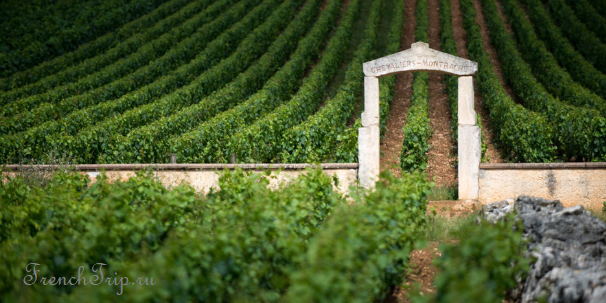
France has around 750,000 hectares under vine and produces something on the order of 4 billion bottles a year. More usefully for a traveller: it has about a dozen distinct wine regions, most of them beautiful, all of them visitable, and the rules that look forbidding on a label are actually a map.
This page explains how to read a French wine label, what each region makes, and how to visit.
How to read the label
The single thing that unlocks French wine: the label tells you the place, not the grape. Where an Australian bottle says “Shiraz”, a French one says “Gigondas” — and you are expected to know that Gigondas means mostly Grenache. The exception is Alsace, which labels by grape like the rest of the world.
The quality tiers, from the top:
- AOC / AOP — Appellation d’Origine Contrôlée. A defined area with rules on grapes, yields and methods. Around half of all French wine. Within it there are further hierarchies: in Burgundy, regional → village → premier cru → grand cru, where a grand cru may be a single walled field.
- IGP — a larger area, looser rules. Often good value, and this is where you find varietal labelling.
- Vin de France — no geographic claim. Ranges from industrial to deliberately unorthodox.
Other words worth knowing: mis en bouteille au château/domaine means bottled where it was grown; vieilles vignes means old vines and is unregulated; cru bourgeois is a Médoc classification below the famous 1855 growths.
The regions
Bordeaux
The largest fine-wine region on earth. Reds are blends — Cabernet Sauvignon-led on the left bank of the Gironde, Merlot-led on the right — and they are built to age. Also the sweet whites of Sauternes. Base yourself in Bordeaux; the Médoc, Saint-Émilion and Sauternes are each under an hour away.
Burgundy
Two grapes, Pinot Noir and Chardonnay, and an obsessive geography: the climats of the Côte d’Or are individually named parcels, some a few rows wide, and they are UNESCO-listed. The Route des Grands Crus runs 60 km south from Dijon through Gevrey-Chambertin, Vosne-Romanée and Meursault. Chablis to the north-west, Beaujolais to the south.
Champagne
Chardonnay, Pinot Noir and Pinot Meunier, made sparkling by a second fermentation in the bottle. The great houses have their cellars in Reims and Épernay, cut into chalk; the growers are out in the villages of the Montagne de Reims and the Côte des Bar near Troyes.
Rhône
Two halves. The north is Syrah on terraces — Côte-Rôtie, Hermitage, Cornas — starting just south of Lyon. The south is Grenache-based blends across flatter, hotter country: Châteauneuf-du-Pape, Gigondas, Vacqueyras, and the rosé of Tavel. Base at Avignon.
Alsace
Almost all white, and labelled by grape: Riesling, Gewurztraminer, Pinot Gris, Muscat, Sylvaner. 51 grands crus, each a named hillside. The Alsace wine route is the most walkable wine region in France.
Loire
The longest and most varied: Muscadet at the Atlantic end, Chenin Blanc in Anjou and Vouvray, Cabernet Franc reds at Chinon and Bourgueil, Sauvignon Blanc at Sancerre and Pouilly-Fumé. Château country at the same time.
Provence
Rosé, and a great deal of it — Côtes de Provence is the largest rosé appellation in France. Also the serious reds of Bandol and the whites of Cassis.
Languedoc-Roussillon
The biggest vineyard area in the world by surface, and the best value in France. Corbières, Minervois, Faugères, Picpoul de Pinet, and the sweet fortified wines of Banyuls and Maury.
The rest
Jura for Savagnin and vin jaune; Savoie for Alpine whites; the south-west for Cahors, Madiran and Jurançon; Corsica for its own indigenous grapes.
Visiting a vineyard
- Book ahead. The famous Bordeaux châteaux want an appointment, often weeks out. Small growers usually want a phone call the day before.
- A sign saying dégustation or vente directe means you can walk in. This is normal across most regions and free or nearly so.
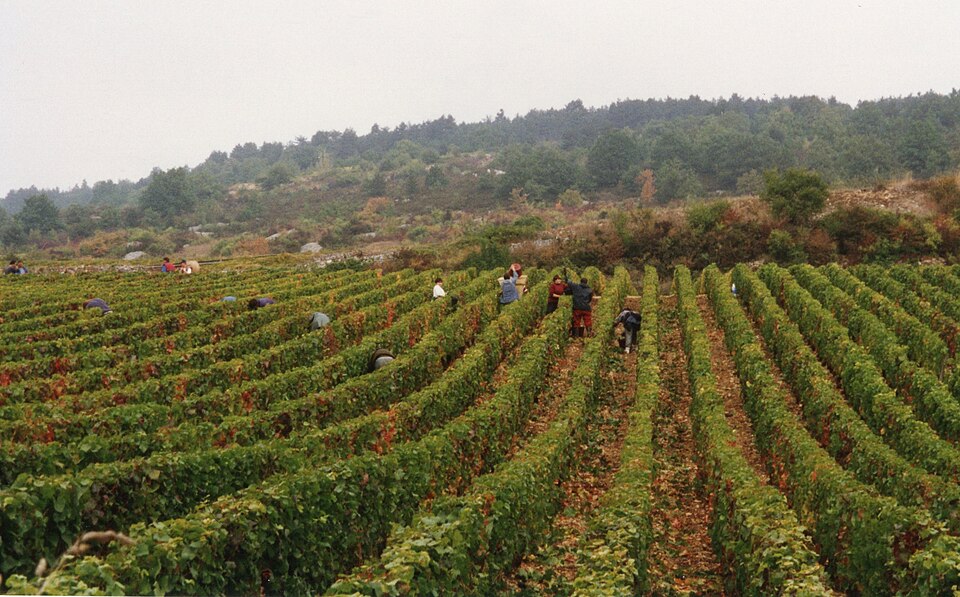
- Do not turn up during the harvest — mid-September to mid-October — expecting attention. Everyone is picking. Before or after is better; the region is at its most beautiful either way.
- Buying is not obligatory but it is the etiquette after a free tasting at a small domaine.
- Drink-driving. France’s limit is low, and in an accident any alcohol in your blood effectively decides fault. On a wine route, nominate a driver who does not taste — or take the bicycle route where one exists.
Ordering wine in a restaurant
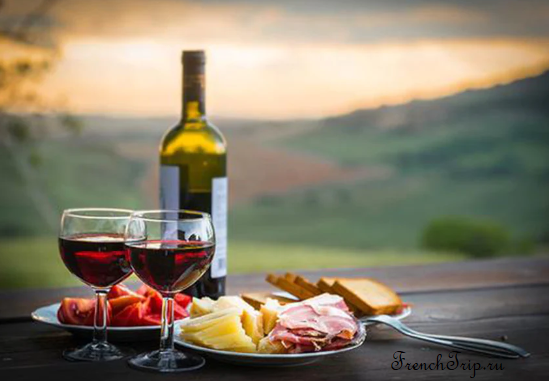
- Ask for the local wine. Un verre de vin de la région will get you something that belongs with the food and costs a third of the imported alternative.
- Wine by the pot. In Lyon a pot is a 46 cl bottle of Beaujolais with a thick base; in many places a pichet of 25 or 50 cl is the cheap and sensible order.
- House wine is usually fine. Vin de la maison in a decent restaurant is chosen by the same person who chose the food.
- Restaurant markups in France are gentler than in Britain or America — a bottle is often twice retail rather than three or four times.
Wine with food
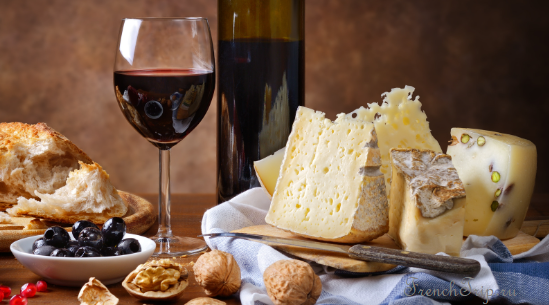
The useful rule is regional: what grew together goes together. Muscadet with Atlantic oysters, Alsace Riesling with choucroute, Cahors with duck confit, Sancerre with Loire goat cheese.
With cheese, white works more often than red — see French cheeses.
Buying and taking home
- Supermarkets are not embarrassing. French supermarkets carry serious wine at fair prices, and the foire aux vins in September is when the good stuff appears.
- Buy at the domaine for wines that never leave the region — most small producers sell out locally.
- Allowances — travel within the EU is effectively unlimited for personal use; outside it, check your own country’s limits before loading the boot.
- Wine hates heat. Do not leave a case in a parked car in Provence in August.
See wine routes in France and the 50 most renowned French wines.
Photo credits
Some photographs on this page come from Wikimedia Commons under free licences:
- Grape harvest near Santenay — JopkeB, CC BY-SA 4.0, via Wikimedia Commons

Updated: