Bordeaux
Bordeaux is the wine capital of the world and, since a long clean-up that began around 2000, one of the best-looking cities in France. The eighteenth-century centre — 350 listed buildings along the curve of the Garonne — is UNESCO-listed as the largest urban world heritage site in the country.
It sits in the south-west, an hour from the Atlantic, and it is a comfortable, walkable city with a superstition-free relationship to its own fame: people here drink the wine rather than talk about it.
What to see
Place de la Bourse and the miroir d’eau
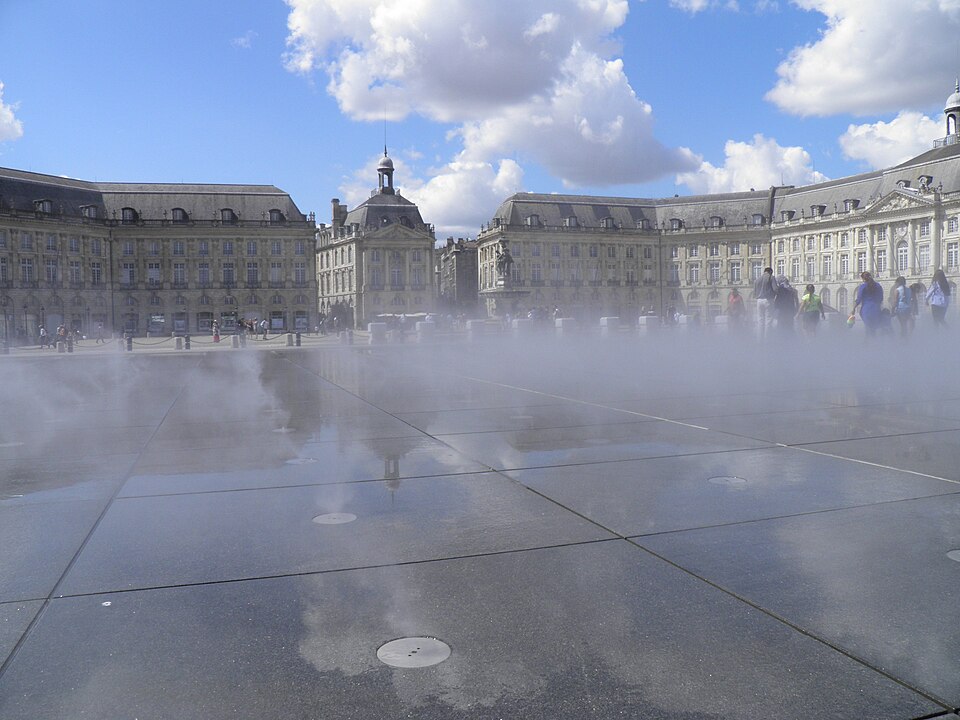
The classical facade of 1730 facing the river, with the Three Graces fountain in front of it. Since 2006 the quay opposite has held the miroir d’eau — the largest reflecting pool in the world, 3,450 m² of granite under two centimetres of water, which alternates between mirror, mist and dry stone every few minutes. Children play in it, everyone photographs it, and it is the single image people take away from Bordeaux.
Grand Théâtre
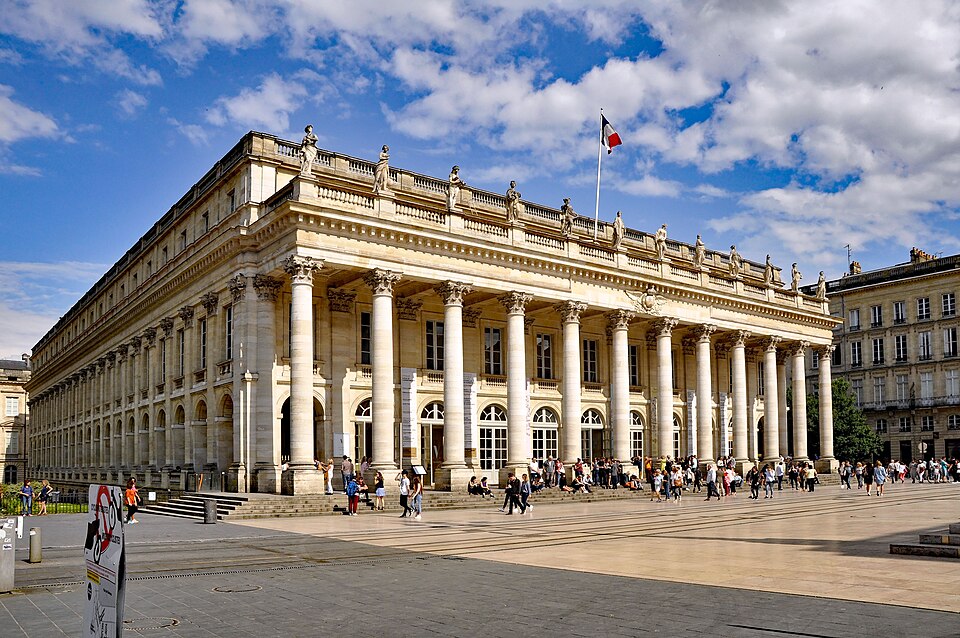
Victor Louis’s opera house of 1780, twelve Corinthian columns across the front and nine muses on top. Its staircase was the model for Garnier’s in Paris. Still a working opera house, and worth a tour if there is no performance.
The old town
- Rue Sainte-Catherine — 1.2 km, the longest pedestrian shopping street in France, running the length of the centre
- Cathédrale Saint-André and the free-standing Tour Pey-Berland, which you can climb for the view over the roofs
- Basilique Saint-Seurin — with a sixth-century crypt, among the oldest Christian sites in the region
- Porte Cailhau — the fifteenth-century river gate, built to celebrate a victory and looking like a castle out of a manuscript
- Place des Quinconces — around 12 hectares, one of the largest squares in Europe, with the Girondins monument at one end
- Saint-Michel — the scruffier, livelier quarter around its own bell tower, with a good flea market
La Cité du Vin
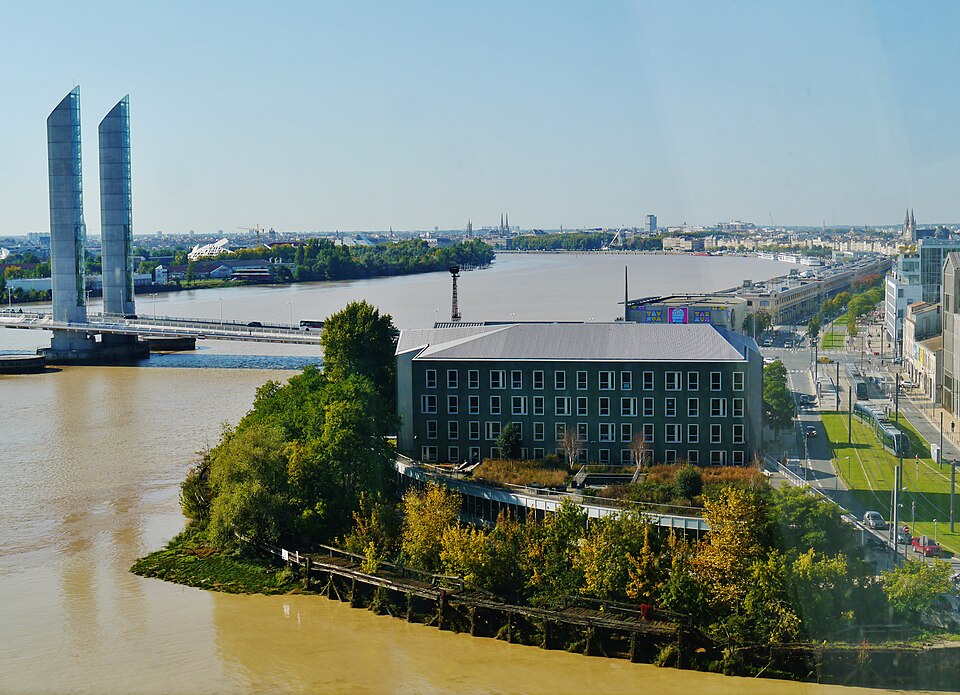
The wine museum north of the centre, opened in 2016 in a building meant to suggest wine swirling in a glass. It covers wine worldwide rather than just Bordeaux, it is genuinely well done, and the ticket includes a glass on the eighth-floor belvedere with the whole city below.
The wine
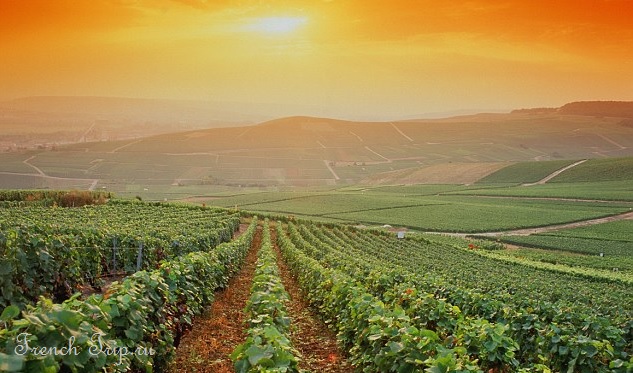
Bordeaux is the second-largest wine region on earth by area and produces well over 700 million bottles a year across some 60 appellations. The famous ones are within an hour of the city:
- Médoc — north along the left bank, past Margaux, Pauillac and Saint-Estèphe, and the grandest of the châteaux
- Saint-Émilion — 40 minutes east, a medieval village on the right bank that is itself UNESCO-listed, with a church hewn out of the rock
- Graves and Pessac-Léognan — immediately south, effectively in the suburbs
- Sauternes — the sweet whites, made from grapes deliberately left to noble rot
Most châteaux take visitors, and most want you to book. Day tours leave from the tourist office if you would rather not drive — which is the sensible choice, since the point is the tasting.
A word of honesty: these are difficult wines. They are built to age, the price does not reliably track the pleasure, and a great bottle from a good year runs into four figures. There is even an investment market in them. Taste a lot before you spend a lot.
See French wines, the 50 most renowned French wines and wine routes in France.
What to eat
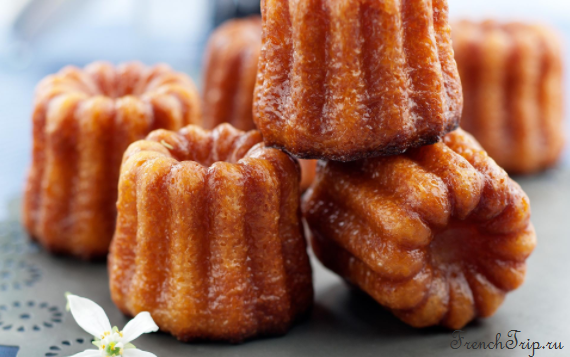
The canelé is the city’s own: a small fluted cake with a dark caramelised crust and a soft custard interior, flavoured with rum and vanilla. Legend has it that nuns made them from egg yolks left over when the wine trade used the whites for fining. They travel well and you can buy them at the airport on the way out.
Otherwise the south-west: duck confit, foie gras and truffles from the Périgord to the east, entrecôte grilled over vine cuttings, oysters from Arcachon eaten with a little sausage, and Basque cooking from the south. Lamprey stewed in red wine is the traditional local dish for the brave.
See the cooking of Nouvelle-Aquitaine and French oysters.
Getting to Bordeaux
- By train — Bordeaux Saint-Jean, about 4 km from the centre, with TGV from Paris in a little over 2 hours since the line opened in 2017, plus services from Marseille, Nice, Toulouse and Lyon. The tram runs from the station into town. See trains in France.
- By air — Bordeaux-Mérignac, well served by low-cost airlines. Note that the budget carriers use a separate low-cost terminal that is a shed with a roof; allow for it. A shuttle bus runs into the city every 45 minutes, and the slower city bus does the same trip for a fraction of the fare.
- By car — the A10 from Paris and the A62 from Toulouse. The centre is largely pedestrian; park on the ring. See parking in France.
In the city itself: three tram lines, a good bike scheme, and a centre small enough to cross on foot. Allow at least a full day for the city, and a second for the vineyards.
Around Bordeaux
- Arcachon and the Dune du Pilat — 50 minutes by train, and the standard day out
- Saint-Émilion — 40 minutes, medieval and UNESCO-listed
- The Médoc — the château route north along the estuary
- Cap Ferret — the oyster villages across the bay
- The Landes — pine forest and surf beaches south
When to go
May, June, September and October. September brings the harvest, which is the most interesting time in the vineyards. Summer is hot and the city empties; winter is mild and wet. The wine festival on the quays runs in June in alternate years, sharing the riverfront with the river festival.
See Nouvelle-Aquitaine and UNESCO sites in France.
Photo credits
Some photographs on this page come from Wikimedia Commons under free licences:
- Place de la Bourse and the miroir d’eau — Gzen92, CC BY-SA 4.0, via Wikimedia Commons
- Grand Théâtre — P. Hughes, CC BY 4.0, via Wikimedia Commons
- La Cité du Vin — Zairon, CC BY-SA 4.0, via Wikimedia Commons
_(1).jpg)


Where to park in Bordeaux
| Car park | Spaces | Fee | From centre |
|---|---|---|---|
| Clemenceau - Auditorium underground | 379 | paid | 130 m |
| Gambetta underground | 438 | paid | 240 m |
| Grands Hommes underground | 413 | paid | 280 m |
| Mériadeck underground | 1,323 | paid | 420 m |
| Tourny underground | 957 | paid | 440 m |
| Pey Berland underground | 646 | paid | 450 m |
| Camille Jullian underground | 338 | paid | 680 m |
| Place du Champ de Mars | 112 | paid | 680 m |
Weather in Bordeaux
| Month | Day | Night | Rainfall |
|---|---|---|---|
| January | +11° | +3° | 87 mm |
| February | +13° | +3° | 67 mm |
| March | +16° | +6° | 62 mm |
| April | +19° | +8° | 74 mm |
| May | +22° | +11° | 68 mm |
| June | +26° | +14° | 68 mm |
| July | +28° | +16° | 46 mm |
| August | +28° | +16° | 53 mm |
| September | +25° | +13° | 72 mm |
| October | +20° | +10° | 74 mm |
| November | +14° | +6° | 109 mm |
| December | +11° | +4° | 105 mm |
This page in Russian: Bordeaux (Бордо)
Updated: