French cheeses
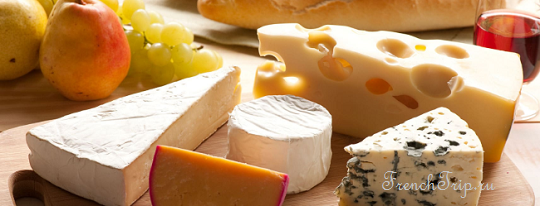
France makes somewhere between 1,000 and 1,600 cheeses depending on who is counting, and around 46 of them hold AOP status — a protected origin that fixes the milk, the breed, the area and the method. De Gaulle’s line about the impossibility of governing a country with 246 varieties of cheese was an understatement and he knew it.
This page is a practical guide: what the main families are, which ones to try, how to buy and how to eat them.
The families
Nearly every French cheese belongs to one of these. Knowing which tells you what it will taste like and how it should look.
Soft with a bloomy rind
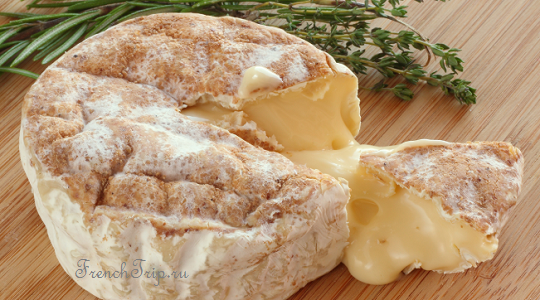
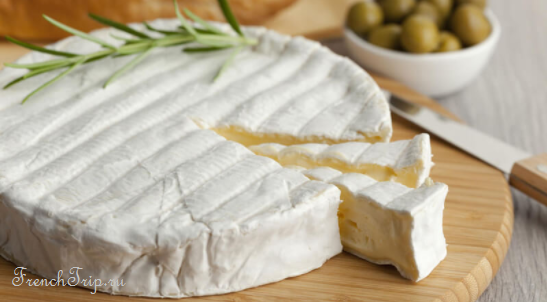
White downy rind, soft interior that should sag when ripe. Camembert de Normandie and Brie de Meaux are the archetypes.
The one thing to know: the supermarket camembert made from pasteurised milk and the AOP camembert made from raw milk are different products. If it says au lait cru and moulé à la louche — ladled by hand — it is the real thing.
Soft with a washed rind
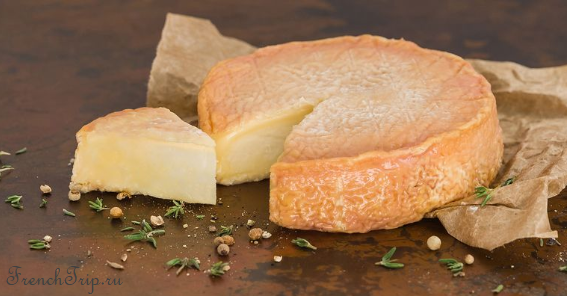
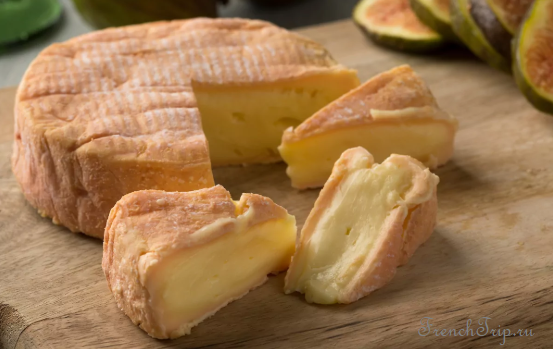
Orange, sticky rind, produced by washing the cheese in brine, beer or spirit as it ages. These are the pungent ones — the smell is far stronger than the taste.
- Époisses (Burgundy) — washed in marc, sold in a wooden box because it will not hold its shape otherwise
- Munster (Alsace) — eaten with cumin seeds and a glass of Gewurztraminer
- Livarot and Pont-l’Évêque (Normandy), Maroilles (the north)
Blue
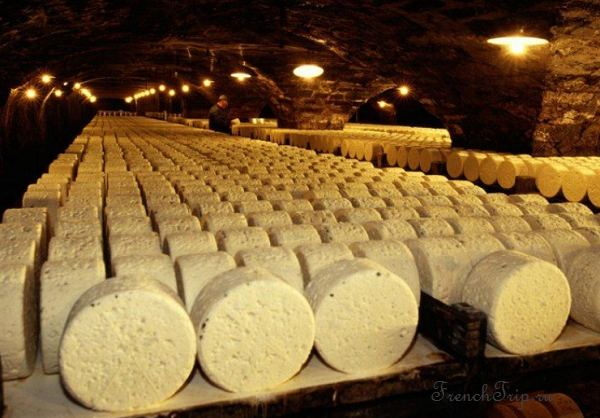
- Roquefort — ewe’s milk, ripened in the natural caves of Roquefort-sur-Soulzon where the mould occurs naturally. The first cheese ever given protected status, in 1925.
- Bleu d’Auvergne, Fourme d’Ambert, Bleu de Gex — cow’s milk, milder
Hard, cooked
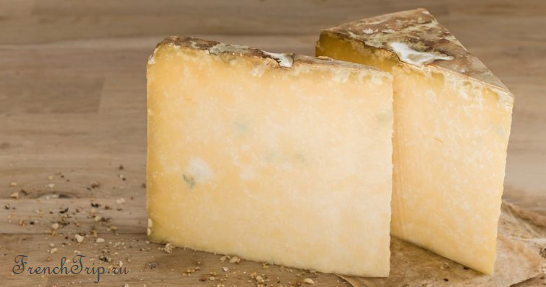
Big mountain wheels, aged for months or years, made to survive a winter.
- Comté (Jura) — the most-produced AOP cheese in France, and the one to buy if you buy only one. Aged 12 to 36 months; the older it is, the more it crystallises.
- Beaufort (Savoie) — the fondue cheese, concave-sided wheels
- Cantal and Salers (Auvergne) — among the oldest cheeses in France; Cantal comes jeune, entre-deux or vieux
- Abondance, Tomme de Savoie, Ossau-Iraty (the Basque country, ewe’s milk)
Goat
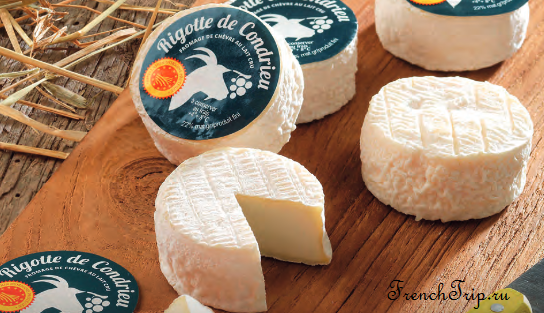
Small, white, often ash-coated, and they change completely with age: fresh and lemony at a week, hard and sharp at two months.
- Crottin de Chavignol (Loire) — grilled on toast, this is the salade de chèvre chaud everyone has eaten
- Sainte-Maure de Touraine — a log with a straw through the middle
- Valençay — a truncated pyramid; the legend says Napoleon knocked the top off with his sword
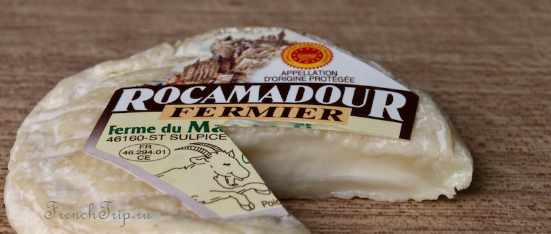
- Rocamadour (Lot) — a small disc, eaten warm
- Picodon, Pélardon, Rigotte de Condrieu — the small southern ones
What AOP actually means
Appellation d’Origine Protégée is not a quality medal — it is a rule book. It fixes the geographic area, the breed of animal, what the animal may eat, whether the milk is raw, the size of the wheel and the minimum ageing. Comté cows must be Montbéliarde or French Simmental and must graze at least one hectare each; Roquefort must ripen in those specific caves.
The practical use: an AOP cheese from any producer will be recognisably the same thing. Outside AOP, the name means nothing — “brie” made anywhere in the world is legal, “Brie de Meaux” is not.
Buying
- Go to a fromagerie, not a supermarket. A cheesemonger with the Maître Fromager or Meilleur Ouvrier de France sign will have aged the cheese themselves and will tell you what is ready today.
- Say when you plan to eat it. This is the single most useful sentence in a French cheese shop: they will pick a wheel at the right stage rather than one that peaks in four days.
- Markets are where the small producers sell — farm cheeses that never reach a shop.
- Raw milk — au lait cru — is where the flavour is. Note that some countries restrict importing it, and pregnant travellers are usually advised against soft raw-milk cheese.
Eating
- Cheese comes after the main course and before dessert in France, not at the end. Ordering it after the pudding marks you out.
- Serve at room temperature. Take it out of the fridge an hour before. Cold cheese tastes of nothing — this matters more than anything else on this page.
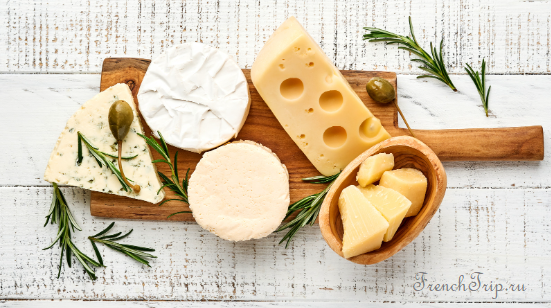
- Three to five cheeses make a board: something soft, something hard, something blue, something goat. An odd number, by convention.
- Cut so that everyone gets some of the middle. Rounds in wedges, pyramids from the top down, blue never with the point cut off — the heart is the best part and it is shared.
- Bread, not crackers. No butter.
Wine with cheese
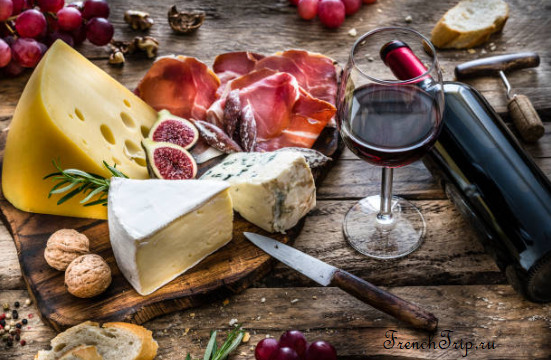
The reflex is red, and the reflex is usually wrong. Cheese is salty, fatty and acidic; tannin fights all three.
- White wins more often than red. Chablis with goat cheese, Alsace Riesling with munster, Jura Savagnin with Comté.
- Match the region. Cheese and wine that grew up in the same place go together — Sancerre with Crottin de Chavignol is the textbook case, and they are made twenty minutes apart.
- Sweet with blue. Sauternes with Roquefort is the classic pairing, and it works because sugar cancels salt.
- Cider with Normandy cheeses — camembert and cider come from the same fields.
Where to eat cheese on a trip
- Savoie and the Alps — fondue, raclette and tartiflette; see Annecy
- Alsace — munster, and the wine route to go with it
- Normandy — four AOP cheeses within one small region
- Burgundy — Époisses, and the wine beside it
- The Auvergne — five AOP cheeses and the dishes built from them; see Auvergne-Rhône-Alpes
- Paris — the best fromageries in the country, since everything comes here; see Paris
Taking cheese home
Wrap it in the paper the shop gives you, not cling film — cheese needs to breathe. Vacuum-packing at the shop works for hard cheeses and ruins soft ones. Check your own country’s import rules: EU to EU is unrestricted, but dairy is often refused entry to the US, Australia and others.
Updated: