Alsace wine route (Route des Vins d’Alsace)
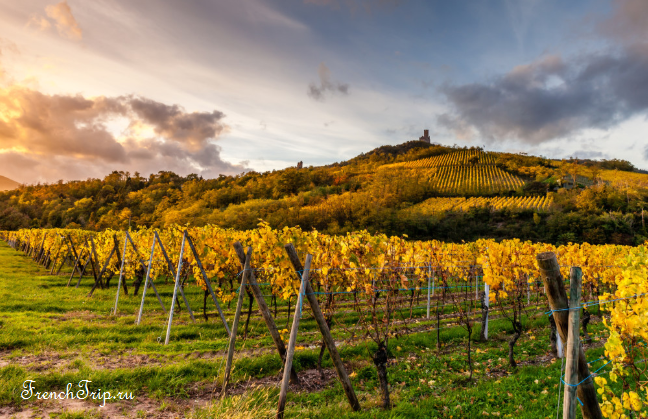
The Alsace Wine Route — La Route des Vins d’Alsace — runs about 170 km down the foot of the Vosges from Marlenheim to Thann, with a separate northern section around Wissembourg. It was declared a tourist route in 1953, the first in France, and it is still the best one.
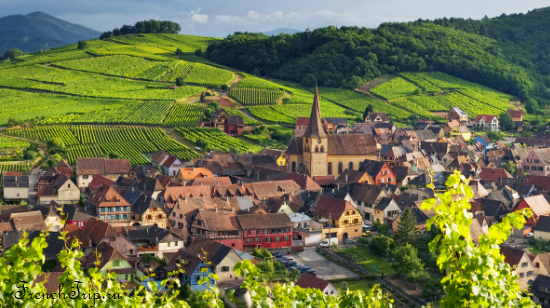
What makes it work is the density: about a thousand growers, a walled village every few kilometres, castles on the ridge above, and vines running right up to the houses.
The wines
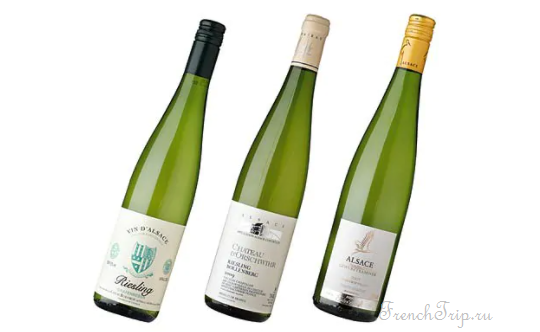
Alsace is white-wine country, and unusually for France the label tells you the grape:
- Riesling — dry, mineral, the region’s serious wine
- Gewurztraminer — aromatic, lychee and rose, off-dry; the one people either love or cannot drink
- Pinot Gris — fuller, good with white meat
- Muscat, Sylvaner and Pinot Blanc — the lighter everyday bottles
- Pinot Noir — the only red, and increasingly good as the climate warms
- Crémant d’Alsace — the sparkling wine, and the largest-selling crémant in France
Everything carries AOC status. Above the basic Alsace appellation sit 51 Grands Crus, each a named hillside, and the late-harvest Vendanges Tardives and Sélection de Grains Nobles at the sweet end.
Alsace wine comes in the tall narrow flûte d’Alsace bottle, and is served cool but not iced — around 8–10 °C.
See French wines and wine routes in France.
The villages, north to south
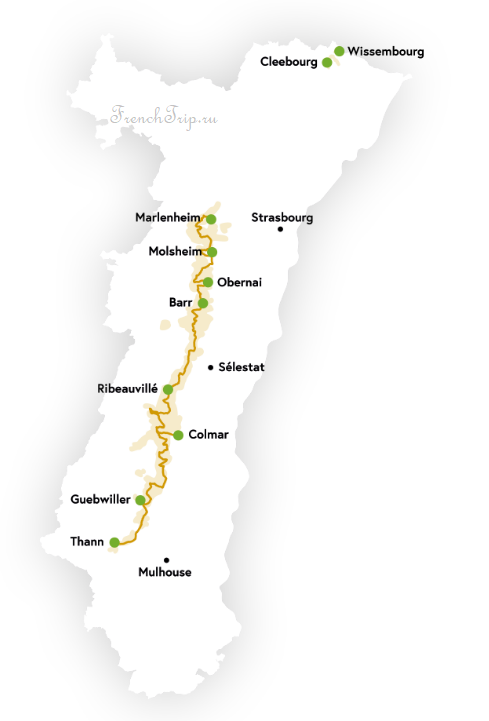
You cannot do all of them, and you should not try. The ones worth stopping for:
Northern section (Bas-Rhin)
- Marlenheim — the official start
- Molsheim — Renaissance buildings, and the Bugatti works are here
- Obernai — the best of the northern towns, and reachable by train
- Barr — a wine town with a good Sunday feel
- Dambach-la-Ville — walled, with vintners’ arms carved over the doors
- Châtenois — with the ruins of Haut-Kœnigsbourg on the ridge above
Southern section (Haut-Rhin)
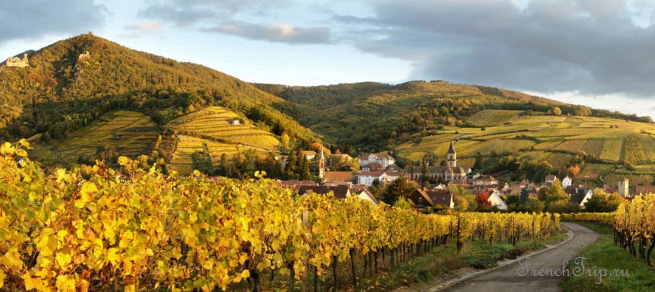
- Ribeauvillé — three ruined castles above it, and the Pfifferdaj minstrels’ festival on the first Sunday of September, when a fountain runs with wine
- Riquewihr — the most famous and the most crowded; a complete sixteenth-century village inside its walls
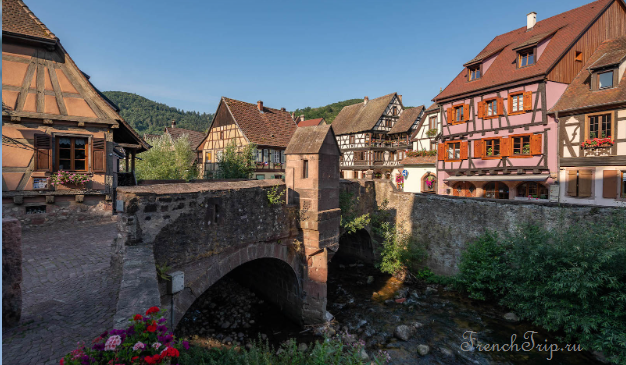
- Kaysersberg — arguably the prettiest, with a fortified bridge over the Weiss and Albert Schweitzer’s birthplace
- Niedermorschwihr — small, with a twisted church spire and vines to the doorstep
- Eguisheim — concentric rings of houses round a castle, and regularly voted the favourite village in France
- Rouffach — larger, and skipped by nearly everyone
- Guebwiller and Thann — the southern end, with the Rangen grand cru at Thann, the steepest vineyard in Alsace
Colmar sits in the middle of the route and is the natural base; Strasbourg is 20 minutes from the northern end.
Several of these are in the Most Beautiful Villages of France association.
How to travel it
By car
The honest answer. Many of these villages get one or two buses a day, and some none — you can get out of Colmar to Eguisheim or Riquewihr, but getting back the same day may not work.
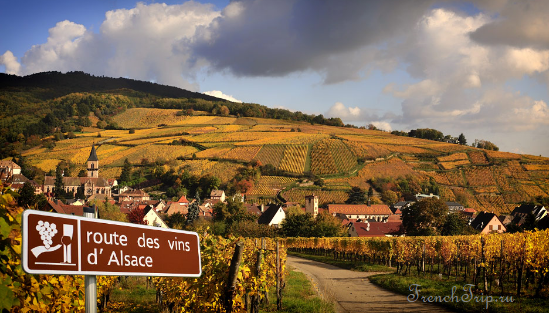
Follow the signposted route on the small road through the villages rather than the free motorway running parallel: the whole point is the vineyards at the roadside. Parking in the villages is metered but cheap, usually one or two squares outside the walls.
One warning worth taking seriously: this is a route built around tasting. France’s limit is low, and in an accident any alcohol in your blood will effectively decide fault. Nominate a driver who does not taste.
By bicycle
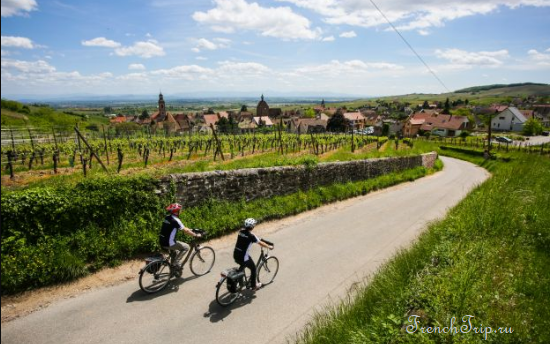
There is a separate marked cycle route, and it is much the nicest way to do a section. The whole 170 km is a serious few days; better to pick the densest stretch — Colmar to Ribeauvillé, or Obernai to Barr — and ride that. The land is flat at the foot of the slope and hilly the moment you go up into the vines.
By train and bus
Obernai, Barr, Dambach, Ribeauvillé (via Sélestat), Rouffach and Thann are all reachable on public transport from Strasbourg or Colmar, and a route built around those works without a car.
What to eat
Alsatian cooking is the other half of the trip: tarte flambée, choucroute garnie, baeckeoffe, coq au Riesling, munster cheese, and kougelhopf. Look for a winstub — the Alsatian wine tavern, wood-panelled, where the food is designed around the local bottles.
When to go
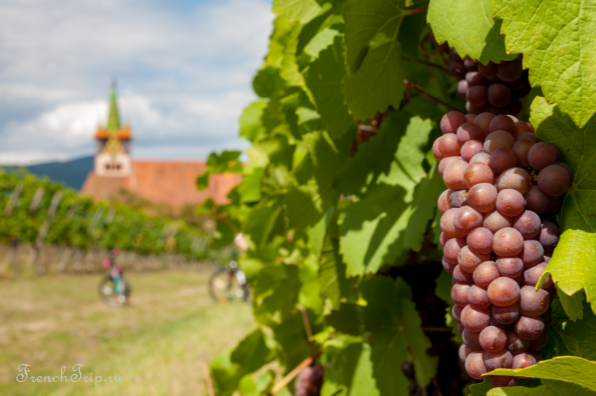
- September–October — the best time. The harvest is on, the vines turn gold, and every village has a wine festival.
- May–June — green, quiet, everything open, geraniums on every window.
- December — the Christmas markets, and Alsace does them better than anywhere in France. Also the busiest: expect queues of traffic into Riquewihr and Kaysersberg, cars parked along the vineyard tracks and a half-kilometre walk in.
- July–August — hot and full.
See Alsace.
Updated: