UNESCO sights in France
France has more than fifty UNESCO World Heritage sites, which puts it in the top handful of countries in the world. They range from a single Roman bridge to an entire mountain range, and several of them are places you would visit anyway without knowing they were listed.
This is a practical selection: what is on the list, grouped by the kind of trip it fits into.
The unmissable ones
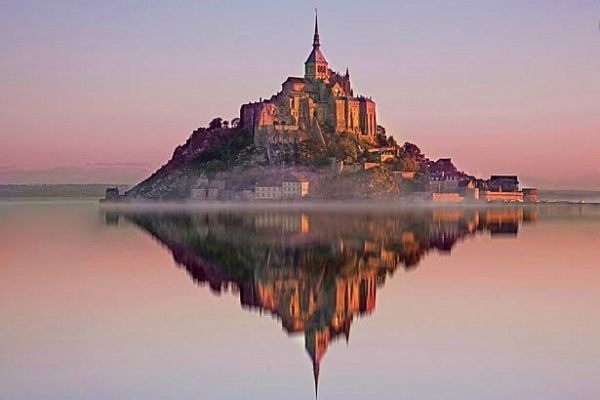
Mont-Saint-Michel and its bay
Listed in 1979. An abbey built upward on a rock in a bay with one of the largest tidal ranges in Europe. Go early or late; the middle of a summer day is a queue on a staircase. See Normandy.
Palace and Park of Versailles
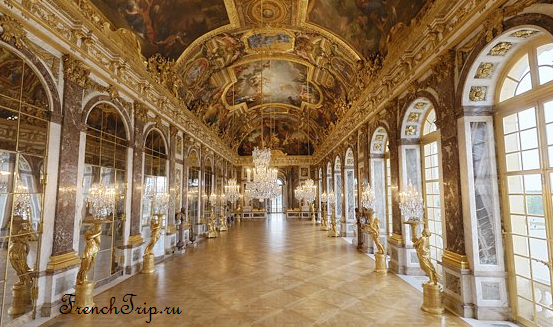
Listed 1979. The Hall of Mirrors, Le Nôtre’s gardens and the Trianons, 20 km from Paris — and the model every European palace copied afterwards. See Versailles.
Paris, Banks of the Seine
Listed 1991 — not a building but a stretch of river, from the Louvre to the Eiffel Tower, taking in Notre-Dame, the Sainte-Chapelle, the Conciergerie and the bridges. See Paris.
Chartres Cathedral
Listed 1979, and the reason is the glass: 176 windows, most of them thirteenth-century originals, in a blue nobody has since reproduced. An hour from Paris.
Roman France
Arles
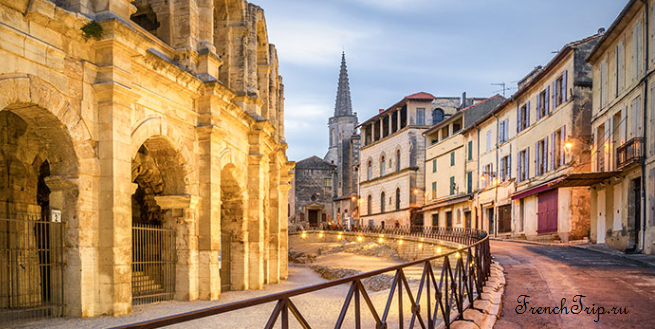
Listed 1981 as “Arles, Roman and Romanesque Monuments”: the amphitheatre, the theatre, the cryptoporticus, the Alyscamps necropolis and the portal of Saint-Trophime. See Arles.
Pont du Gard
Listed 1985. The highest Roman aqueduct bridge ever built, 49 m, part of a channel that fell only 12 m over 50 km to bring water to Nîmes.
Orange
Listed 1981: the Roman theatre, which still has its stage wall standing — one of only three in the world that do — and the triumphal arch.
Lyon
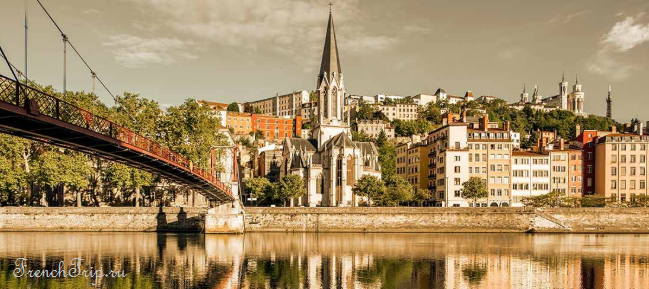
Listed 1998 for its historic site: Roman Lugdunum on Fourvière, the Renaissance quarter below it, the silk-workers’ hill of Croix-Rousse, and the traboules linking them. See Lyon.
Medieval towns and churches
Vézelay
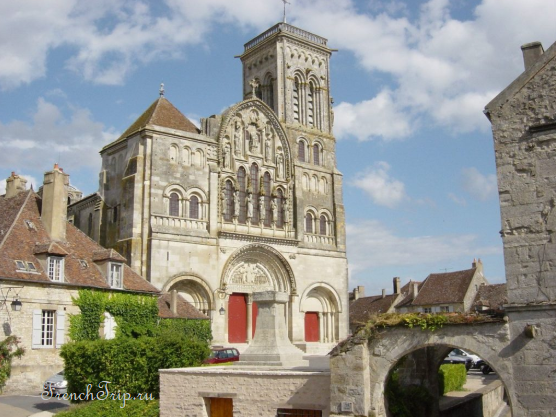
Listed 1979. The Romanesque basilica on its hill in Burgundy, a starting point of the pilgrimage roads to Santiago — which are themselves listed as a route across France.
Provins
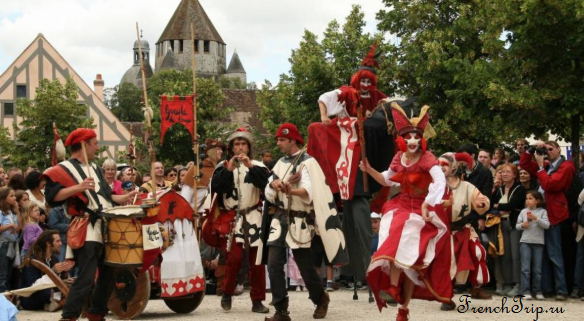
Listed 2001 as a town of medieval fairs — the Champagne fair town that kept its ramparts, its underground galleries and its street plan. An hour and a half east of Paris, and it stages one of the better medieval festivals in France.
Carcassonne
Listed 1997. The double-walled fortified city of the Cité, heavily restored by Viollet-le-Duc in the nineteenth century — a fact the listing acknowledges and which changes nothing about the silhouette.
Strasbourg
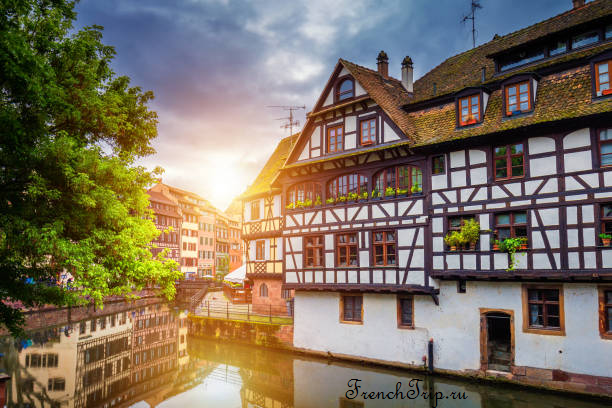
The Grande Île was listed in 1988 and the listing was extended in 2017 to include the German-built Neustadt. The cathedral, the Petite France quarter, and two very different city plans side by side. See Strasbourg.
Albi and Le Puy
Albi’s Episcopal City, listed 2010, is built entirely in brick around the largest brick cathedral in the world. Le Puy-en-Velay’s chapel on its volcanic plug is part of the Santiago routes listing.
Palaces and châteaux
The Loire Valley
Listed 2000 — not individual castles but the whole valley between Sully and Chalonnes, 280 km of river with Chambord, Chenonceau, Amboise, Azay-le-Rideau and Villandry in it.
Fontainebleau
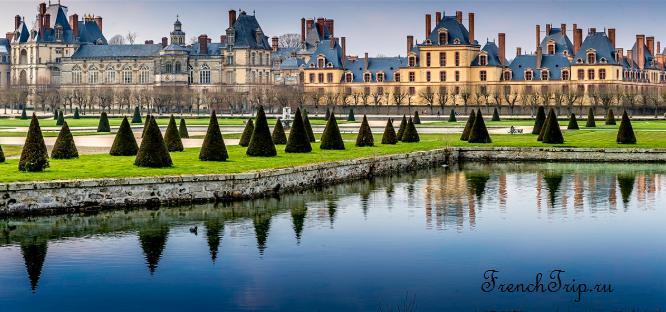
Listed 1981. Eight centuries of French monarchs building on the same site, in a forest an hour south of Paris — and quieter than Versailles by a wide margin.
Vauban’s fortifications
Listed 2008 as a group of twelve sites across the country, from Briançon in the Alps to Saint-Martin-de-Ré on the Atlantic: the seventeenth-century military engineer whose star forts still shape a dozen French towns.
Landscapes
The Causses and the Cévennes
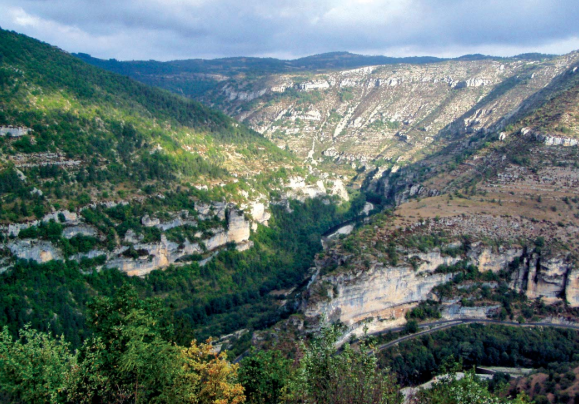
Listed 2011 as a Mediterranean agro-pastoral cultural landscape — limestone plateaux, gorges and a way of grazing sheep that has shaped the country for millennia. This is where Roquefort ripens.
The Gulf of Porto, Corsica
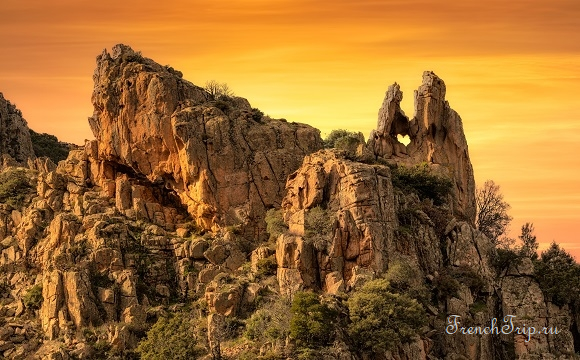
Listed 1983: the Calanche of Piana, the Gulf of Girolata and the Scandola nature reserve — red porphyry falling into clear water, reachable mostly by boat.
Chaîne des Puys
Listed 2018. A chain of eighty extinct volcanoes across the Auvergne, with a rack railway up the Puy de Dôme. Half an hour from Vichy.
The Pyrenees — Mont Perdu
Listed 1997 and shared with Spain: high limestone massif, the Cirque de Gavarnie, and pastoral traditions that cross the border.
Wine landscapes
- The Climats of Burgundy (2015) — the individually named vineyard parcels of the Côte d’Or, some of them a few rows wide; see Dijon
- Champagne hillsides, houses and cellars (2015) — the vineyards, the Avenue de Champagne at Épernay and the chalk cellars under Reims
- Saint-Émilion (1999) — the medieval wine village near Bordeaux, with its church cut out of the rock
- Bordeaux, Port of the Moon (2007) — the eighteenth-century city itself
Industrial and modern
- Canal du Midi (1996) — 240 km of seventeenth-century canal from Toulouse to the Mediterranean, under plane trees
- Nord-Pas-de-Calais Mining Basin (2012) — slag heaps, pit villages and winding gear, listed as a landscape shaped by coal
- Le Havre (2005) — the city centre rebuilt in reinforced concrete by Auguste Perret after 1945
- Le Corbusier (2016) — ten French buildings within a transnational listing, including the chapel at Ronchamp and the Cité Radieuse in Marseille
- The Great Spa Towns of Europe (2021) — Vichy among eleven towns in seven countries
Also listed, and worth knowing
- Decorated caves of the Vézère valley (1979) — Lascaux and fourteen others in the Dordogne. The original Lascaux is closed; the facsimile is a serious reconstruction.
- Bourges Cathedral (1992) and Amiens Cathedral (1981) — the two great Gothic churches most visitors miss
- Papal Palace, Avignon (1995) — with the bridge and the walls; see Avignon
- Belfries of Belgium and France (2005) — 23 bell towers in the north
- Bassin de Marennes-Oléron and other more recent additions, plus France’s intangible listings: the gastronomic meal, the baguette, and the skills of the master craftsmen
Planning around them
The sites cluster, which is convenient:
- Provence — Arles, Orange, Pont du Gard and Avignon within an hour of each other
- Île-de-France — Paris, Versailles, Fontainebleau, Chartres and Provins, all day trips
- Burgundy — Vézelay, Fontenay Abbey and the Climats
- The south-west — Bordeaux, Saint-Émilion, the Vézère caves and the Canal du Midi
- Alsace and Champagne — Strasbourg and the Reims cellars, two hours apart by train
Note that a UNESCO listing is a statement about significance, not about how enjoyable a visit is. Some of the best listed sites — the Cévennes, the mining basin, Le Havre — are nearly empty, while the famous ones need booking and an early start.
See the most beautiful villages in France.
Updated: