Les Plus Beaux Détours de France
Les Plus Beaux Détours de France is an association of about a hundred small French towns, and it exists to fill a specific gap.
The better-known Most Beautiful Villages of France only admits communes of under 2,000 inhabitants. That rule excludes a whole category: towns of two to twenty thousand people, with a real old centre, a market and somewhere to sleep — too big to be a village, too small to be on anyone’s itinerary.
Les Plus Beaux Détours, founded in 1998, is the list for those.
What the label means
The criteria are more practical than picturesque, which is what makes the list useful:
- Between 2,000 and 20,000 inhabitants
- Off the motorway — the town has to be a genuine detour, not a service area
- Heritage worth stopping for, and a centre you can walk
- Actual services — hotels, restaurants, shops open out of season, a tourist office
- Membership is reviewed, and towns have been dropped
That last group of criteria is the difference in practice. A plus beau village may have thirty houses, one restaurant open in August and nowhere to stay. A détour town is somewhere you can spend the night, eat on a Tuesday in November and buy food.
Which of them are on this site
Several towns covered elsewhere here hold the label:
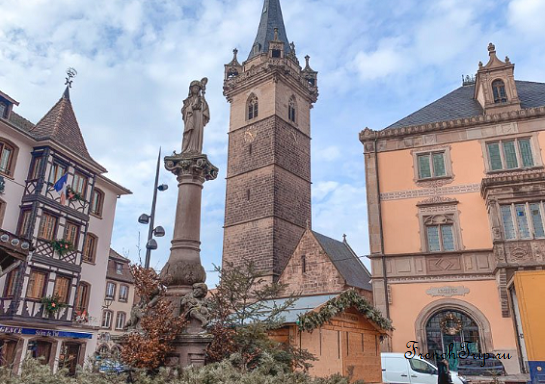
- Obernai — Alsace, on the wine route and reachable by train
- Wissembourg — the northern tip of Alsace, on the German border
- Forcalquier — Haute-Provence, with the Monday market
- Salon-de-Provence — Nostradamus, soap and the air force
- Aigues-Mortes — the complete medieval ramparts in the Camargue
- Vaison-la-Romaine — the largest Roman excavation in France
Others worth knowing
Spread across the country, and most of them barely visited by foreign travellers:
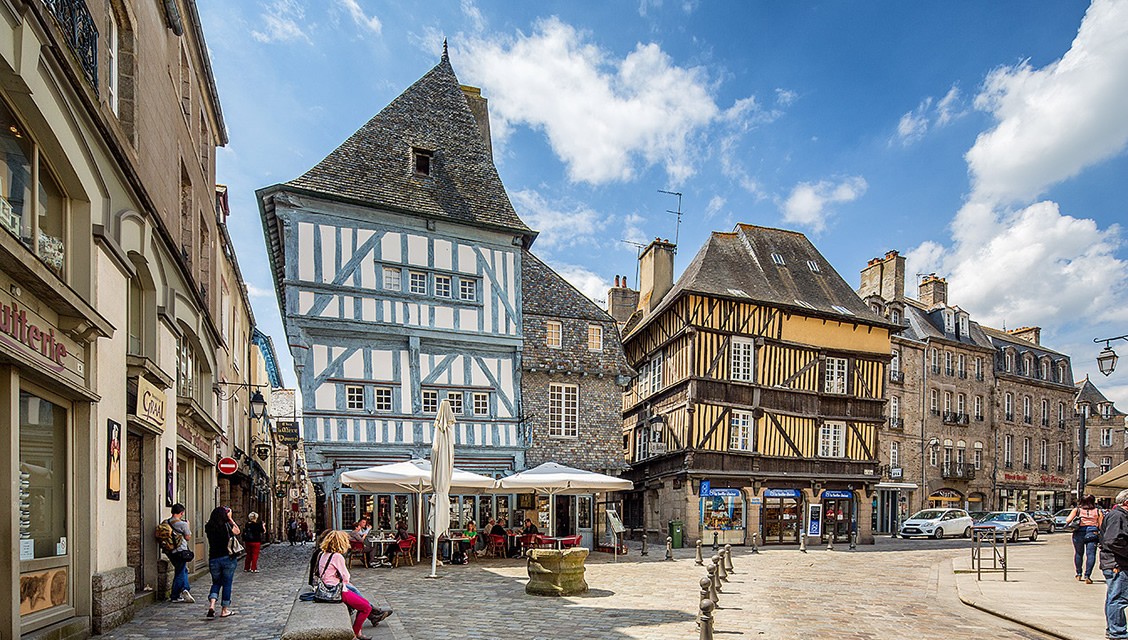
- Dinan (Brittany) — a walled medieval town above the Rance, and one of the best-preserved in France
- Bergerac and Sarlat (Dordogne) — the wine town and the golden-stone one
- Cahors (Lot) — with the fortified Valentré bridge and the black wine
- Uzès (Gard) — a ducal town with one of the best markets in the south
- Barbizon and Provins (Île-de-France) — the painters’ village and the fair town
- Riquewihr‘s larger neighbours in Alsace — Ribeauvillé and Barr
- Saint-Jean-de-Luz (Basque coast), Honfleur (Normandy), Pérouges (near Lyon)
- Salers, Espalion and Figeac in the Massif Central
How to use the list
Its real use is route planning between the famous places. France’s motorways are efficient and boring; the parallel national roads pass through these towns. Substituting a détour town for a service-station lunch changes the character of a long drive, and most of them are within twenty minutes of a motorway junction.
It is also the list to consult for where to sleep when the village you want to see has no beds — which is the usual situation in the Luberon, on the Alsace wine route and around the Verdon.
Related lists
- Les Plus Beaux Villages de France — under 2,000 inhabitants, about 180 members
- Grands Sites de France — landscapes repaired after being damaged by their own popularity
- UNESCO sites in France
- Villes et Pays d’Art et d’Histoire — a state heritage label held by around 200 towns and districts, including Reims and Troyes
- Petites Cités de Caractère — a fourth label, for small towns with strong architectural character
The labels overlap and no town holds all of them. Taken together they are a reasonable filter for a country with far more small towns than anyone can visit.
This page in Russian: Les Plus Beaux Détours de France
Updated: