Marseille
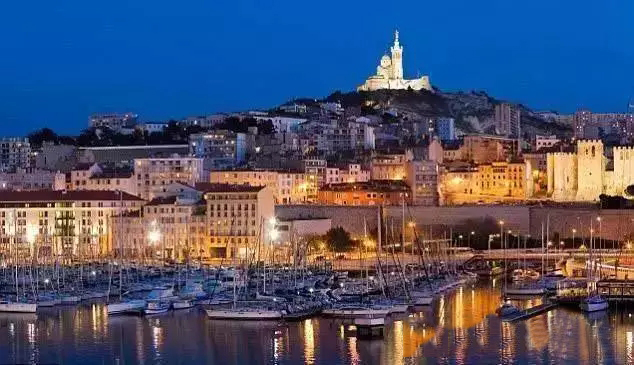
Marseille is the oldest city in France and its second largest — founded by Greek sailors from Phocaea in 600 BC, which makes it six hundred years older than Paris. It is a port city and it behaves like one: loud, mixed, unpolished, and completely unlike the manicured Riviera an hour east.
It has spent decades with a bad reputation and most of that is now out of date. Since it was European Capital of Culture in 2013 the waterfront has been rebuilt, and the city is one of the more interesting places to spend a few days in France.
The Vieux-Port
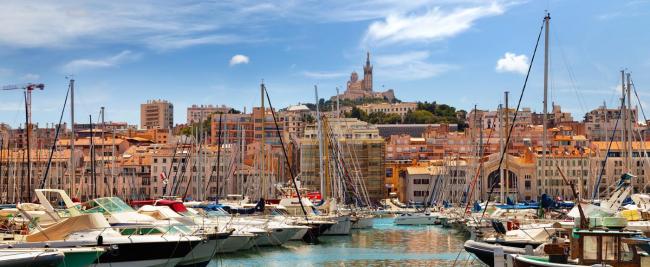
The old harbour is where the Greeks landed and it is still the centre of the city. Forts guard both sides of the entrance, the fish market runs on the quay every morning, and the whole thing is closed to traffic on one side. Norman Foster’s mirrored canopy at the head of the port — a polished steel ceiling on thin columns — has become the meeting point.
What to see
Notre-Dame de la Garde
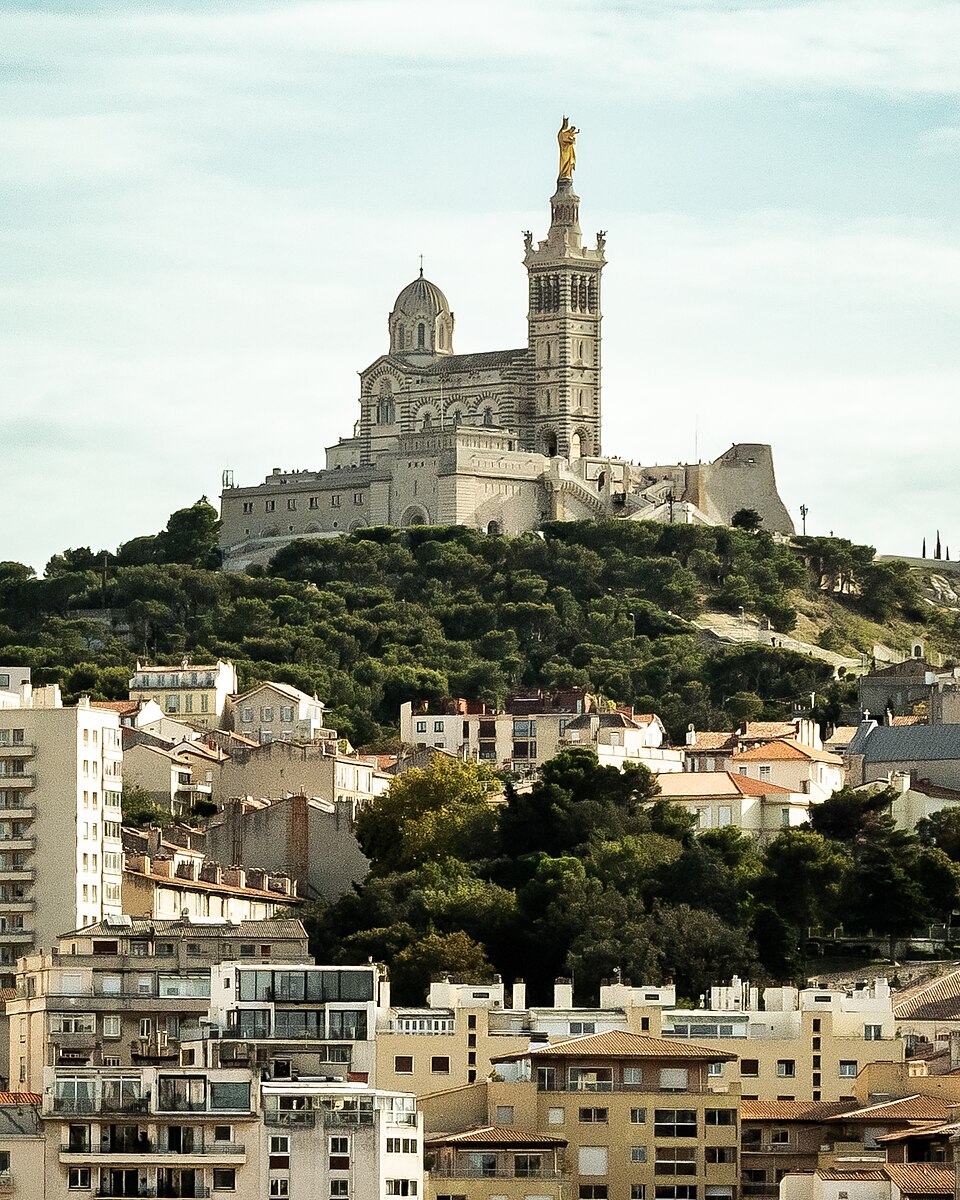
The neo-Byzantine basilica on the highest point of the city, with a gilded Virgin on the bell tower that sailors used to navigate by. Locals call her la Bonne Mère. Inside, the walls are covered in ex-votos: painted ships, model boats, plaques from people who survived something at sea.
The view takes in the whole city, the islands and the Calanques. Walk up if you are fit, or take the bus — it is a serious climb.
MuCEM and the Fort Saint-Jean
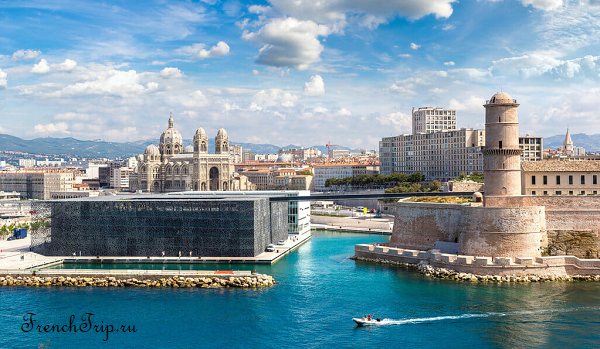
The Museum of European and Mediterranean Civilisations, opened in 2013, is a black concrete lattice box sitting on the water and joined to the seventeenth-century fort by a footbridge. Even without going in, the walk across the bridge and round the fort ramparts is free and one of the best things in Marseille.
Le Panier
The oldest quarter, on the slope north of the port — narrow lanes, washing lines, street art and stairs. It was the fishermen’s and immigrants’ district, and part of it was dynamited by the Germans in 1943. The Vieille Charité, a seventeenth-century almshouse with a domed chapel around an arcaded courtyard, is the architectural set piece and now holds two museums.
Cathédrale de la Major
An enormous striped neo-Byzantine cathedral in green and white stone, standing between the port and the docks. Built in the nineteenth century to be seen from the sea.
Château d’If
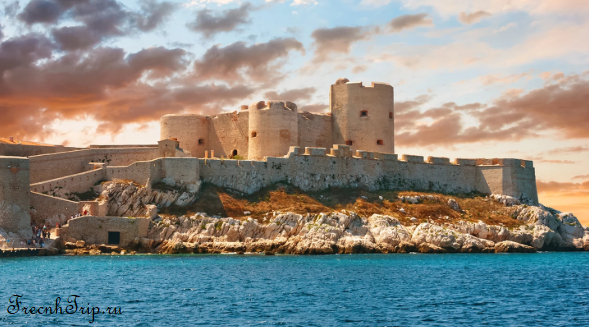
The island fortress in the bay, built in the 1520s and used as a prison for three centuries — and the setting for the escape in The Count of Monte Cristo. Boats run from the Vieux-Port in about 20 minutes, often combined with the Frioul islands next door.
La Canebière and the Longchamp palace
The Canebière is the avenue running inland from the port, the city’s main street since the seventeenth century. At the far end of the axis, the Palais Longchamp is a monumental fountain and colonnade built to celebrate the arrival of drinking water in 1869, with two museums in its wings.
The Calanques
The limestone inlets start at the southern edge of the city and run 20 km east to Cassis. They have been a national park since 2012, and they are reachable from Marseille itself — Callelongue and Sormiou are within the city boundary.
Two practical notes: the massif closes to walkers on high fire-risk days, decided the evening before, most often in July and August; and there is no shade. Boat trips from the Vieux-Port are the effortless alternative.
Beaches
The Prado beaches south of the centre were made from spoil dug out for the metro in the 1970s, and they work: sand, lawns, and a park behind. Further round, the Corniche Kennedy runs along the sea for five kilometres past small coves — a good walk or a cheap bus ride with the view.
What to eat
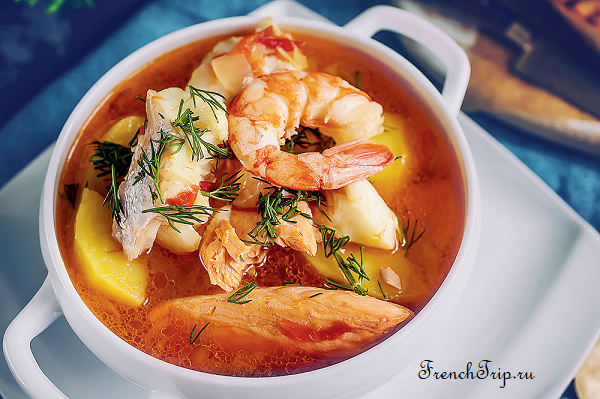
Bouillabaisse is the dish, and it is worth knowing what the real one is: a fisherman’s soup of several specific rockfish, cooked with saffron and fennel, served in two courses — the broth first with rouille and croutons, then the fish, filleted at the table. It takes time and it is not cheap. Restaurants signed up to the Charte de la Bouillabaisse commit to the traditional version; a cheap “bouillabaisse” on the tourist quay is not it.
Beyond that: panisses (chickpea fritters), navettes (orange-flower biscuits from the Four des Navettes, baking since 1781), pastis, and the North African and Armenian cooking that came with the city’s migrations. See Provençal cuisine.

The souvenir is savon de Marseille — olive-oil soap made to a formula fixed by royal edict in 1688. Look for the 72% olive oil stamp; most of what is sold as Marseille soap is made elsewhere.
Getting to Marseille
- By train — Gare Saint-Charles, in the centre at the top of a monumental staircase. TGV from Paris in about 3 hours, and frequent services to Aix (30 min), Avignon, Arles and Nice.
- By air — Marseille-Provence, 25 km north-west, with a shuttle bus to Saint-Charles in 25 minutes.
- By ferry — to Corsica, Algeria and Tunisia.
- By car — the A7 and A55. Driving in Marseille is not recommended and parking is worse; use the metro. See parking in France.
The city has two metro lines, trams and a dense bus network. The centre is walkable, though hilly.
A word on safety
Marseille’s reputation is largely about drug-related violence in the northern housing estates, which are nowhere a visitor has reason to go. The tourist areas are ordinary big-city territory: watch your pockets on the Canebière and at Saint-Charles, and be sensible late at night. Do not let the reputation keep you away.
Around Marseille
- Cassis — 30 minutes, with the calanques and the Route des Crêtes
- Aix-en-Provence — 30 minutes, and a complete change of tone
- Arles and the Camargue — an hour west
- Îles du Frioul — the archipelago off the port, with walks and swimming
- Corsica — overnight by ferry
When to go
April to June and September to October. July and August are hot and the calanques often close. The mistral blows hard here — cold and clear, and it is why the light is so good. Winter is mild and the city keeps working, which not everywhere on this coast does.
See Provence-Alpes-Côte d’Azur.
Photo credits
Some photographs on this page come from Wikimedia Commons under free licences:
- Notre-Dame de la Garde — Epgui, CC BY-SA 4.0, via Wikimedia Commons

Where to park in Marseille
| Car park | Spaces | Fee | From centre |
|---|---|---|---|
| Parking Bourse underground | 1,767 | paid | 230 m |
| Indigo underground | — | paid | 240 m |
| Parking d'Estienne d'Orves underground | — | paid | 450 m |
| Parking Félix Baret underground | — | paid | 540 m |
| Cours Julien underground | 630 | paid | 540 m |
| Indigo République underground | — | paid | 630 m |
| Parking du Vieux Port underground | — | paid | 640 m |
| Parking Préfecture underground | — | paid | 650 m |
Nearby
Other places on this site within easy reach, as the crow flies:
- Calanques — 10 km
- Aéroport de Marseille — 21 km
- La Ciotat — 23 km
- Martigues — 29 km
- Miramas-le-Vieux — 41 km
- Salon-de-Provence — 44 km
Weather in Marseille
| Month | Day | Night | Rainfall |
|---|---|---|---|
| January | +13° | +6° | 58 mm |
| February | +14° | +6° | 41 mm |
| March | +17° | +8° | 34 mm |
| April | +19° | +10° | 66 mm |
| May | +23° | +13° | 47 mm |
| June | +28° | +17° | 24 mm |
| July | +30° | +19° | 10 mm |
| August | +30° | +20° | 23 mm |
| September | +26° | +16° | 79 mm |
| October | +22° | +14° | 90 mm |
| November | +17° | +10° | 83 mm |
| December | +14° | +7° | 60 mm |
This page in Russian: Марсель (Marseille)
Updated: