Paris in one day
You cannot really see Paris in one day. There are too many sights, and the most famous of them, the Eiffel Tower and the Louvre above all, have long queues. But you can get a very good first impression of the city in a day on foot, as long as you choose: either a walk past all the great landmarks, or a day spent inside one or two of them. Trying to do both is the most common mistake.
Three tips before you start:
- Book ahead. The Louvre, the Eiffel Tower and many other sights sell timed tickets online, and on busy days they can sell out. Even Notre-Dame, which is free, recommends booking a time slot. A queue can easily eat two hours of your only day.
- Start early. The first hours of the morning are the quietest everywhere.
- Use the metro to link the walks. It is fast, frequent and saves your legs for the parts worth walking.
Below are three ways to spend the day.
1. The great sights along the Seine (half a day to a day)
The best route for a first visit. It follows the Seine through the centre of Paris, past the riverbanks that are a UNESCO World Heritage Site, and covers the Eiffel Tower, the Invalides, Notre-Dame, the Louvre, the Champs-Élysées and the Arc de Triomphe. It is about 10 to 12 km on foot, flat and easy, and takes around five hours if you do not go inside anything. Add the Eiffel Tower or a museum and it becomes a full day.
- The Eiffel Tower. Start at the RER C station Champ de Mars–Tour Eiffel, or the metro at Bir-Hakeim. If you want to go up, book the first slot of the morning.
- The Champ de Mars, the long lawn behind the tower, with the École Militaire at its far end.
- The Invalides, with its golden dome over the tomb of Napoleon and the army museum.
- Pont Alexandre III, the most ornate bridge in Paris, with the Grand Palais and the Petit Palais on the other bank.
- Walk along the left bank past the Musée d’Orsay, then cross the river by the footbridge of the Pont des Arts.
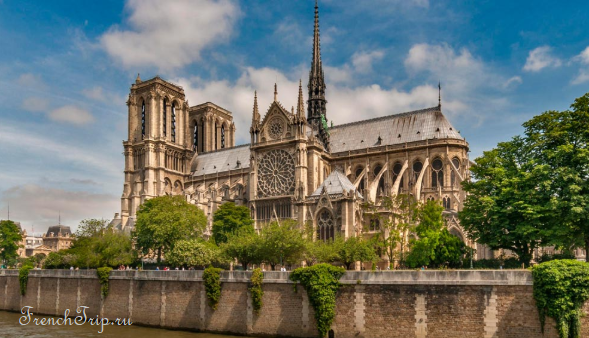
- The Île de la Cité, with the Conciergerie, the Sainte-Chapelle and Notre-Dame, reopened in December 2024 after the fire of 2019. Time it for lunch: the Latin Quarter, just south across the river, has many simple, good-value restaurants.
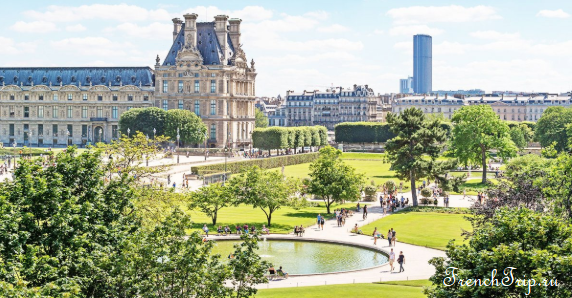
- The Louvre, with its glass pyramid, and the Tuileries garden beyond.
- The Place de la Concorde and its Egyptian obelisk, with a detour north to the elegant Place Vendôme if you have time.
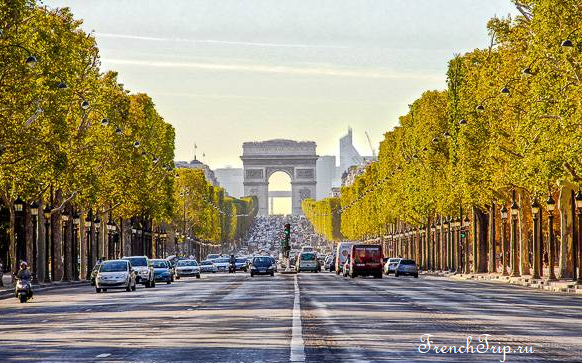
- Up the Champs-Élysées to the Arc de Triomphe. Use the underground passage to reach the arch: never try to cross the roundabout on foot. You can climb to its roof for a view down the avenues.
- End at the Trocadéro, across the river from the Eiffel Tower, for the classic view of it. After dark the tower sparkles with lights for a few minutes at the start of every hour.
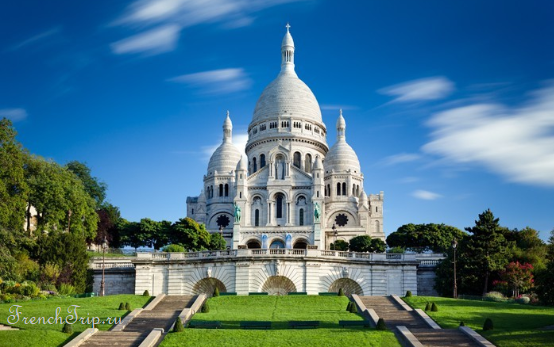
If you still have energy in the evening, take the metro to Montmartre for the view from the Sacré-Cœur and dinner in the old village streets.
2. All of Paris in one day (about 21 km)
A long walk for good walkers who are in Paris for the first time and want to see almost everything, except the Bastille and the east of the city. It takes a full day, from morning to dark, with a stop for lunch; you can shorten any part of it by metro.
- The Arc de Triomphe (metro and RER Charles de Gaulle–Étoile).
- The Trocadéro and its view of the Eiffel Tower.
- The Eiffel Tower and the Champ de Mars, to the École Militaire.
- The Invalides and the Pont Alexandre III.
- The Musée d’Orsay and the church of Saint-Germain-des-Prés, one of the oldest in Paris, in its literary café quarter.
- The Montparnasse Tower, whose observation deck has one of the best views of Paris, precisely because the tower itself is not in it.
- The Luxembourg Gardens and the Panthéon.
- Notre-Dame and the Île Saint-Louis, a quiet island of old houses behind it.
- The Place de la Bastille, then back west through the Marais to Les Halles.
- The Louvre, the Tuileries and the Place Vendôme.
- By metro or on foot to the Moulin Rouge in Pigalle, and up the hill to the Sacré-Cœur and Montmartre for sunset over the city.
3. One or two neighbourhoods
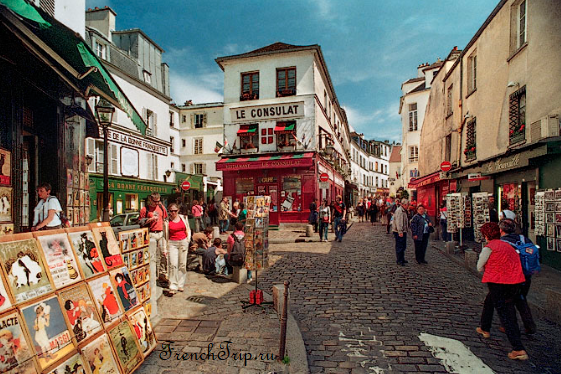
If you have been to Paris before, or you would rather see one part of it well, spend the day in one or two neighbourhoods. The Louvre and the Tuileries, and the Île de la Cité with Notre-Dame, are always worth it. For the artistic and intellectual Paris of the past, choose Montmartre first, then Saint-Germain and Montparnasse. For old streets, shops and cafés, choose the Marais. See the arrondissements of Paris to choose.
Paris in a day with children
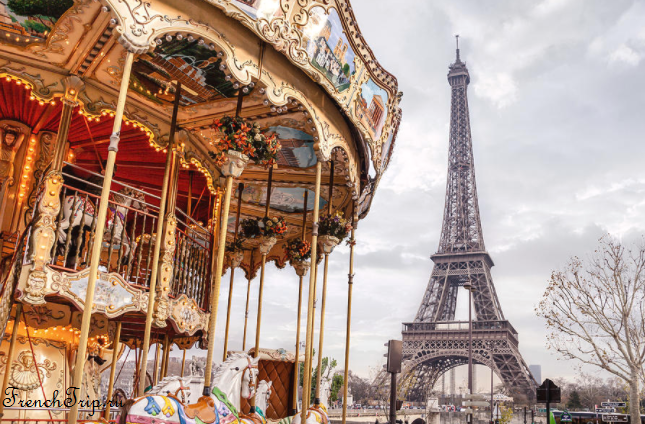
With children or older relatives, forget the long routes and the big queues. The hop-on hop-off sightseeing buses and the boat trips on the Seine show you the main sights without the kilometres. Plan around parks and playgrounds: the Luxembourg Gardens, with their playground, puppet theatre and the little sailing boats children push across the pond, can be a better day than the stairs of Montmartre, which are hard work with a pushchair. Old-fashioned carousels turn in many squares, including one by the Eiffel Tower.
Safety
- Pickpockets work the crowds around the Eiffel Tower, the Louvre, Notre-Dame, the Sacré-Cœur, the metro and the big stations. Carry your phone and wallet in a front pocket or a zipped bag, and be careful when a stranger asks you a question or bumps into you.
- Scams: the “found gold ring”, fake petitions for charity, and the “friendship bracelet” sellers at Montmartre. Say no and keep walking.
- Traffic. Cross only at crossings and watch for bikes, scooters and buses in their own lanes, which often run against the traffic.
- Wear comfortable shoes, carry water in summer, and take a break: a day on foot in Paris is longer than it looks on the map.
For longer visits, see our guide to Paris.
Updated: