Shopping in France
Shopping in France runs on rules: two official sales seasons fixed by the state, a tax refund with a threshold and a procedure, shops that close on Sunday and sometimes for lunch. Knowing them is the difference between a good afternoon and a wasted one.
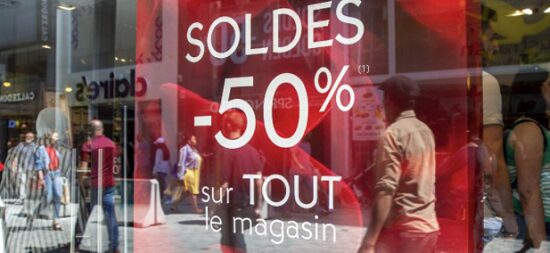
The soldes
France has exactly two official sales periods, and their start dates are set by the government for the whole country: soldes d’hiver in January and soldes d’été at the end of June. Each now runs four weeks — it was six until the law was shortened — and every shop begins on the same day.
A few departments keep their own calendar: Meurthe-et-Moselle, Meuse, Moselle and the Vosges in the east, the Alpes-Maritimes and Pyrénées-Orientales in the south, Corsica, and the overseas territories. Check the year’s dates before planning a trip around them — they are published officially and move by a week or two.
How they go. On the first morning the big stores open early and stay open late, with queues at the doors, and they usually open on the first Sunday. Discounts start modest and deepen week by week, while the stock thins out. If you take a common size, go early; if you do not, the end of the season is when the good things are left and cheapest.
Outside the official periods, shops may run short promotions of their own — the Paris department stores discount the new spring collection for a week or two in March — and a tourist card usually gets you around 10% in the big stores at any time of year. See sales in France.
Tax free
Visitors resident outside the European Union can reclaim the VAT on what they carry home. The standard rate is 20%, with 10% on some goods and 5.5% on food and books; what you actually receive after the refund company’s commission is nearer 12%.
The threshold is a purchase of more than 100€ in one shop on one day — it was 175€ until 2021, so older guides are wrong. Not everything qualifies: tobacco, medicines, vehicles and their parts, weapons, postage stamps and cultural goods over fifty years old are all excluded.
The procedure:
- Ask the shop for a bordereau de détaxe at the till, with your passport — the form must be in the name of the person who will leave the EU with the goods.
- At the airport, before checking the luggage in, scan the barcode at a PABLO kiosk. The screen turns green and the form is validated electronically; there is no queue at a customs desk unless the kiosk sends you to one.
- Collect the refund — on a card, usually within a few weeks, or in cash at a refund desk for a further fee.
Validate on leaving the European Union, not France. If you fly home from Germany, the stamp happens in Germany; if you cross into Switzerland, which is outside the EU, it happens in France.
Where to shop in Paris
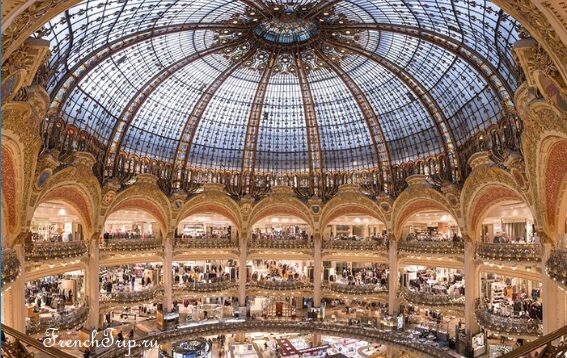
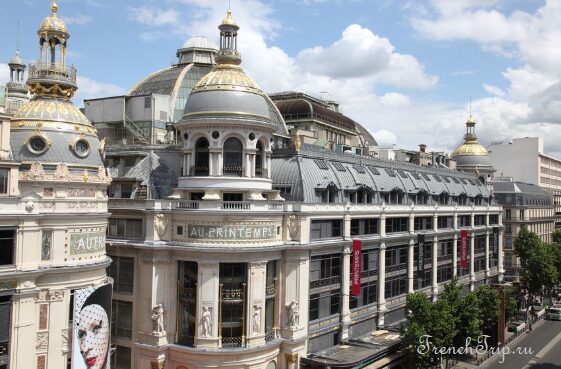
Department stores. Galeries Lafayette and Printemps on the Boulevard Haussmann, Le Bon Marché on the Left Bank — all three are worth entering for the architecture, and all three run tax-free desks and tourist discounts.
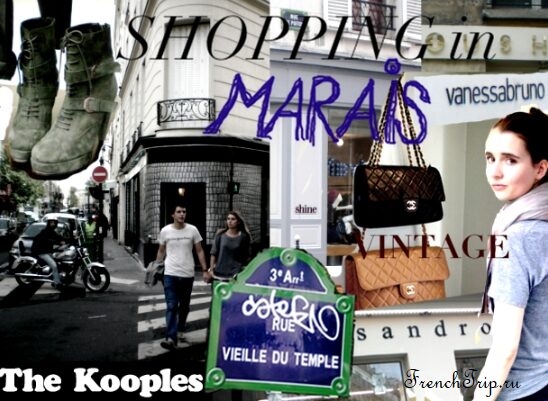
Rue de Rivoli for chain stores under the arcades; the Champs-Élysées for flagship stores that are really showrooms; the Marais for small independent shops, open on Sunday when most of the city is shut.
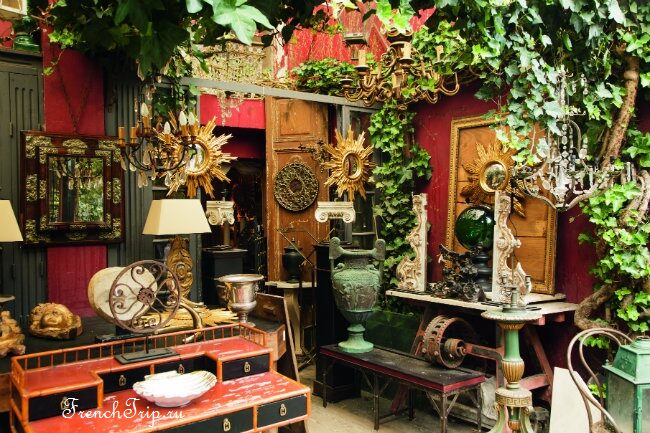
Flea markets and brocantes. Saint-Ouen in Paris is the largest antiques market in the world; every provincial town has its own brocante or vide-grenier on weekends, which is where the interesting things actually are.
Outlet villages sit outside the cities — La Vallée Village east of Paris is the best known — with discounts of around 30%, deeper in the sales. See outlet stores in France.
What is actually worth buying
Ignore the souvenir shops. The things France does better than anywhere are edible or practical: cheese and wine from a market or a cave; salted butter caramel and biscuits in tins from Brittany; mustard from Dijon; sea salt from Guérande; herbs and olive oil from Provence; knives from Thiers or Laguiole; copper pans from a kitchen shop; and the pharmacy skincare that costs a third of what it does abroad. See French cuisine for what to look for regionally.
Three towns are destinations in themselves. Grasse is the perfume capital: the old houses sell their own scents, and several run workshops where you blend one. Lyon built its fortune on silk, and the Croix-Rousse workshops still sell scarves and fabric woven in the city. Aix-en-Provence has the best market days in Provence and the calissons that belong to the town.
Opening hours
Shops generally run 10:00–19:00 and close on Sunday, with exceptions in designated tourist zones, the Marais, and around the big stations. In small towns expect a lunch break of an hour or two, and in villages a closing day — often Monday. Bakeries run on their own schedule, opening early and closing when the bread is gone.
Markets are the exception and the highlight: most towns hold one or two mornings a week, they finish around 13:00, and they are where you will spend money you did not plan to.
Updated: