Gorges du Verdon
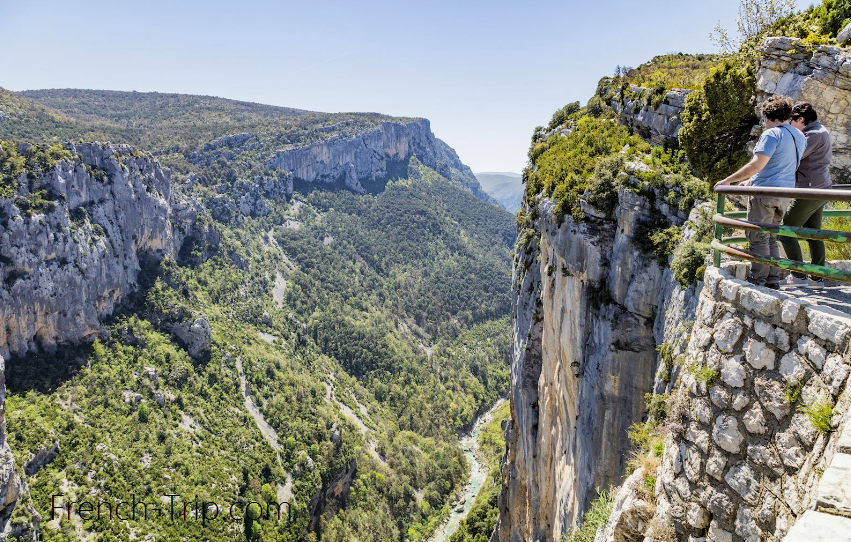
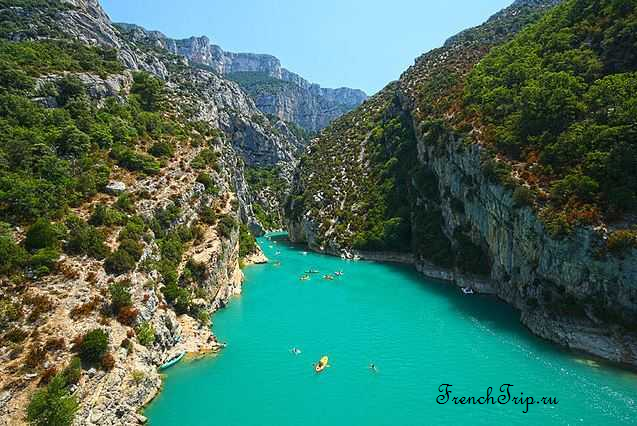
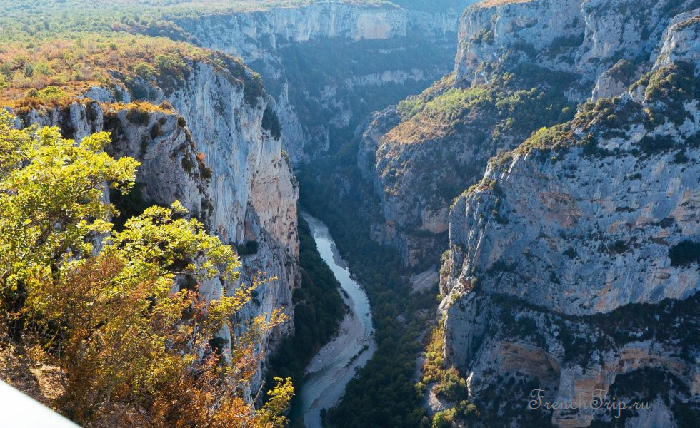
The Gorges du Verdon are the deepest and most spectacular gorges in France, and one of the great sights of Provence. In places the limestone walls rise 700 metres above the river. The most dramatic stretch — the Grand Canyon du Verdon — runs for about 21 km between the villages of Castellane and Moustiers-Sainte-Marie.
The colour of the water is the thing everyone remembers. The Verdon is named for it: a green-turquoise that comes from glacial minerals and fine limestone suspended in the flow.
The river
The Verdon rises at 2,150 m in the south-western Alps near the Col d’Allos and runs south-west through Colmars and Saint-André-les-Alpes, past Castellane and into the canyon. After some 175 km it joins the Durance at Vinon-sur-Verdon.
Between 1929 and 1975 a series of dams created the lakes that now punctuate its course — Castillon, Chaudanne, Sainte-Croix, Quinson and Esparron. Lac de Sainte-Croix, at the western end of the canyon, is where most visitors swim and hire boats.
Grand Canyon du Verdon
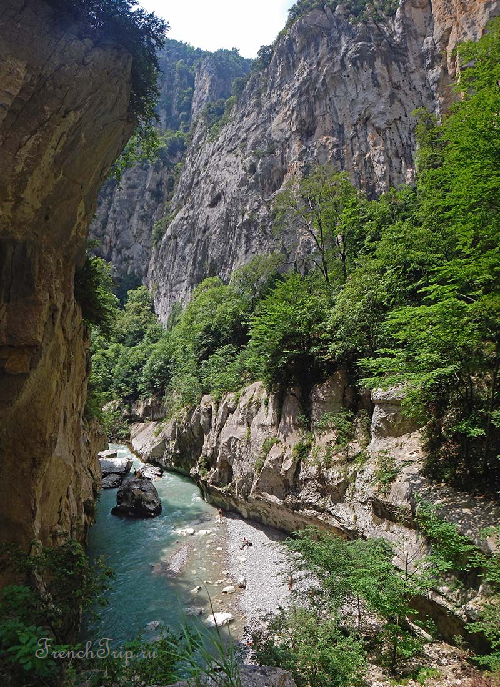
The canyon was cut through Jurassic limestone as the Alps rose, and it is unique in Europe at this scale. The surrounding country is now the Parc naturel régional du Verdon.
Until the nineteenth century the deepest sections were considered impassable; only local woodcutters went down on ropes, looking for timber. The first full descent was made in 1905 by the speleologist Édouard-Alfred Martel, and the road along the rim came later still.
The three rim roads
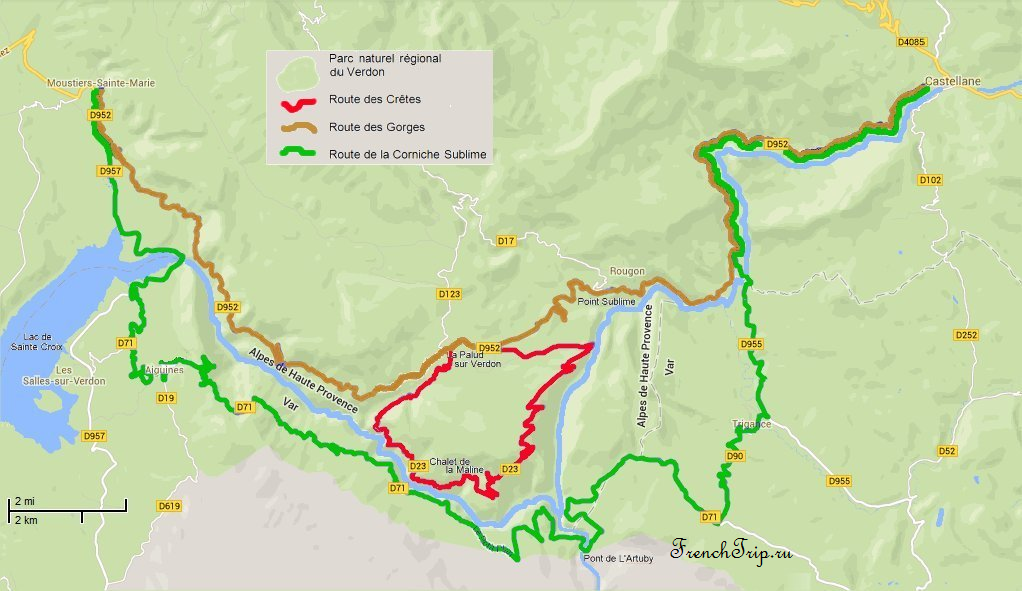
There is no road through the canyon — only along its rims. Which one you take determines what you see, and this is the main planning decision.
Route des Gorges (north rim, D952)
From Castellane along the northern side to Moustiers, through the Point Sublime and the Couloir Samson. The classic route, and the busiest.
Corniche Sublime (south rim, D71)
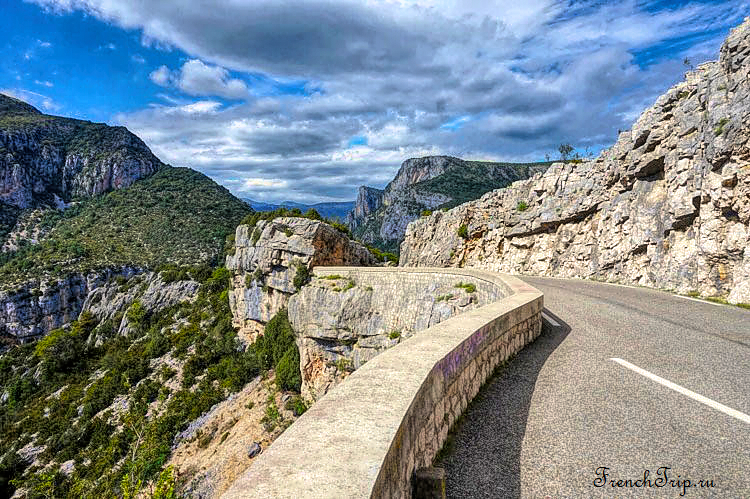
The southern road, and for most people the more spectacular of the two: it runs closer to the edge, with the Balcons de la Mescla and the Pont de l’Artuby — at 182 m, the highest bridge in Europe when it was built, and now a bungee-jumping site.
Route des Crêtes (D23)
A 23 km loop off the northern route above La Palud-sur-Verdon, with fourteen marked viewpoints looking straight down into the canyon. It is one-way for much of its length, so check the direction before you set off, and it usually closes in winter.
Driving the full circuit of both rims is around 130 km and takes a full day with stops. The roads are narrow, winding and busy in summer; a motorhome or a caravan is a poor idea.
What to do
- On the water — electric boats, pedalos and kayaks can be hired at Lac de Sainte-Croix and taken up into the mouth of the canyon. This is the view from below, and it is worth having as well as the view from above.
- Walking — the Sentier Martel is the famous one: about 15 km along the canyon floor, with tunnels and ladders, taking six to eight hours one way. It needs a torch, water and a plan for getting back, as it is not a loop. Shorter paths run down from several points on both rims.
- Climbing — the Verdon is one of the best-known limestone climbing areas in the world, with hundreds of routes on the walls around La Palud.
- Rafting and canyoning — organised from Castellane in the upper section.
Villages along the gorge
- Moustiers-Sainte-Marie — at the western end, built into a cleft in the cliff with a gilded star strung on a chain between the rock faces above it. Famous for faience pottery since the seventeenth century, and one of the Plus Beaux Villages de France.
- Castellane — the eastern gateway, under a rock topped by a chapel.
- La Palud-sur-Verdon — the base for climbers and walkers, in the middle of the north rim.
- Aiguines — above Lac de Sainte-Croix on the southern side, with a château and the best views over the lake.
Getting there
A car is effectively necessary. Public transport to the gorge is sparse — a few seasonal buses from Castellane and Moustiers, nothing that lets you follow the rim roads. Most visitors come from the coast or from Aix.
- From Nice — about 2 hours to Castellane
- From Cannes — around 2 hours
- From Aix-en-Provence — about 1 hour 40 to Moustiers
- From Avignon — roughly 2 hours 30
See driving in France and the traffic rules before you set off — the mountain roads here are demanding.
When to go
May, June and September are ideal: the water is high, the roads are open and the traffic is manageable. July and August bring heat and queues on the narrow roads, though the swimming is best. The Route des Crêtes and some paths close from about November to March, and snow is possible on the higher ground.
Take water and proper shoes whatever you plan. There is very little shade on the rims, and the descents to the river are steep in both directions.
See the natural sights of Provence and what to do in Provence.
Nearby
Other places on this site within easy reach, as the crow flies:
- Moustiers-Sainte-Marie — 14 km
- Tourtour — 18 km
- Riez — 20 km
- Sillans-la-Cascade — 24 km
- Valensole — 29 km
- Fayence — 33 km
Weather in Gorges du Verdon
| Month | Day | Night | Rainfall |
|---|---|---|---|
| January | +9° | -1° | 64 mm |
| February | +10° | -2° | 54 mm |
| March | +14° | +1° | 62 mm |
| April | +17° | +5° | 78 mm |
| May | +21° | +8° | 81 mm |
| June | +26° | +12° | 64 mm |
| July | +29° | +14° | 35 mm |
| August | +28° | +14° | 52 mm |
| September | +24° | +11° | 54 mm |
| October | +19° | +8° | 89 mm |
| November | +13° | +4° | 100 mm |
| December | +10° | 0° | 72 mm |
This page in Russian: Gorges du Verdon (Вердонское ущелье)
Updated: