Mulhouse
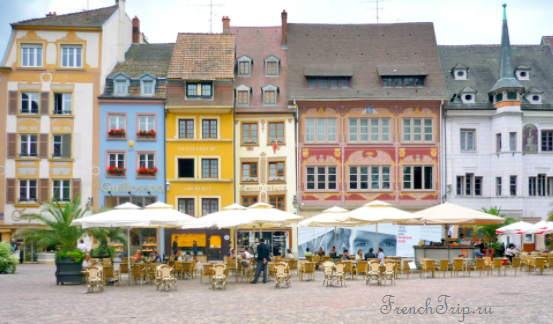
Mulhouse is in the far south of Alsace, on the Swiss border next to Basel, and it is the odd one out. It is not a pretty half-timbered village — it is an industrial city, the French Manchester, and its attraction is a set of technical museums that have no equal in Europe.
Be straightforward about it: apart from the central square with its town hall and church, and the nineteenth-century workers’ quarter, there is not a great deal of architecture. What there is instead is the largest car museum in the world, and that is worth the trip on its own.
An independent republic until 1798
Mulhouse belonged to the Décapole, the league of ten free imperial cities of Alsace, from 1354 to 1515. Then it did something none of the others did: it allied itself with the Swiss Confederation. As a result it was not annexed by France at the Peace of Westphalia in 1648 along with the rest of the Sundgau.
For close to three centuries it was an enclave — a free, independent, Calvinist republic inside Alsace, the Stadtrepublik Mülhausen, tied to Switzerland. Its citizens voted to join France on 4 January 1798, and the treaty was signed that December, during the Directory.
That history explains the city: the small centre, the Protestant temple where other Alsatian towns have a Catholic church, and the outward tilt towards Basel that is still obvious today.
Industry
From the mid-eighteenth century the Koechlin family began printing cotton here, and Mulhouse became one of the leading textile centres in France. André Koechlin moved into machinery and started building railway equipment in 1842; his firm employed 1,800 people by 1839 and became one of the six great French locomotive makers.
Textiles, then leather, then chemicals and engineering. The city was called the city of a hundred chimneys, and it built some of the most advanced workers’ housing of its day — the Cité ouvrière, laid out on a grid from 1853, with a school and a small vegetable garden for every house. Around 1,200 of those houses survive and the quarter is still lived in.
The museums
Cité de l’Automobile
The main event. Around 400 cars over 17,000 m² — the largest collection of its kind anywhere. It began as the private hoard of the Schlumpf brothers, textile magnates who spent the company’s money on cars in secret through the 1960s and 70s; when the firm collapsed in 1977 the workers occupied the mill and found the collection inside. It was seized, listed as a historic monument and opened to the public.
It holds more than a hundred Bugattis, including two of the six Bugatti Royales ever built — Bugatti was based at Molsheim, up the wine route. Allow at least half a day. If you have children who care about cars, this is non-negotiable.
Cité du Train
The French national railway museum, and the largest in Europe: locomotives from the earliest steam through to the TGV, presidential carriages, and a good deal you can walk through.
The others
- Musée de l’Impression sur Étoffes — printed textiles, with an archive of six million fabric samples, the reference collection for the industry worldwide
- Électropolis — the history of electricity, built around a colossal 1901 steam generator that still runs for visitors
- Musée du Papier Peint — wallpaper, at nearby Rixheim, and more interesting than it sounds
Four national-standard technical museums in one small city. That is the reason to come.
Place de la Réunion
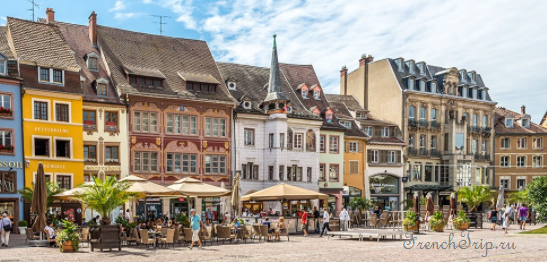
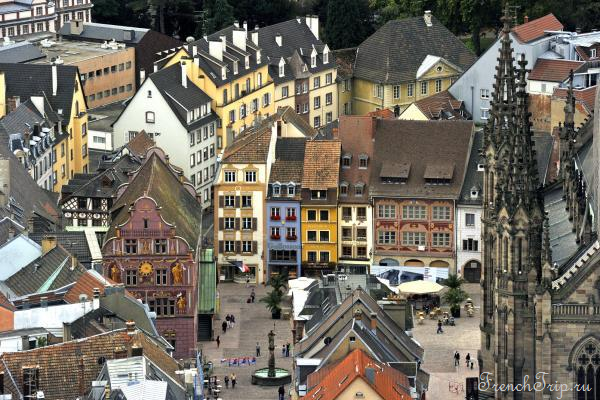
The historic centre, and a genuinely handsome square. The Hôtel de Ville of 1552 is Rhenish Renaissance, painted in shades of pink with trompe-l’œil allegories all over the front — one of the most decorated town halls in France. Beside it the neo-Gothic Temple Saint-Étienne, Protestant and the tallest of its kind in France, holds fourteenth-century stained glass rescued from the medieval church it replaced.
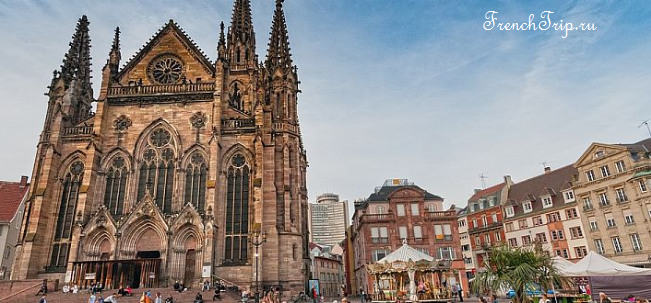
Old houses, a fountain and a traditional carousel complete the square, and the pedestrian shopping streets run off it.
Festivals
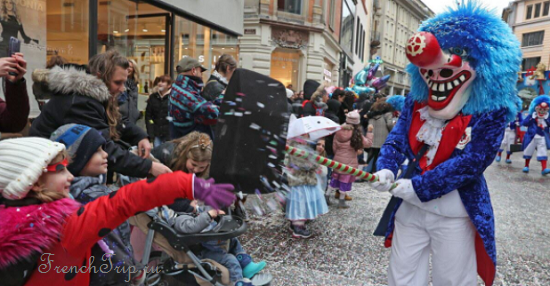
- Carnival — late February to early March, in the Basel tradition rather than the French one: masks, fifes and drums, and a proper street event
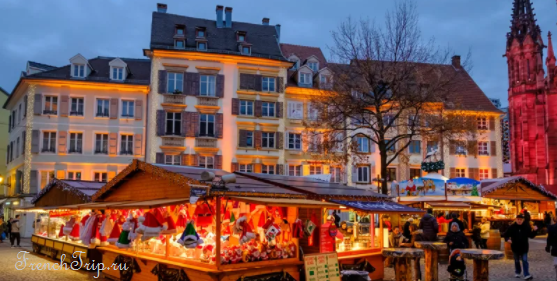
- Christmas market — from late November, and unlike any other in Alsace: each year has a new fabric designed for it, printed locally, and the market is dressed in it. A direct descendant of the textile industry.
- Beer and street-art festivals through the summer
What to eat
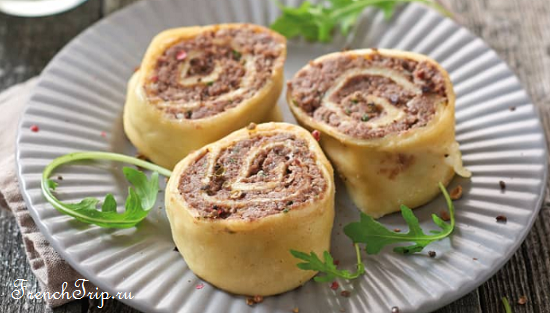
Alsatian with a Swiss lean. Tarte flambée is everywhere and cheap. The local things to look for are fleischschnacka — pasta rolled round minced beef, sliced and browned in stock — and sürlawerla, a sharp liver dish for the adventurous. The moricette, a pretzel-dough roll invented by a Mulhouse baker, makes the best quick sandwich in Alsace.
Getting to Mulhouse
- By air — EuroAirport Basel-Mulhouse-Freiburg, 25 km away, shared by three countries and well served by low-cost airlines. Note that it has separate French and Swiss exits; take the French one for Mulhouse.
- By train — TGV from Paris in about 3 hours, and frequent services from Strasbourg (50 min), Colmar (30 min) and Basel (20 min).
- By car — the A35 and A36; Basel is 35 km, Freiburg 60 km. See parking in France.
The centre is small and walkable; the museums are out of town, on the tram network.
Around Mulhouse
- The Alsace wine route — Thann, its southern end, is 20 minutes away, and Rouffach half an hour north
- Écomusée d’Alsace — an open-air museum of some 70 rebuilt Alsatian buildings at Ungersheim, the largest in France, and very good with children
- Basel — 20 minutes by train, with the art museums
- The Sundgau — the hill country south, and the Ballon d’Alsace in the Vosges to the west
When to go
Any time — the attractions here are indoors, which makes Mulhouse one of the few places in Alsace that works in bad weather. Carnival in late winter and the Christmas market in December are the two dated reasons to come.
One practical note: Mulhouse is more industrial and more mixed than the rest of Alsace, and away from the central square it does not look or feel like the tourist Alsace of the wine route. Come for the museums and know what you are coming for.
See Alsace.
Where to park in Mulhouse
| Car park | Spaces | Fee | From centre |
|---|---|---|---|
| Place des Cordiers | — | paid | 70 m |
| Maréchaux | 558 | paid | 290 m |
| Centre underground | 648 | paid | 370 m |
| Place Salvator | — | free | 390 m |
| Bâle | 300 | paid | 420 m |
| Parking Gare Centrale 1 underground | 433 | paid | 610 m |
| Porte Haute | 225 | paid | 610 m |
| Parking Mercerie | — | — | 790 m |
Nearby
Other places on this site within easy reach, as the crow flies:
- Cernay — 14 km
- Soultz-Haut-Rhin — 18 km
- Thann — 19 km
- Guebwiller — 20 km
- Murbach — 24 km
- Eguisheim — 33 km
Weather in Mulhouse
| Month | Day | Night | Rainfall |
|---|---|---|---|
| January | +5° | -1° | 58 mm |
| February | +7° | -1° | 49 mm |
| March | +12° | +2° | 50 mm |
| April | +17° | +5° | 50 mm |
| May | +21° | +9° | 78 mm |
| June | +24° | +12° | 68 mm |
| July | +26° | +14° | 63 mm |
| August | +26° | +14° | 67 mm |
| September | +22° | +10° | 61 mm |
| October | +16° | +7° | 70 mm |
| November | +10° | +3° | 59 mm |
| December | +6° | 0° | 75 mm |
This page in Russian: Mulhouse (Мюлуз)
Updated: