Most Beautiful Places in Normandy
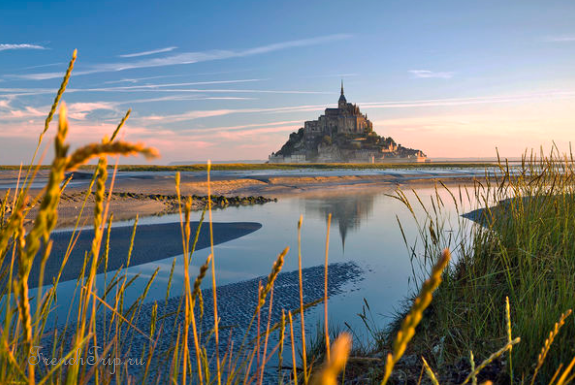
Normandy looks calm and green today, but it has had a turbulent history. From the 9th century it was settled by Vikings, who gave it its name, the land of the Northmen. For centuries afterwards England and France fought over it, and in June 1944 its beaches saw the largest seaborne invasion in history. What remains is one of the richest regions of France to travel in: medieval abbeys and castles, chalk cliffs, half-timbered villages, gardens, the light that drew the Impressionists, and very good food, from Camembert and cider to seafood.
Here are the ten places and areas we think are the most beautiful, in rough order. For the region as a whole, start with our Normandy guide.
1. Mont-Saint-Michel and its bay
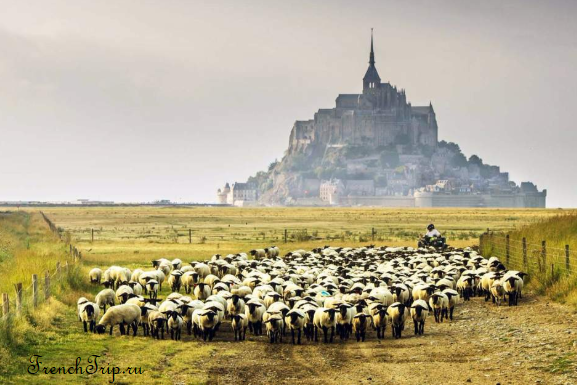
The abbey on its rocky island at the mouth of the Couesnon, rising above a vast bay of sand and tide, is the best-known sight in Normandy and one of the most visited in France. It is a UNESCO World Heritage Site. Walls and old houses crowd the slope of the rock, and the abbey crowns the top. Cars are not allowed near it: you park on the mainland and take the free shuttle or walk the last few kilometres along the causeway.
- Come early in the morning or stay into the evening; in the middle of the day the single main street is packed. Book the abbey visit in advance in summer.
- Look out for the high spring tides, when the sea rushes in around the rock.
- For the view from the other side, drive round the bay to the viewpoint at Roche-Torin, and visit Avranches, whose museum holds the medieval manuscripts of the abbey.
Never walk out across the bay without a licensed guide. The tide comes in very fast over flat sand, and there are patches of quicksand. Every year people are caught out and have to be rescued. Guided crossings on foot are a wonderful experience; going alone is not.
2. The Alabaster Coast and Étretat
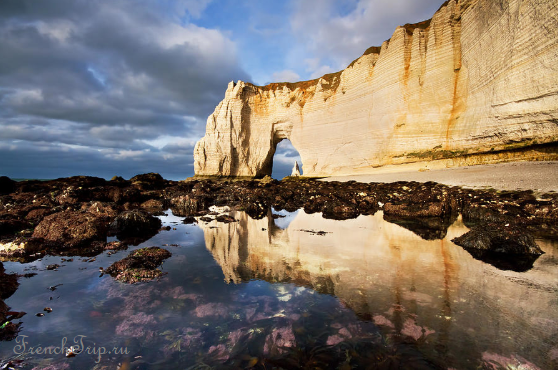
The Côte d’Albâtre runs for about 130 km from Le Havre to Le Tréport. It is a line of white chalk cliffs, 30 to more than 100 metres high, broken by small valleys where fishing villages sit beside pebble beaches. Its most famous spot is Étretat, where the sea has carved the chalk into arches and a free-standing needle. It is worth staying the night: the car parks fill up by mid-morning, the walks to the cliffs take time, and the cliffs are at their best in the evening light.
Also on this coast:
- Fécamp, a fishing port with a great abbey church and the Palais Bénédictine, where the liqueur is made; Cap Fagnet above it has a sailors’ chapel, wartime bunkers and views both ways.
- Dieppe, with a castle guarding the harbour.
- Veules-les-Roses, a lovely village on what is said to be the shortest river in France; Saint-Valery-en-Caux, between two cliffs; and Yport, a narrow valley village of flint houses.
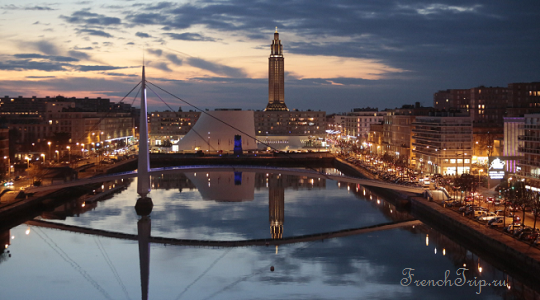
- Le Havre, rebuilt after 1945 by Auguste Perret and listed by UNESCO for its post-war architecture, with an excellent museum of Impressionist painting, the MuMa.
Safety on the cliffs. Chalk is soft and the cliffs fall without warning. Keep back from the edge at the top, and do not sit or sunbathe at the foot of the cliffs. Some viewpoints mean climbing steep steps or paths, so wear good shoes. And although Normandy is known for rain, the summer sun on the cliff tops can be fierce, with a cool sea breeze that hides it, so bring a hat.
3. Rouen
Rouen, the historic capital of Normandy, is one of the most beautiful cities in France. Its streets are lined with colourful half-timbered houses, and its Gothic cathedral is a lacework of stone that Monet painted more than thirty times. Joan of Arc was tried and burned here in 1431.
- The Gros-Horloge, an astronomical clock set in a Renaissance arch over the main street, with a mechanism dating from 1389.
- The cathedral, which holds the tombs of the early dukes of Normandy and the heart of Richard the Lionheart.
- The Joan of Arc museum and the modern church on the Place du Vieux-Marché, where she died.
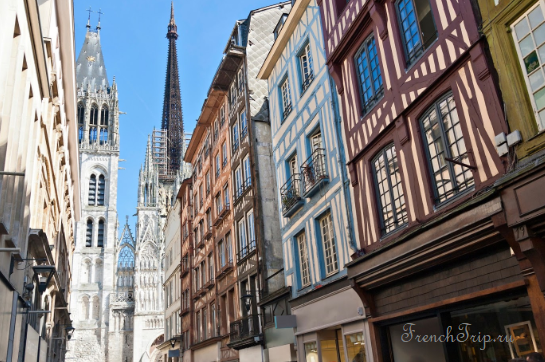
4. Pays d’Auge and Honfleur
The Pays d’Auge, inland from the Calvados coast, is the Normandy of the postcards: rolling green farmland, orchards, half-timbered farmhouses and manors, and some of France’s most famous cheeses and drinks, Camembert, Pont-l’Évêque, Livarot, cider and Calvados. Beuvron-en-Auge is one of the most beautiful villages in France.
On the coast are the classic seaside resorts with long sandy beaches: Deauville, elegant and fashionable since the 19th century, Trouville, Villers-sur-Mer and Cabourg, the model for Proust’s Balbec. At the mouth of the Seine is Honfleur, with its old harbour ringed by tall, narrow slate-fronted houses, beloved of the Impressionists.
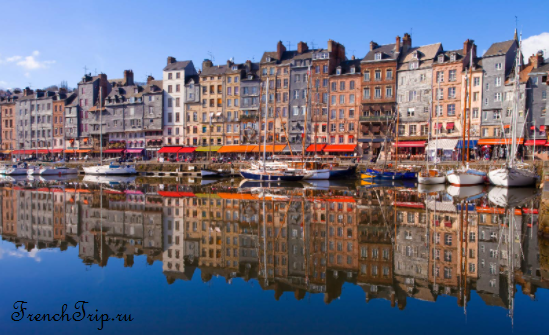
- This coast is a favourite weekend escape for Parisians and very busy in summer and in school holidays; book ahead or come out of season.
- In Honfleur, leave the car at one of the large car parks at the entrance to the town and walk; the old harbour is about five minutes away, and driving in the centre in summer is slow.
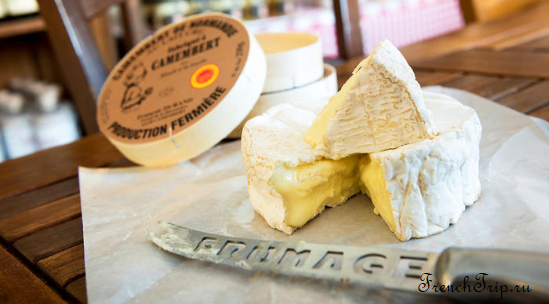
For what to eat and drink, see the cuisine of Normandy.
5. Vexin Normand and Giverny
The Vexin Normand, between Rouen and Paris, combines history, art and countryside as well as anywhere in Normandy. Its best-known sight is Giverny, where Claude Monet lived for 43 years and made the garden and the water-lily pond that he painted again and again. The house and gardens open from spring to autumn; it is very popular as a day trip from Paris, so book a time slot and come early.
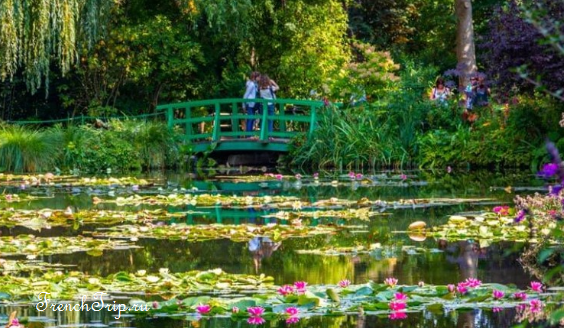
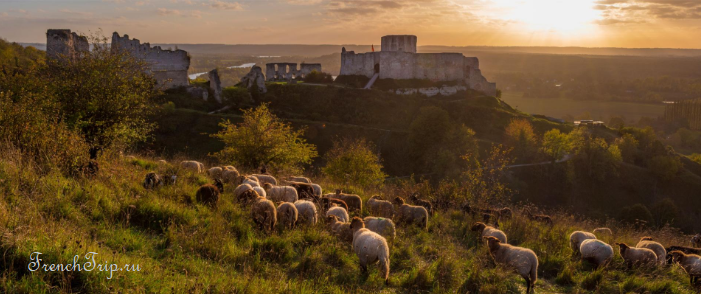
- Château Gaillard, the ruined castle that Richard the Lionheart built in just two years at the end of the 12th century, high above the Seine and the town of Les Andelys.
- The round keep of the castle of Gisors.
- Vernon, with its old mill perched on the piers of a medieval bridge.
- Lyons-la-Forêt, a village of half-timbered houses in the middle of a great beech forest, and the ruined Cistercian abbey of Mortemer nearby.
See also our page on French painters, many of whom worked in this part of Normandy.
6. The Cotentin Peninsula
The Cotentin, the peninsula that sticks out into the Channel at the north-west of Normandy, is wilder than the rest of the region, with cliffs, dunes, rocky points, lighthouses and some of the oldest rocks in France. Its main town is Cherbourg, the setting of the 1964 film The Umbrellas of Cherbourg, with a large sea museum, the Cité de la Mer, where you can go inside a nuclear submarine.
- The cliffs of the Nez de Jobourg and the wild cape of La Hague.
- The lighthouse of Gatteville, one of the tallest in France.
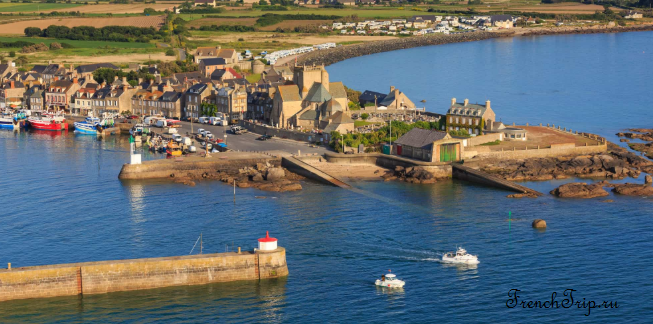
- Barfleur, one of the most beautiful villages in France, and Saint-Vaast-la-Hougue, with its oyster beds and the island of Tatihou, whose Vauban tower is part of a UNESCO World Heritage Site.
Roads are small and distances longer than they look on the map, so base yourself in one place for a few days. Check the tide tables: many places look completely different at low and high tide. On foot, Tatihou can only be reached at low tide, so check the times before you set off, and never try to wade back as the tide rises.
7. The Seine meanders (Boucles de la Seine)
Between Rouen and the sea, the Seine winds in great loops through a regional nature park of forests, cliffs and marshes. This is the country of the great medieval abbeys: Jumièges, the most romantic ruin in France, Saint-Wandrille, where monks still live, and Saint-Martin-de-Boscherville. There are hundreds of kilometres of footpaths, and the Marais Vernier is good for birdwatching. Small ferries carry cars across the river at several points, and they are free. Caudebec-en-Caux makes a central base.
8. The D-Day landing beaches
The five beaches of the Allied landings of 6 June 1944, Utah, Omaha, Gold, Juno and Sword, stretch along the coast north of Bayeux and Caen. Together with the museums, cemeteries and remains along them, they make one of the most moving places to visit in Europe.
- The Normandy American Cemetery at Colleville-sur-Mer, above Omaha Beach.
- The steel sculpture Les Braves on Omaha Beach, and the cliffs of Pointe du Hoc.
- The remains of the Mulberry artificial harbour at Arromanches.
- The Caen Memorial, one of the best museums of the Second World War.
The bunkers and craters at Pointe du Hoc and elsewhere are rough ground with unfenced drops; keep to the paths and keep children close.
9. Bayeux and Caen
Bayeux, a small, well-preserved town a few kilometres inland from the beaches, is the best base for visiting them. It has a fine Gothic cathedral and is famous for the Bayeux Tapestry, the 70-metre embroidered story of the Norman conquest of England in 1066. Its museum closed in 2025 for a major renovation, and the tapestry is lent to the British Museum in London while the work goes on, so check before you plan a visit around it.
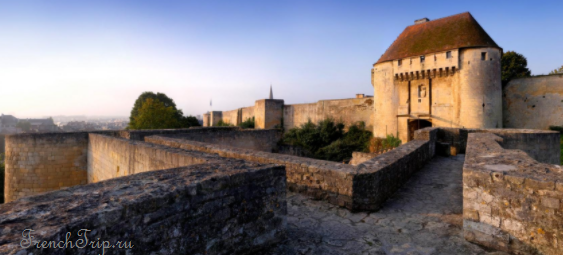
Caen, the largest city of the area, was badly damaged in 1944 but kept its great monuments: the castle of William the Conqueror and the two abbeys he and his wife Matilda founded, the Abbaye aux Hommes, where he is buried, and the Abbaye aux Dames.
10. Suisse Normande
Normandy is not a mountainous region, but in the Suisse Normande, the gorges of the Orne south of Caen, you could almost believe you were in the hills. It is a small area you can see by car in a day, but it is best for walking, canoeing and rock climbing. The finest views are from the Roche d’Oëtre and around Clécy, where people bungee-jump from an old railway viaduct.
More ideas
- The most beautiful cities in France
- The most beautiful small towns in France
- The most beautiful villages in France
- Over the border in Brittany, Saint-Malo is less than an hour from Mont-Saint-Michel.
Updated: