Cuisine of Hauts-de-France
The cooking of the north rests on three things: beer, chips and generosity. Lille, Calais, Arras, Amiens — this is Flanders as much as France, and the kitchen is closer to Belgium than to Paris. It is rich, plain and built for long winter evenings.
Beer in the pot
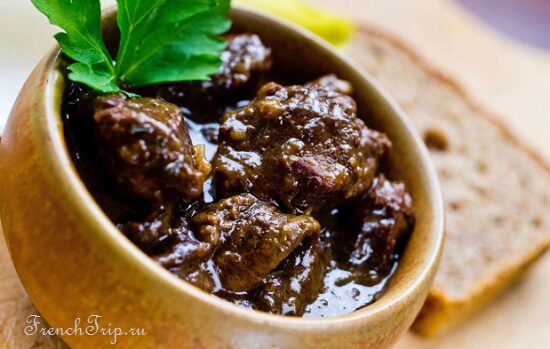
Carbonade à la flamande is the dish of the region: pieces of beef seared first, then cooked slowly with onions in a strong local beer, often with a slice of spiced bread and mustard stirred in at the end. Sweet, dark and deep.
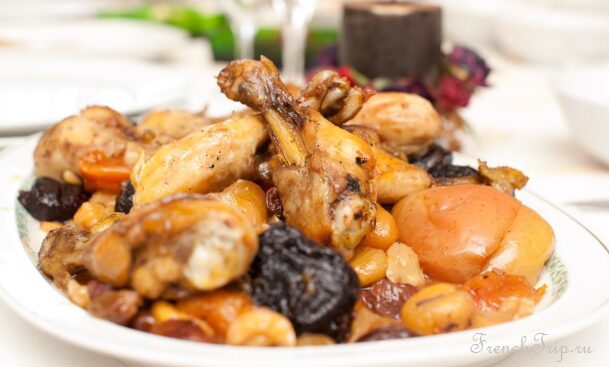
Coq à la bière is the same idea with poultry: chicken stewed in beer with vegetables, at its best with a free-range bird from Licques. Carpe à la bière takes carp from the local rivers, cooks it in butter with onion, shallot, celery, bay and thyme, then finishes it in strong beer with spiced bread.
The Flemish plate
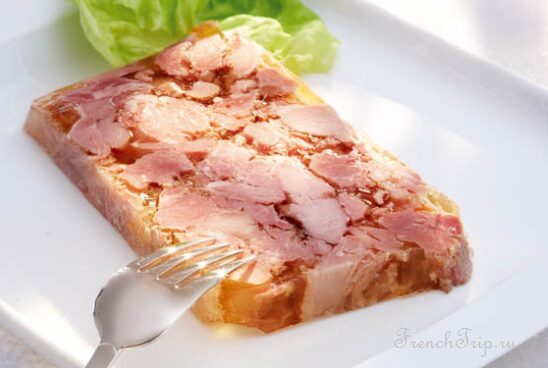
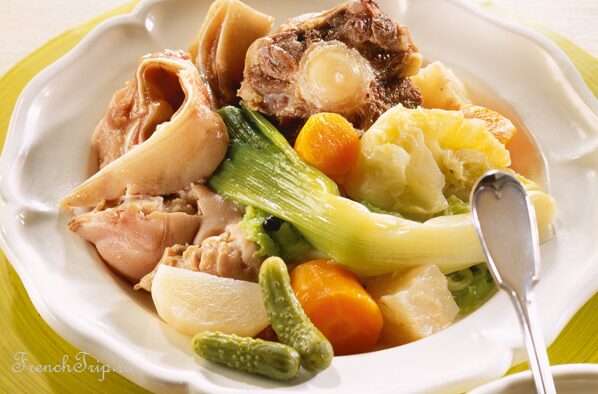
Potjevleisch — «little pot of meat» — sets four white meats (rabbit, chicken, veal, pork) in their own jelly and serves them cold, with chips. Hochepot flamand is the hot counterpart: a hotpot of mixed meats and winter vegetables cooked together for hours.
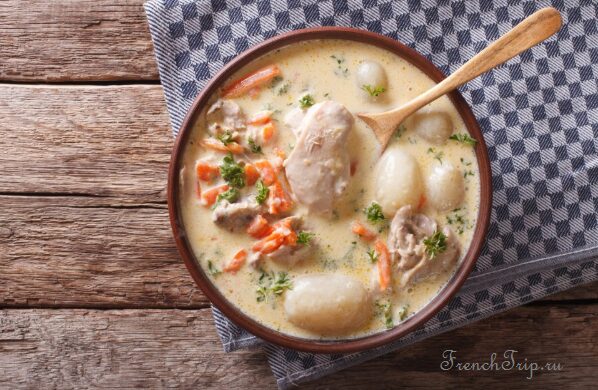
Waterzooi, borrowed from just over the border, is chicken or fish in a creamy vegetable broth — the gentlest dish in the regional repertoire. Andouillettes, small tripe sausages, are an Arras speciality and come with chips or mash. Anguilles au vert are eels cooked with spinach and sorrel in white wine, served hot or cold on fried bread.
Tarts, and the cheese that makes them
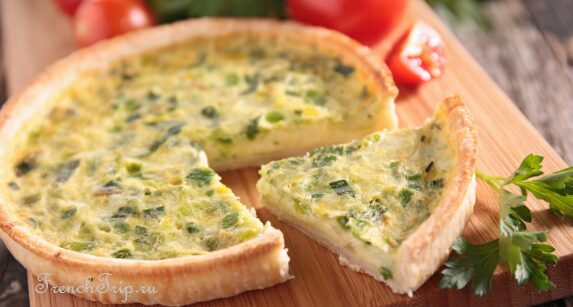
Flamiche can be sweet or savoury — the word is Flemish for a tart — and the famous one is made with leeks. Many are baked with Maroilles, the powerful washed-rind cheese of the Avesnois, which also gives the region its tarte au maroilles, a cheese tart strong enough to be a meal.
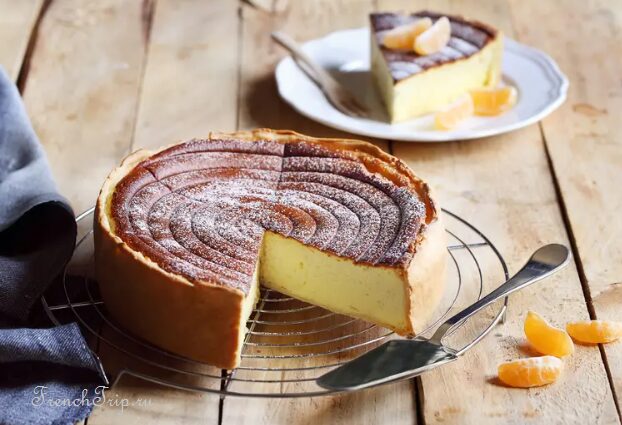
Sweet baking runs to pumpkin waffles, sugar tarts and the gros bordés tart, and the north’s best-known sweet is the bêtise de Cambrai, a striped mint drop created, so the story goes, by a confectioner’s apprentice getting a recipe wrong.
Chips, mussels and the sea
Chips are not a side dish here, they are a category. The friterie — often a van parked on a square — sells them in a paper cone with a choice of a dozen sauces, and no northern meal is complete without them. Put them next to a pot of mussels and you have moules-frites, the summer dish of the whole coast: see French mussels.
Boulogne-sur-Mer is the largest fishing port in France, and the coast lives on herring — smoked, salted, marinated — along with mackerel and sole. The smoked herring salad with warm potatoes is on every menu between Calais and Dunkirk.
Inland, the vegetable that matters is the endive, called chicon here: braised, wrapped in ham and baked under béchamel as chicons au gratin.
Soup, and what to drink
There is a northern garlic soup, from the Douai area, quite distinct from the Languedoc version — see French soups.
Otherwise: beer. The region brews more of it than anywhere else in France, from the farmhouse bière de garde to the breweries around Lille, and the beer in your glass is very often the beer in the pot. The other local drink is genièvre, the juniper spirit distilled around Houlle and Wambrechies, drunk cold after a heavy plate or poured into coffee.
Drink either of them in an estaminet, the northern equivalent of the Alsatian winstub: a plain room with long tables, board games on the shelf, and a short menu of exactly the dishes above.
Cheese and sweets
Maroilles heads a whole family of washed-rind cheeses — dauphin, flavoured with tarragon, and boulette d’Avesnes, a cone of mashed cheese with herbs and paprika, are its relatives and are stronger still. For the rest of the country’s cheeses, see French cheeses.
Sweet baking is Flemish too: the tarte au sucre of brown sugar and cream, waffles — plain, pumpkin, or the thin Lille gaufre filled with vanilla — and the sugar-crusted brioche cramique with raisins.
Neighbouring kitchens: the cuisine of Normandy to the west and the cuisine of Grand Est to the east. For the region itself, see Hauts-de-France; for the rest of the country, French cuisine.
Updated: