French soups
France has a soup for every region and a vocabulary to go with it. Some of them — onion soup, bouillabaisse — are known everywhere; most are local, cheap and built out of whatever the season gives.
How the French classify soup
Two families. Clear soups are bouillon and consommé. Thick soups are named after whatever thickens them: purées are vegetable soups thickened with starch, bisques are shellfish soups finished with cream, crèmes use béchamel, and veloutés are bound with egg, butter and cream. Rice, flour and grain do the same job in the plainer versions.
Where the word comes from
Soup began as sop — broth or stew poured over pieces of bread. The bread is still there in onion soup, floating under the cheese. The word restaurant comes from the same table: in 16th-century France a restaurer was a concentrated, cheap soup sold in the street as a remedy for exhaustion, and when a Paris tradesman opened a shop specialising in them in 1765, the name stuck to the shop rather than the soup.
The ones worth ordering
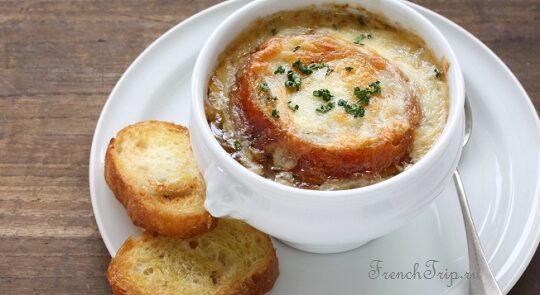
Soupe à l’oignon
The classic of Lyon and the Rhône-Alpes: caramelised onions in beef stock, baked with croutons and cheese on top. Onion soups go back to Roman times and were poor people’s food for most of their history — onions grew easily and kept. The modern version, with beef stock and slow-caramelised onion, took shape in 18th-century Paris. Even people who dislike onions tend to like it.
Bouillabaisse
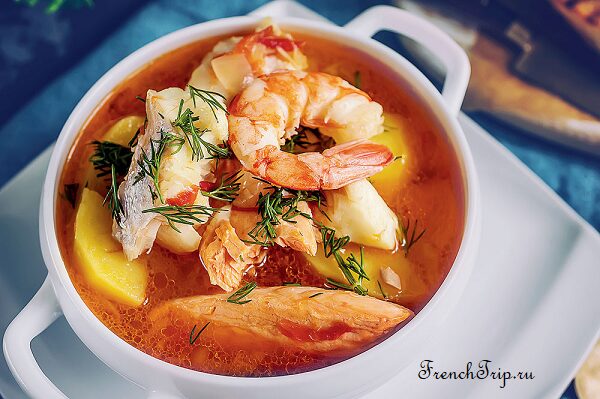
From Marseille, and the name says what to do: Occitan bolhabaissa, boil then lower the heat. Fish stewed in water or white wine with garlic, olive oil and saffron. The traditional trio is rascasse, gurnard and conger eel, with John Dory, monkfish, sea urchins, crab and spider crab joining as the pot grows. More in the cuisine of Provence.
Cotriade bretonne
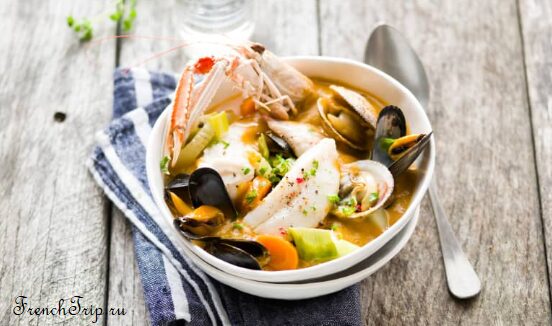
The Breton version: potatoes and several kinds of fish and shellfish in a seasoned broth. See the cuisine of Bretagne.
Marmite dieppoise
Normandy’s take on the same idea, from Dieppe: fish and shellfish in a cream and cider broth. See the cuisine of Normandy.
Soupe au pistou
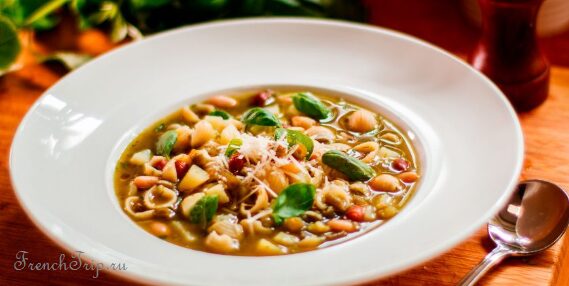
White beans, green beans, tomatoes, summer squash and potatoes, served hot or cold, finished with fresh basil crushed into olive oil. Pistou comes from the Occitan pistar, to pound — the same root as Italian pesto, though pesto adds pine nuts and cheese. In Provençal the word refers to the pestle, not the basil.
Bourride
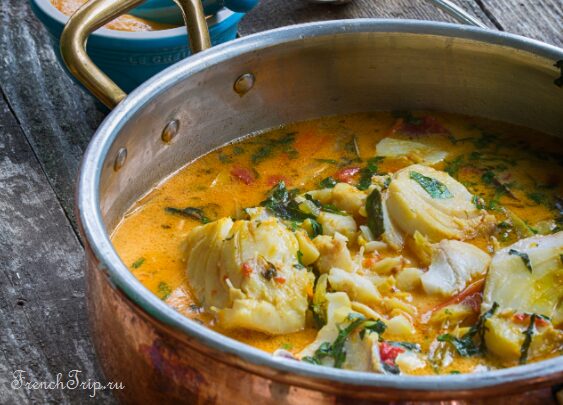
White fish stewed and thickened with aioli, found all along the Mediterranean and at its best in Sète.
Garbure
The thick meat, bean and vegetable soup of the south-west — a meal rather than a course, traditionally built around a duck or goose neck and whatever the garden had. See the cuisine of Nouvelle-Aquitaine.
Bajana
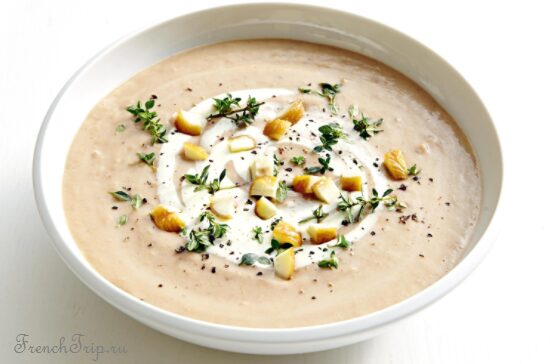
The dried chestnut soup of the Cévennes, and a reminder that chestnuts fed these mountains for centuries. Aquitaine has its own soupe aux châtaignes made with fresh sweet chestnuts.
Axoa de veau
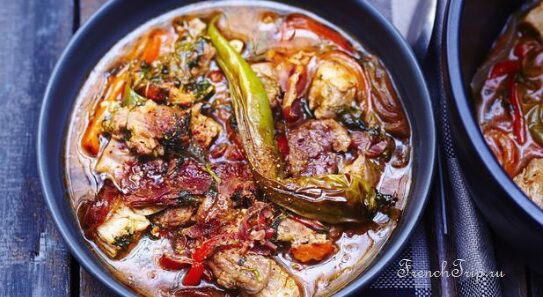
From the Basque country: chopped veal cooked down with onions, green peppers and piment d’Espelette. Thick enough to argue about whether it is a soup at all.
The shorter list
- Aigo boulido — Provence: garlic, sage and olive oil in water, poured over bread. The convalescent’s soup.
- Soupe à l’ail — the Languedoc garlic soup, with a northern version around Douai.
- Soupe à la graisse — from Caen in Normandy, built on seasoned fat kept in a pot through the year.
- Bisque de crevettes — the prawn bisque of the Charente.
- Soupe au potiron — pumpkin soup, the Auvergne version being the traditional one.
- Soupe aux haricots verts — green bean soup from Lorraine.
For the rest of the country’s cooking, see French cuisine and the 50 most popular soups in France.
Updated: