Cuisine of Grand Est
Grand Est is an administrative region rather than a culinary one: in 2016 it put together three kitchens that had spent centuries not being each other — Alsace, Lorraine and Champagne-Ardenne. What they do share is a border with Germany, Luxembourg and Belgium, a cold winter, and a taste for pork, cabbage and white wine.
Alsace
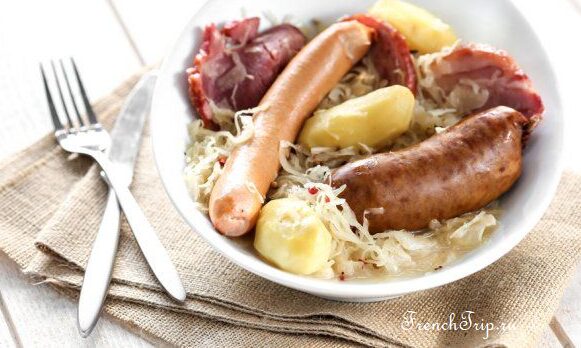
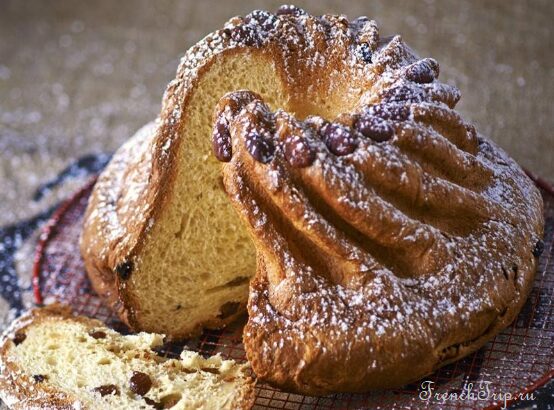
The loudest of the three. Choucroute garnie under a pile of smoked pork and sausages; tarte flambée straight from a hot oven; baeckeoffe baked in a sealed pot; coq au Riesling; knacks, Munster and horseradish; kougelhopf and, at Christmas, bredele and männele. The wine is white almost without exception — Riesling, Pinot Blanc, Gewurztraminer, Pinot Gris — and it is drunk with everything.
Full detail in the cuisine of Alsace.
Lorraine
Quieter, and responsible for one dish the whole world cooks badly. Real quiche lorraine has eggs, cream and smoked bacon, and no cheese at all. Beyond it: potée lorraine, the pork and cabbage stew; pâté lorrain, marinated pork and veal in pastry; and the mirabelle, the small golden plum that Lorraine grows more of than anywhere else and turns into tarts, jam and a fierce clear eau-de-vie.
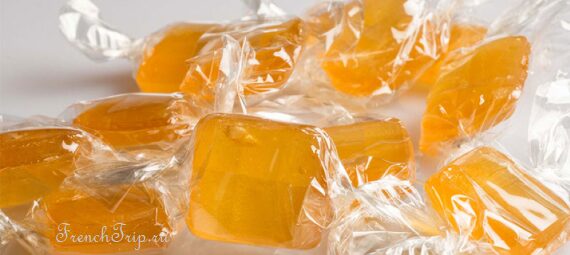
Nancy adds the bergamotes and its macarons; Commercy has the madeleine; Metz has its own tarts and the mirabelle festival in late summer. See the cuisine of Lorraine.
Champagne-Ardenne
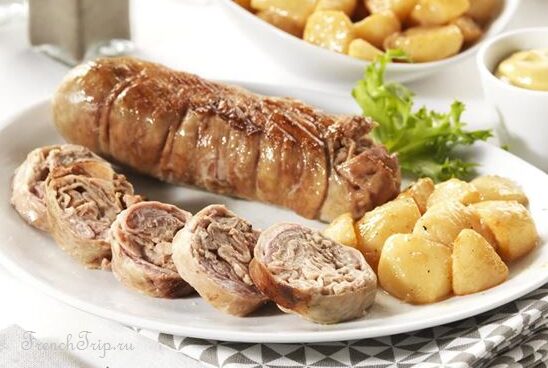
Champagne is drunk here and also cooked with: chicken in champagne, hot oysters in champagne, sabayon. The rest of the table is andouillette de Troyes, boudin blanc de Rethel, Reims ham, the potato dishes of the Ardennes, and cheeses that carry the region abroad — chaource, langres and brie.
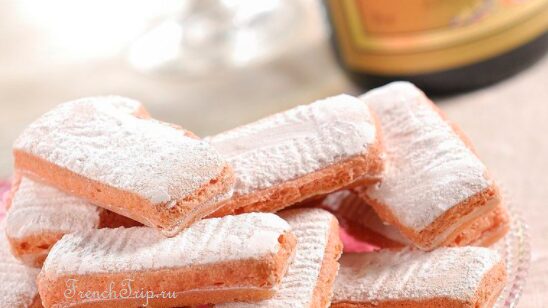
Full detail in the cuisine of Champagne-Ardenne.
The Vosges and the Ardennes
The two forested edges of the region cook differently again. The Vosges live on cheese and dairy: Munster above all, made on both slopes and eaten with cumin; tofailles, potatoes stewed with bacon and onion; blueberry tart in late summer, when the whole massif smells of them. Mountain inns called fermes-auberges serve a fixed menu of smoked meat, potatoes, cheese and a single dessert, and are worth planning a walk around.
The Ardennes are game country: wild boar, roe deer and hare from the forests, along with the dry-cured ham, the boudin blanc of Rethel, and the potato dishes that keep the whole thing standing — cacasse à cul nu, salad with bacon, potatoes stewed with onion.
What the three have in common
Pork, in every form. Smoked, salted, in sausages, in pastry, in stews — the charcuterie counter is the centre of a market anywhere in the region.
Cabbage and potatoes. Sauerkraut in Alsace, potatoes in the Ardennes, both in the winter dishes of Lorraine.
Drink made where you are standing. Alsatian white, champagne, mirabelle eau-de-vie, and beer along the whole northern edge — Alsace brews more of it than any other French region.
Christmas markets. Strasbourg’s dates from 1570 and the tradition runs through the whole region: mulled wine, bredele, gingerbread, sausages and gratin in the cold.
For the region itself, see Grand Est; for the rest of the country’s cooking, French cuisine.
Updated: