Châteauneuf-du-Pape
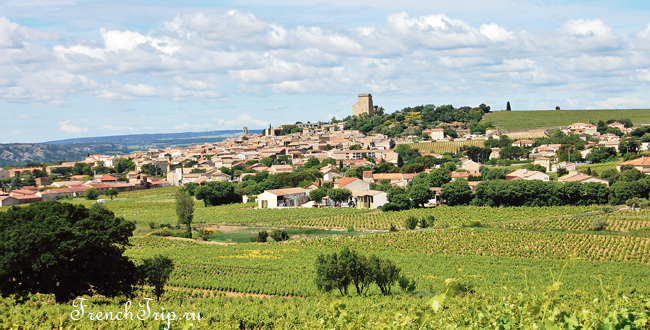
Châteauneuf-du-Pape is a village of 2,000 people 18 km north of Avignon that gives its name to the most famous red wine of the southern Rhône — and, less obviously, to the entire French appellation system.
There is a ruined papal castle on the hill, about 3,200 hectares of vines around it, and not a great deal else. You come here to taste.
The popes
When the papacy moved to Avignon in 1309, the popes needed a summer residence out of the city. John XXII built the castle here in the 1320s and planted the vineyard; the village took the name.
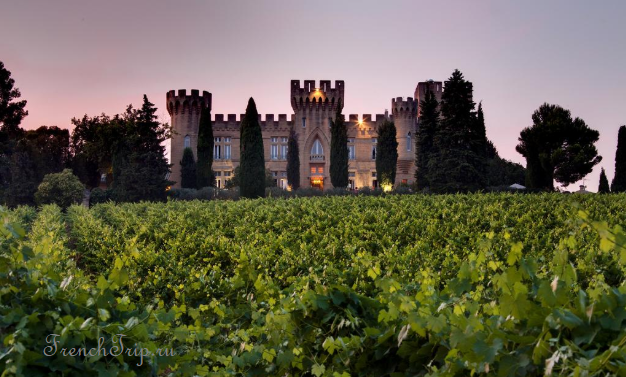
The castle was wrecked in the Wars of Religion and finished off in August 1944, when the retreating German army blew up the keep. One wall stands, and the view from it takes in the Rhône, the Dentelles de Montmirail and Mont Ventoux.
The first appellation
In the 1920s the growers here, led by Baron Le Roy, were losing sales to wine fraudulently sold under their name. Their response was to write down rules — the area, the permitted grapes, the minimum ripeness, the obligation to discard substandard fruit — and to have them enforced in court, in 1923.
That set of rules became the template for the national appellation d’origine contrôlée system created in 1936. Every AOC on every French label descends from what was worked out in this village.
The wine
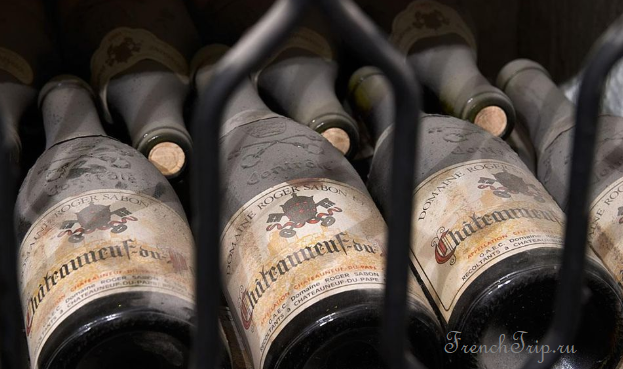
Mostly red, and a blend: thirteen grape varieties are permitted — eighteen if you count the colour variants separately — with Grenache dominant, supported by Syrah and Mourvèdre. Very few estates use all of them. The wines are full, warm and long-lived, and they need time.
About 6% of production is white, made from Roussanne, Clairette, Grenache Blanc and Bourboulenc, and it is worth seeking out because almost none of it leaves the region.
The galets
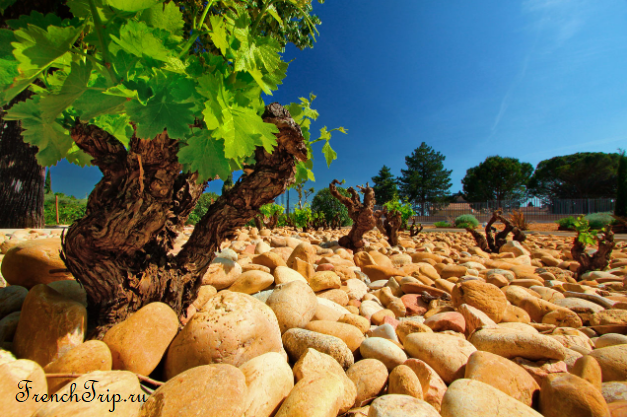
The famous feature of the ground: large rounded quartzite pebbles, rolled smooth by the Rhône when it was a glacial river, covering the vineyards in a layer sometimes a metre deep. They hold the day’s heat and radiate it back at night, which ripens the Grenache. They also make the vineyards physically hard to work.
Tasting
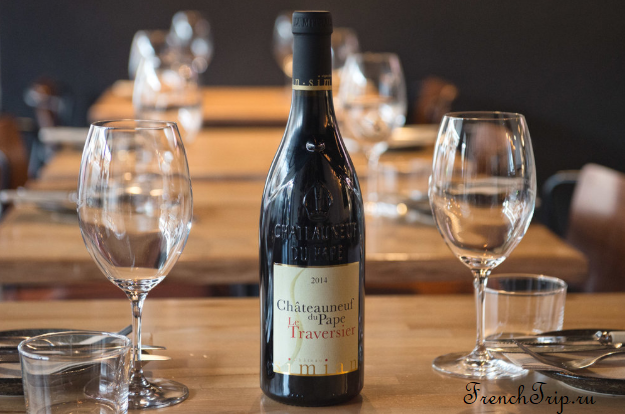
The village is full of tasting rooms and most need no appointment; the individual domaines out among the vines generally do. There is a wine museum in an old cellar, and the caveaux on the main street will let you compare several estates side by side, which is the efficient way in.
The Fête de la Véraison in early August turns the village medieval for three days.
See French wines and wine routes in France.
Getting to Châteauneuf-du-Pape
- By car — 25 minutes from Avignon. And the obvious problem: this is a village that exists for tasting. Take a driver who abstains, or a tour. France’s limit is low and in an accident any alcohol decides fault.
- By bus — a limited service from Avignon and Orange.
- By tour — half-day wine tours run from Avignon and are the sensible option.
See parking in France.
Around Châteauneuf-du-Pape
- Orange — 10 km, with the best-preserved Roman theatre in Europe
- Gigondas and Vacqueyras — the other serious southern Rhône appellations, under the Dentelles de Montmirail
- Tavel — across the river, and France’s only appellation that makes nothing but rosé
- Avignon — 18 km
When to go
September and October for the harvest — though during the picking itself the growers have no time for visitors, so either side of it is better. Spring is quiet and everything is open. Avoid the height of August: hot, and the village is small.
Nearby
Other places on this site within easy reach, as the crow flies:
- Orange — 9 km
- Villeneuve-lès-Avignon — 11 km
- Carpentras — 17 km
- Pernes-les-Fontaines — 19 km
- L'Isle-sur-la-Sorgue — 23 km
- Venasque — 26 km
Weather in Châteauneuf-du-Pape
| Month | Day | Night | Rainfall |
|---|---|---|---|
| January | +10° | +2° | 53 mm |
| February | +12° | +2° | 35 mm |
| March | +16° | +5° | 38 mm |
| April | +19° | +7° | 61 mm |
| May | +23° | +11° | 52 mm |
| June | +28° | +15° | 39 mm |
| July | +31° | +17° | 31 mm |
| August | +30° | +17° | 37 mm |
| September | +25° | +13° | 93 mm |
| October | +20° | +10° | 88 mm |
| November | +14° | +6° | 96 mm |
| December | +11° | +3° | 48 mm |
Updated: