Impressionist painters in Normandy
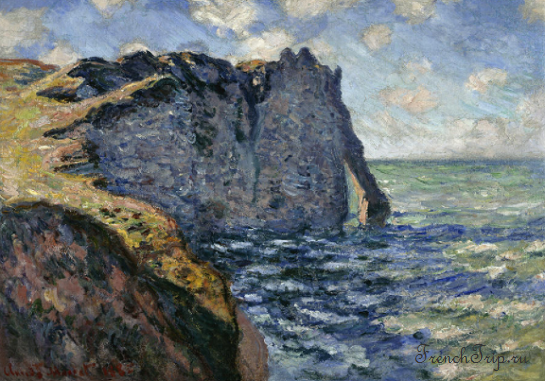
Impressionism was born in Normandy and around Paris in the 1860s and 1870s. Painters such as Monet, Renoir, Pissarro, Sisley and Degas left their studios to paint in the open air, with quick, bold brushstrokes, trying to catch the colours of nature and the ever-changing effects of light on water, sky and stone. Many of the places they painted have hardly changed: the cliffs of Étretat, the harbours of Honfleur and Le Havre, the cathedral of Rouen, the loops of the Seine and Monet’s garden at Giverny.
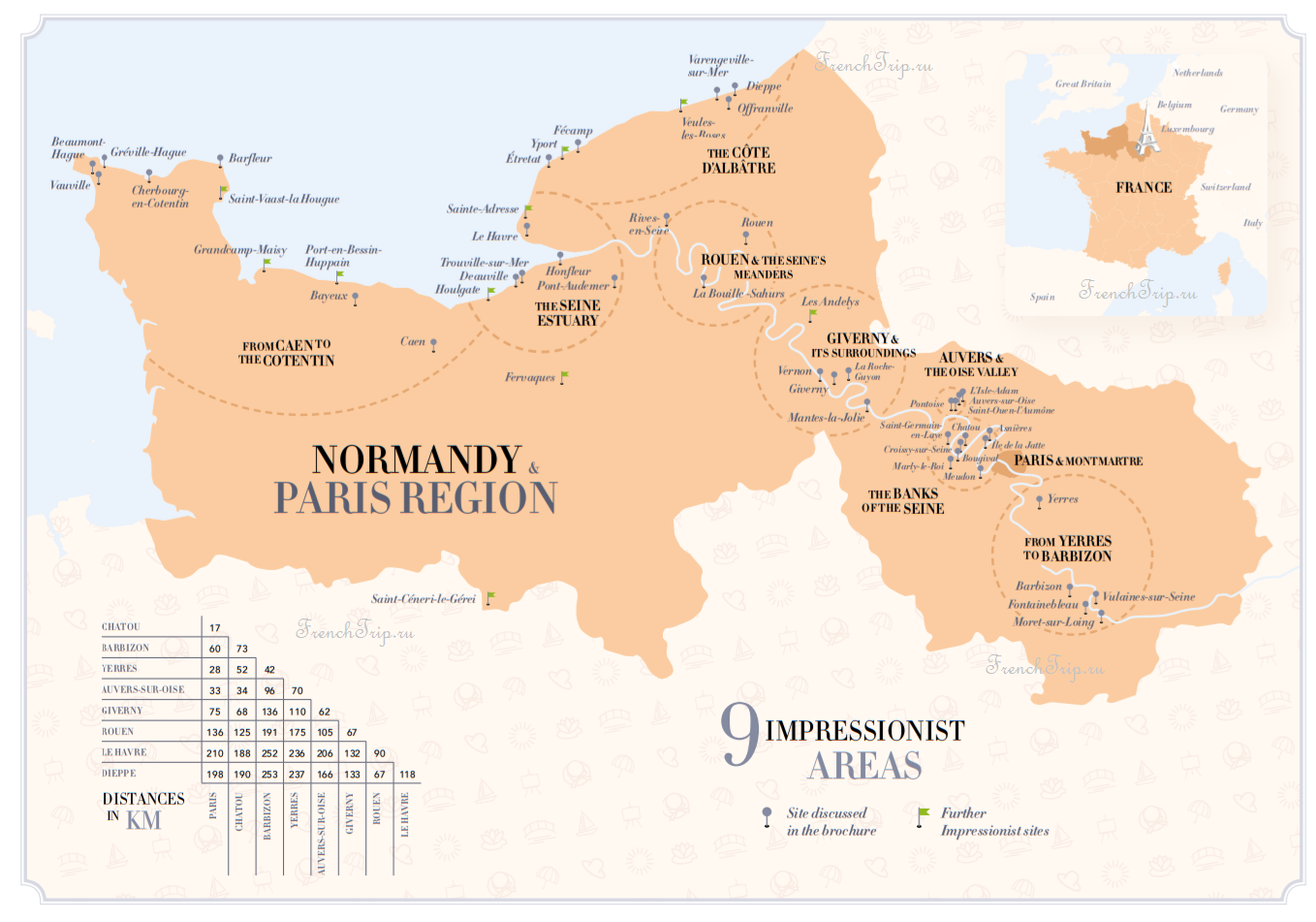
Travelling in their footsteps is one of the most rewarding ways to see northern France: you can stand where the painters set up their easels and then see their pictures in the museums of Paris, Rouen, Le Havre and Giverny. This guide follows the nine areas most closely linked with the Impressionists, from Paris down the Seine to the Channel coast.
How Impressionism began
In the middle of the 19th century, painting was ruled by the Academy, with its historical and mythological subjects painted in the studio. A new generation wanted to paint what they saw around them: landscapes, the sea, the streets of Paris, people at leisure. Paint in tubes, invented in the 1840s, made it easy to work outdoors, and the new railways from Paris to the Normandy coast took painters to the sea in a few hours. They followed in the footsteps of the landscape painters of the Barbizon school and of the marine painters of the Normandy coast, above all Eugène Boudin, who taught the young Claude Monet to paint outdoors on the beaches near Le Havre.
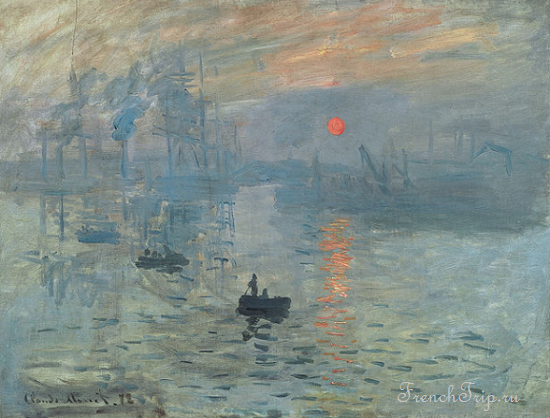
In 1874 the group held its first independent exhibition in Paris. Among the works was Monet’s view of the port of Le Havre at dawn, Impression, Sunrise. A critic mocked the painters as “impressionists”, and the name stuck.
The nine Impressionist areas
1. Paris and Montmartre
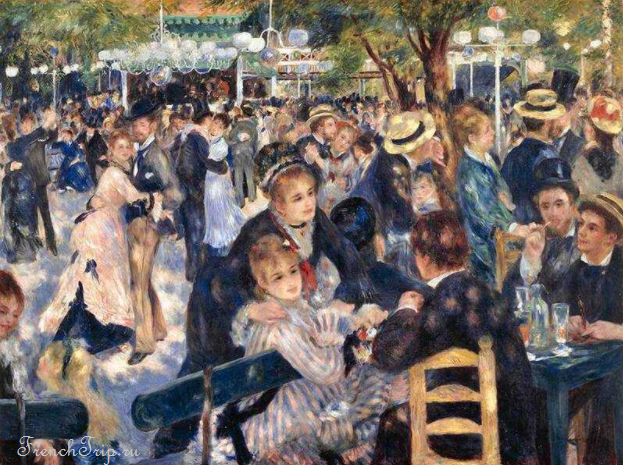
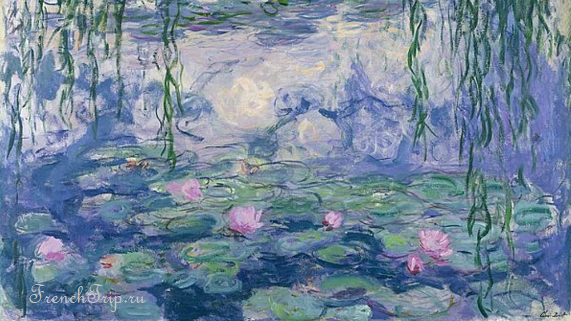
In the 1850s and 1860s Baron Haussmann rebuilt Paris with wide boulevards, parks and railway stations, and a new world of cafés, cabarets, dance halls, theatres and racecourses grew up around them. Manet, Monet, Degas, Renoir, Pissarro and Caillebotte painted this modern city and its pleasures. Today Paris has the largest collection of Impressionist painting in the world, in the Musée d’Orsay, the Musée de l’Orangerie, with Monet’s huge Water Lilies, and the Musée Marmottan Monet. On the hill of Montmartre you can still find the Moulin de la Galette, where Renoir painted Parisians dancing on a Sunday afternoon.
2. Barbizon and the forest of Fontainebleau
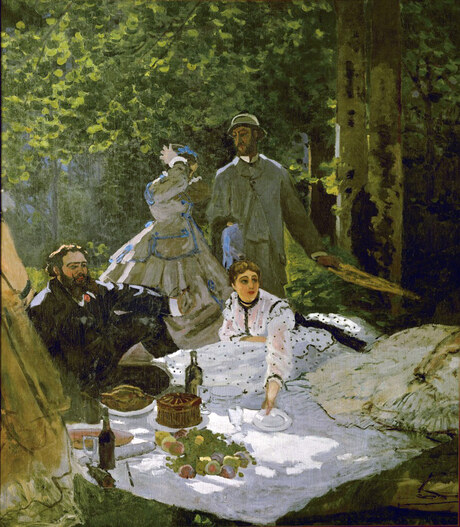
South of Paris, the village of Barbizon, on the edge of the forest of Fontainebleau, was the home of the Barbizon school, the landscape painters such as Millet and Théodore Rousseau who first painted nature directly. The young Impressionists came here too: Monet painted his Luncheon on the Grass in the forest at Chailly-en-Bière in 1865–1866. Alfred Sisley spent the last twenty years of his life around Moret-sur-Loing, which he painted again and again, and Gustave Caillebotte painted the family estate at Yerres, now open to visitors.
3. The banks of the Seine west of Paris
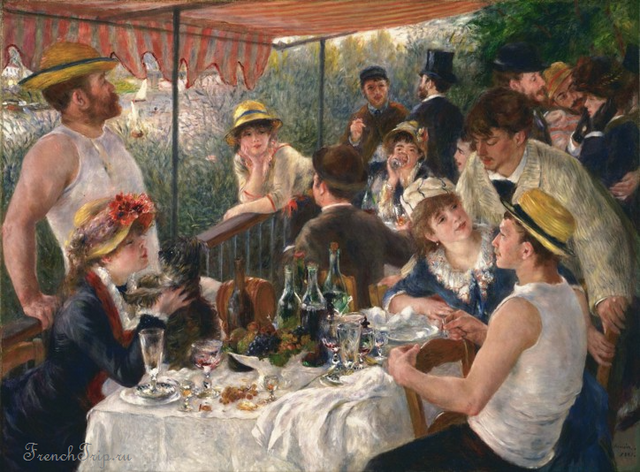
The railway made the riverside villages west of Paris, such as Chatou, Croissy and Bougival, a Sunday escape for Parisians, with boating, swimming and open-air dance halls called guinguettes. In 1869 Monet and Renoir painted side by side at the bathing place of La Grenouillère, and Renoir’s Luncheon of the Boating Party was painted on the terrace of the Maison Fournaise at Chatou, which is now a restaurant and a small museum. On the island of La Grande Jatte, Seurat painted his famous Sunday afternoon.
4. Auvers-sur-Oise and the Oise valley
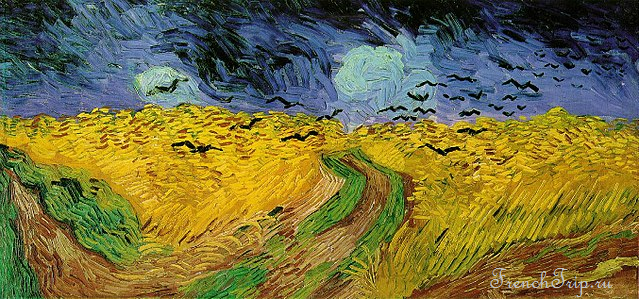
North of Paris, the Oise valley drew painters from Daubigny and Corot to Cézanne. Camille Pissarro lived and worked for many years at Pontoise. In 1890 Vincent van Gogh settled at Auvers-sur-Oise, where in the last seventy days of his life he painted some eighty canvases. You can visit the Auberge Ravoux, where he lived and died, see the church and the wheat fields he painted, and his grave beside his brother Theo’s in the village cemetery.
5. Giverny
In 1883 Claude Monet settled at Giverny, a village on the Seine on the border of Normandy, and lived there for the rest of his life, until 1926. Here he created the gardens that became his great subject: a flower garden in front of the pink house, and across the road a water garden with a Japanese bridge and the pond of water lilies he painted over and over in his last decades. His house and gardens are open from spring to autumn, and the Museum of Impressionisms in the village holds exhibitions on Monet and his circle. The gardens are at their best from May to July, and very crowded; book ahead and come early.
6. Rouen and the Seine valley
In 1892 and 1893 Monet rented a room facing the cathedral of Rouen and painted its façade more than thirty times, at every hour of the day and in every weather, one of the most famous series in the history of painting. Pissarro and Sisley painted the city and the river too, and later the painters of the “Rouen school” made the misty Seine their subject. The Musée des Beaux-Arts in Rouen has one of the finest collections of Impressionist painting in France outside Paris. The old town is also famous for its half-timbered houses.
7. The Seine estuary: Le Havre, Honfleur and Deauville
This is where Impressionism began. Eugène Boudin, born in Honfleur, painted the skies and the beaches of the coast and taught Monet, who grew up in Le Havre. Painters gathered at the Saint-Siméon farm inn above Honfleur, on the Côte de Grâce. The Musée Eugène Boudin in Honfleur and the MuMa in Le Havre hold many of their works, and Boudin’s fashionable beach scenes of Trouville and Deauville are still easy to recognise on the boardwalks today.
8. The Alabaster Coast: from Dieppe to Étretat
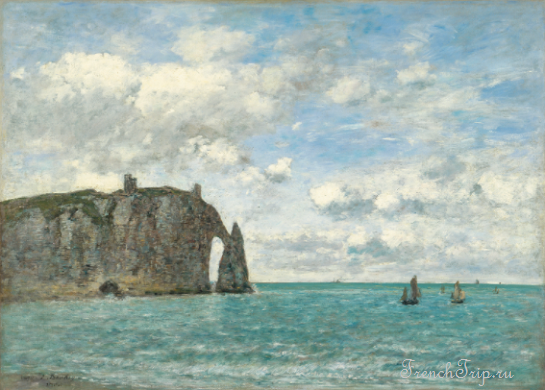
The Côte d’Albâtre, with its white chalk cliffs, pebble beaches and fishing villages, became a favourite of painters as soon as the resorts opened. Dieppe was one of the first seaside resorts in France, from 1824, and drew Turner, Delacroix, Pissarro, Renoir and Morisot. Monet painted the cliffs at Pourville, Varengeville and Fécamp, and above all at Étretat, with its arches and needle of rock, which Courbet and Boudin had painted before him.
9. From Caen to the Cotentin
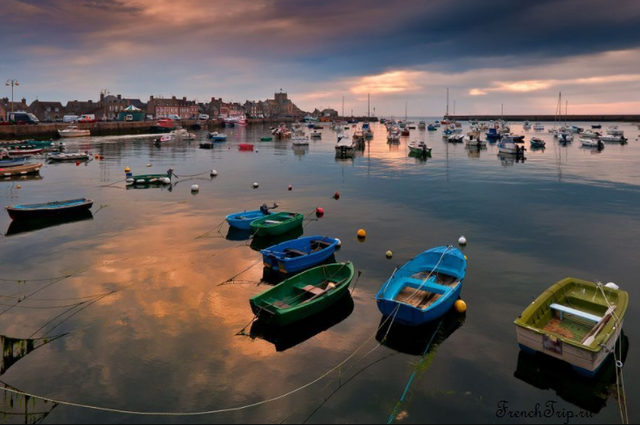
Western Normandy is better known for its abbeys and the D-Day beaches, but it too has links with the painters. Jean-François Millet, the painter of peasants who prepared the way for the Impressionists, was born near Cherbourg, at Gréville-Hague, where his birthplace is a museum. Stanislas Lépine, a painter from Caen, showed at the first Impressionist exhibition in 1874. Paul Signac painted the harbours of Port-en-Bessin and of Barfleur, a granite fishing port at the tip of the Cotentin.
Practical tips
- Normandy holds a large festival of Impressionism, Normandie Impressionniste, every few years, with exhibitions across the region.
- Giverny is about an hour from Paris by train to Vernon and a shuttle bus; Rouen and Le Havre are on the main line from Paris Saint-Lazare.
- Many of the coastal sites are on cliffs. At Étretat and along the Alabaster Coast, keep well away from the cliff edges, which crumble without warning, do not walk under the cliffs, and check the tides before walking on the beach: the rising tide can cut you off at the foot of the cliffs.
For the lives and works of the painters themselves, see French painters, and for the rest of the region, the most beautiful places in Normandy.
Updated: