Carcassonne
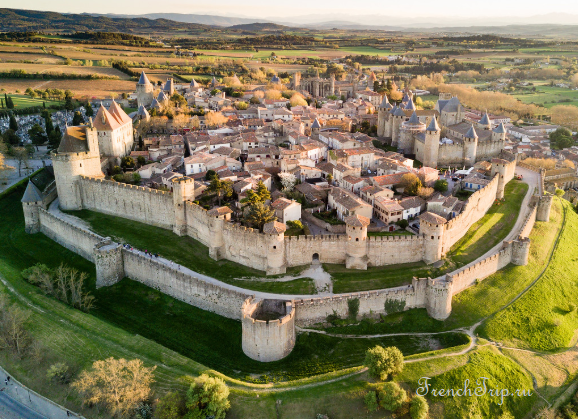
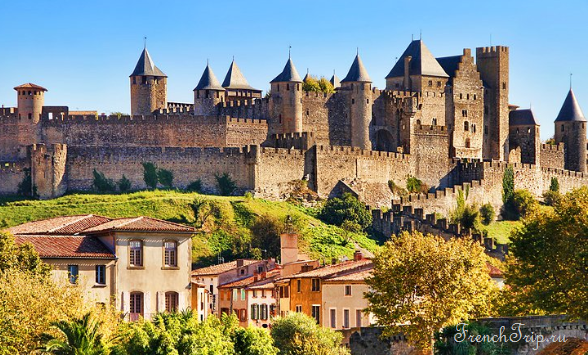
Carcassonne is a town in the south of France, in the Aude department of Occitanie, between Toulouse and the Mediterranean. It is famous for one thing: La Cité, a medieval fortified town on a hill, enclosed by two rings of walls with 52 towers. It is the largest surviving walled town of its kind in Europe, a UNESCO World Heritage Site since 1997, and one of the most visited sights in France, with several million visitors a year.
The Cité appeared in the film Robin Hood: Prince of Thieves, and it is often said to have inspired the castle in Disney’s Sleeping Beauty. Below it, across the river Aude, is the second Carcassonne: the Bastide Saint-Louis, the lower town, with its grid of streets, shops and squares, where most people actually live.
The two towns
- La Cité (the upper town) is the fortress on the hill: walls, towers, the Château Comtal, the basilica and narrow streets full of shops and restaurants. You can walk in freely at any time; only the castle and the walk along the ramparts have a ticket.
- The Bastide Saint-Louis (the lower town) was laid out in the 13th century on a regular grid. It has 18th-century town houses, the covered market, the main square and the railway station.
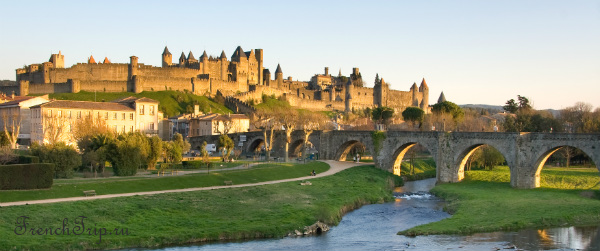
- Between them is the old Trivalle district and the river Aude, crossed on foot by the Pont Vieux. The walk from the Bastide to the walls of the Cité takes 20 to 30 minutes, uphill at the end. A small tourist train also links the two in season.
Allow at least half a day for the Cité: a couple of hours to walk around inside the walls, more if you visit the castle and the ramparts and then go round the outside to look at the walls from below.
A short history
There was a Gallo-Roman town on the hill, and the inner ring of walls still stands partly on its 3rd–4th century foundations. In the 12th century Carcassonne belonged to the Trencavel family, viscounts of Carcassonne and Béziers, who built the castle.
In 1209 the Albigensian Crusade, the war launched by the Pope against the Cathars of the Languedoc, reached the town. The crusaders had just massacred the population of Béziers. Carcassonne was besieged from 1 to 15 August; the young viscount Raymond-Roger Trencavel went out to negotiate, was taken prisoner, and the town surrendered. He died in his own prison that November, aged 24, in circumstances that were suspicious even at the time. His lands were given to Simon de Montfort, the leader of the crusade. His son tried to take the city back in 1240 and failed.
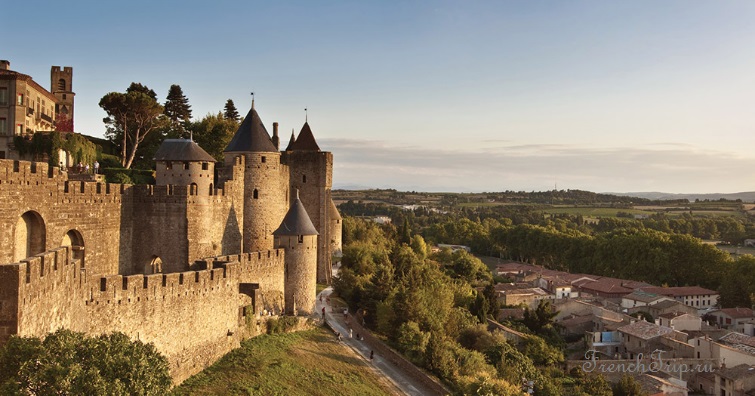
The French kings then rebuilt the fortress. Louis IX and his son Philip III added the outer ring of walls and the main gate, making the Cité almost impregnable. The people expelled from the old suburbs were resettled across the river, in the new Bastide. In 1355, during the Hundred Years’ War, the Black Prince burned the lower town but did not try the walls.
When the border with Spain moved south in 1659, the fortress lost its purpose and fell into ruin. It was saved in the 19th century: from 1853 the architect Eugène Viollet-le-Duc restored the walls, the towers and the castle. His work has always been argued over. The pointed slate roofs on the towers, for example, look more like northern France than the south. But without him the Cité would probably not be standing.
What to see in the Cité
Porte Narbonnaise. The main gate on the east side, the one most visitors use, built around 1280 with two massive towers. Next to it is a stone bust of Dame Carcas, a copy; the original is in the town’s stone museum. Legend says that during a long siege by Charlemagne she fed the last of the town’s grain to the last pig and threw it from a tower. The besiegers decided the town still had food to spare and left, and the bells rang out: “Carcas sonne!”, which gave the town its name. It is a story, not history, but everyone in Carcassonne will tell it to you.
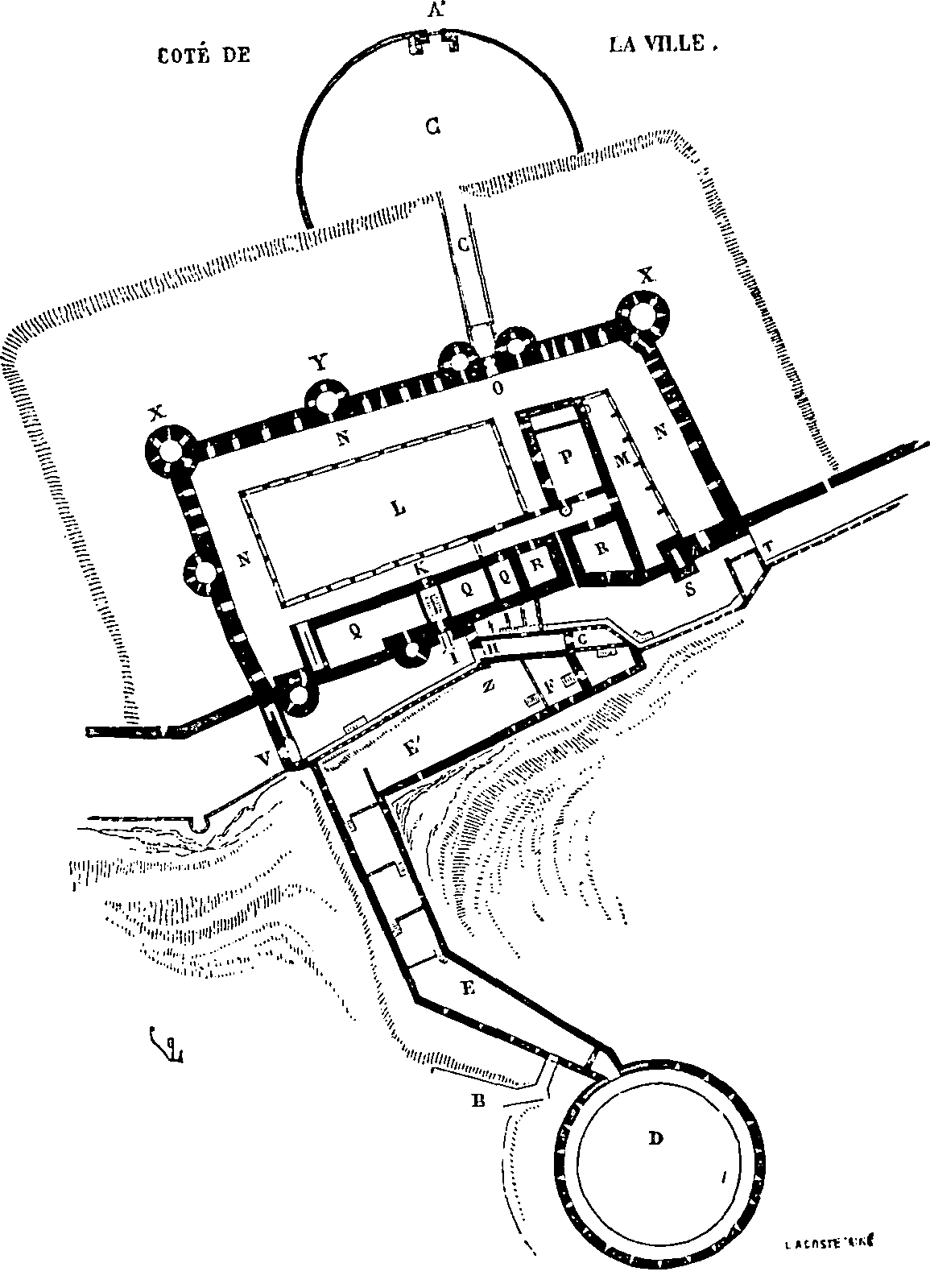
The Château Comtal. The castle of the counts, a fortress within the fortress, built by the Trencavels around 1130 and turned into a royal stronghold in the 13th century, with its own moat, barbican and nine towers. The visit takes you through the castle and its small museum of stone carving, and onto the ramparts, where you can walk along a long section of the walls. It is run by the Centre des monuments nationaux; buy a ticket at the entrance or online, and expect queues in summer.
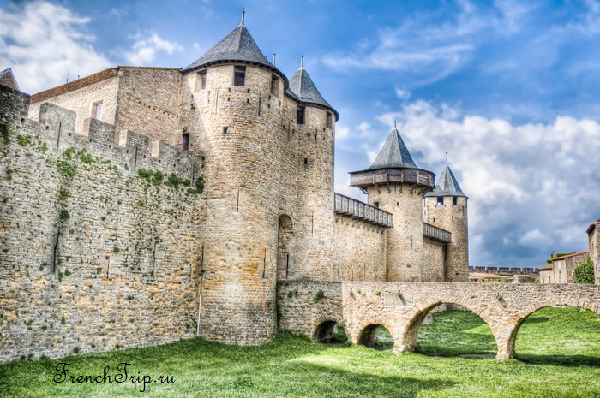
Basilica of Saint-Nazaire. The church stands on the site of a much older one. Pope Urban II blessed the stones for the new building in 1096. The Romanesque nave survives, and the Gothic choir and transepts have some of the finest stained glass in the south of France. Try to see it on a sunny morning.
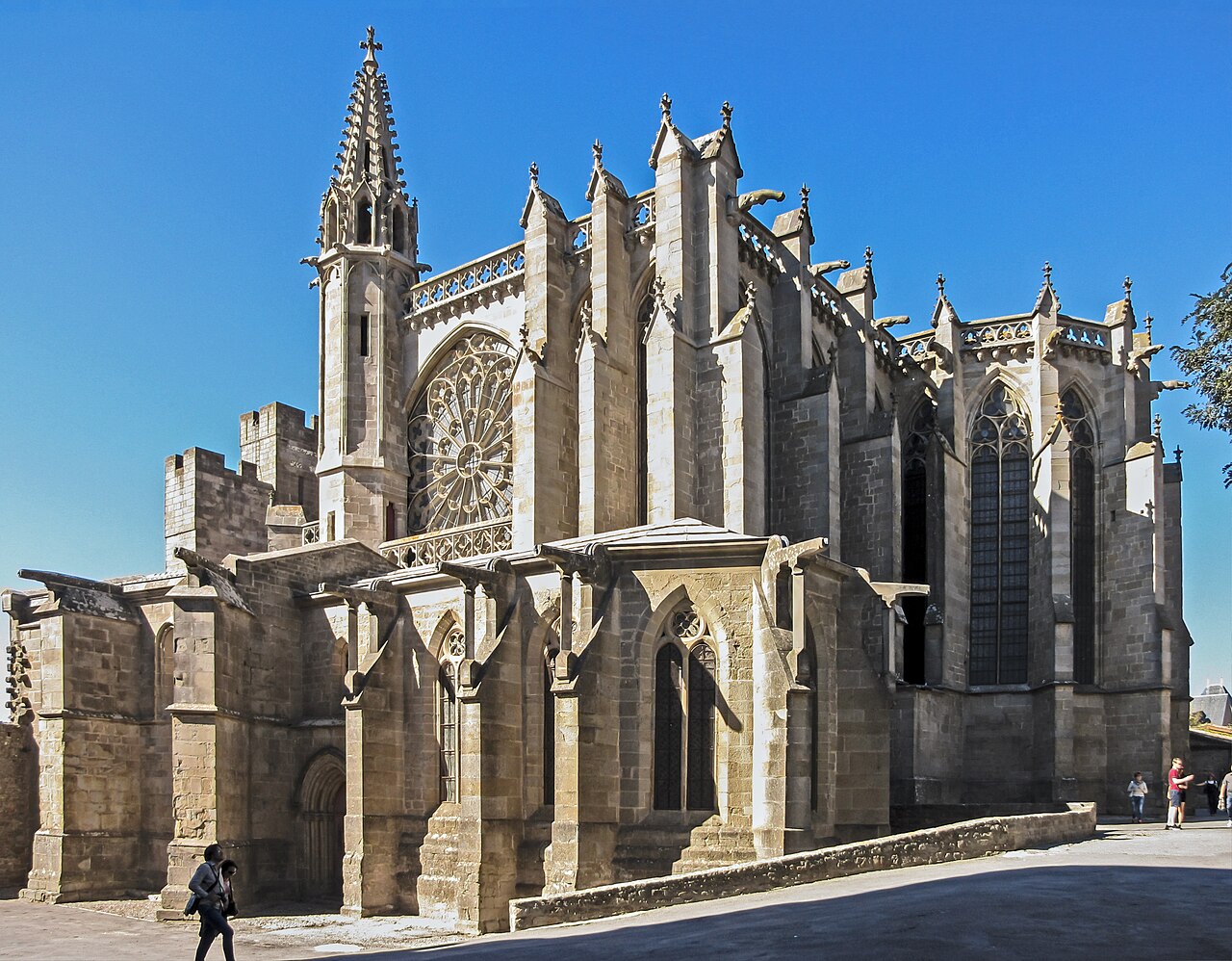
Les Lices. The open strip between the two rings of walls, just over a kilometre round. It is the best walk in the Cité, free, with views of the walls on both sides, of the lower town and, on a clear day, of the Pyrenees and the Montagne Noire. In summer it is used for knights’ tournaments.
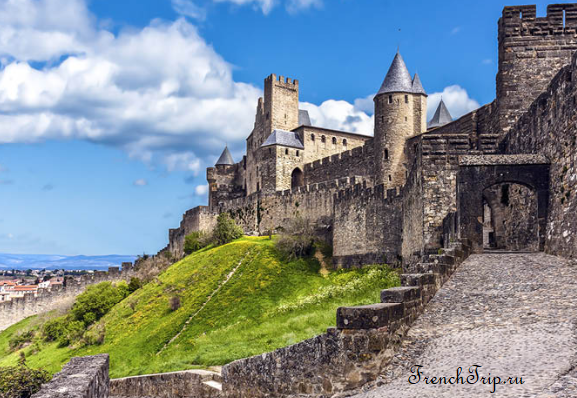
Porte d’Aude. The western gate, facing the river, reached by a steep stepped ramp up from the Trivalle district. It is the classic way to walk up from the lower town.
The Grand Puits. The oldest of the Cité’s 22 wells. Legend has the Visigoths hiding the treasure of the Temple of Solomon in it, and the well has been searched more than once.
Théâtre Jean-Deschamps. An open-air theatre inside the walls, on the site of an old cloister. It is the main stage of the summer Festival de Carcassonne, with concerts and plays.
Safety and comfort in the Cité
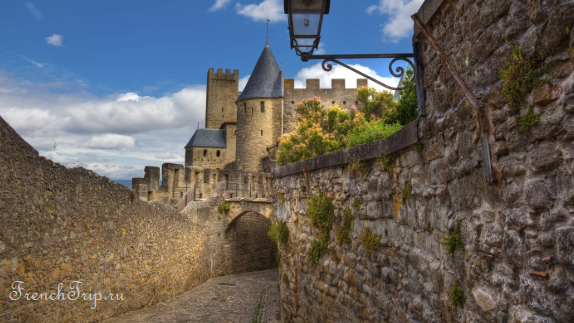
- The streets are cobbled and steep in places, and the cobbles are slippery when wet. Wear proper shoes.
- On the ramparts the walkways are narrow, the steps uneven, and in places the parapets are low. Hold small children by the hand, and do not climb on the walls or the crenellations.
- In summer the Cité is very hot and very crowded in the middle of the day. Arrive early in the morning or come in the evening, when the walls are lit and the day-trippers have gone; bring water and a hat.
What to see in the Bastide Saint-Louis
Place Carnot. The main square of the lower town, shaded by plane trees, with an 18th-century marble fountain of Neptune. It has been the town’s market place since the Middle Ages; a fresh produce market is still held here in the mornings several days a week.
Town houses. Most of the Bastide was built in the 18th century, when Carcassonne grew rich on cloth. Its streets have handsome hôtels particuliers: the Hôtel de Rolland, now the town hall, is the finest. The Maison du Sénéchal, from the 14th century, is one of the few houses to survive the Black Prince’s fire.
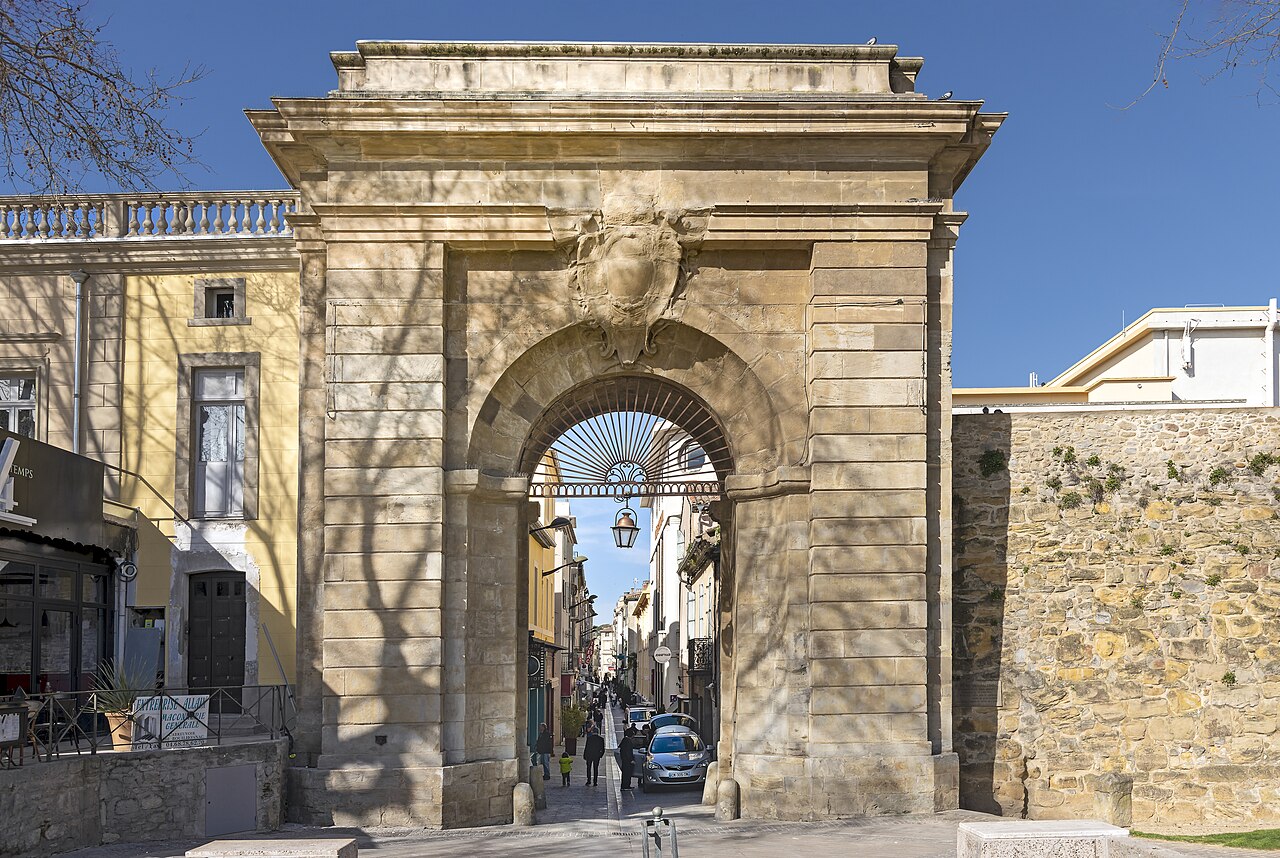
Portail des Jacobins. The last of the four gates in the walls of the lower town, rebuilt in its present form in 1779.
Les Halles. The covered market, built in 1768 on the site of an old church.
Pont Vieux. The 14th-century stone bridge over the Aude, for centuries the only link between the two towns. It is now for pedestrians only, and it gives the classic view of the Cité, especially at dusk. At the town end is the small chapel of Notre-Dame-de-la-Santé, the last trace of the old hospital.
The Canal du Midi. The 17th-century canal from Toulouse to the Mediterranean, also a UNESCO World Heritage Site, runs past the railway station on the northern edge of the Bastide. The towpath makes a quiet walk or bike ride, and boat trips leave from the port in season.
Festivals
- Festival de Carcassonne, in summer: concerts, theatre and dance, mostly in the open-air theatre in the Cité.
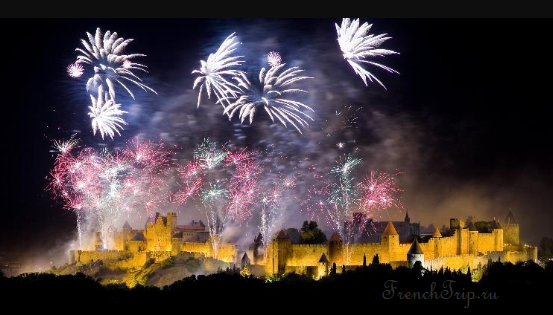
- Embrasement de la Cité, on the evening of 14 July: one of the biggest fireworks displays in France, set off from the walls so that the whole Cité seems to be on fire. Hundreds of thousands of people come to watch, and the ramparts are closed that day. Arrive very early, and expect traffic jams and full trains afterwards.
- Medieval tournaments and shows in the Lices in summer, and a Christmas market in December.
What to eat
Carcassonne’s dish is cassoulet: white beans slow-cooked in an earthenware dish with duck or goose confit, sausage and pork, under a crust that forms as it bakes. Castelnaudary and Toulouse also claim it, and each town has its own version. It is a heavy dish for a cold day, served with a local red from the Corbières, Minervois or Fitou. Further south, Limoux makes a sparkling white, Blanquette de Limoux. See the cuisine of Occitanie.

The restaurants inside the Cité cater mostly to visitors; for an everyday meal, the Bastide has more choice at better value. The shops in the Cité are souvenirs and crafts. For ordinary shopping, go to the lower town.
Getting there
By train. The station is on the northern edge of the Bastide, by the Canal du Midi, on the line between Toulouse and the Mediterranean coast. There are regular trains from Toulouse (about an hour), Narbonne, Béziers and Montpellier, and some direct trains from further afield; see trains in France. From the station, walk through the lower town to the Cité (about 30 minutes) or take a local bus.
By car. Carcassonne is on the A61 motorway between Toulouse and Narbonne; see toll roads in France. Cars are not allowed inside the Cité. The large car parks by the Porte Narbonnaise are paid and fill up in summer; it is often easier to park in the lower town and walk up. More on the rules in our guide to parking in France.
Where to park in Carcassonne
| Car park | Spaces | Fee | From centre |
|---|---|---|---|
| Parking MJC | — | paid | 150 m |
| Place Davilla | — | paid | 290 m |
| Parking gratuit Barbès | 200 | paid | 300 m |
| Square Lucie Aubrac | — | paid | 320 m |
| Effia | — | paid | 530 m |
| Place du Lieutenant-Colonel Joseph Pistre | — | free | 610 m |
| P2 Porte d'Aude | — | paid | 1.1 km |
| Place Occitane | — | — | 1.3 km |
By air. Carcassonne has a small airport a few kilometres west of the town, mostly with low-cost flights. Toulouse airport, about an hour away by motorway, has many more connections.
Around Carcassonne
- The Cathar castles. Peyrepertuse, Quéribus, Lastours and Montségur are ruined castles on rocky peaks in the hills to the south, one to two hours away by car. The paths up are steep and exposed and the wind can be fierce, so wear good shoes and do not go up in a storm.
- Lagrasse and Minerve, two of the most beautiful villages in France, each with a long history.
- Limoux, for its sparkling wine and its long winter carnival.
- Toulouse, the pink city, about an hour away.
- For another walled town, Aigues-Mortes in the Camargue; and for more castles across France, see castles.
Weather in Carcassonne
| Month | Day | Night | Rainfall |
|---|---|---|---|
| January | +10° | +4° | 66 mm |
| February | +12° | +4° | 47 mm |
| March | +15° | +6° | 58 mm |
| April | +18° | +8° | 71 mm |
| May | +22° | +12° | 63 mm |
| June | +26° | +15° | 47 mm |
| July | +29° | +17° | 30 mm |
| August | +29° | +17° | 40 mm |
| September | +25° | +14° | 48 mm |
| October | +20° | +11° | 63 mm |
| November | +14° | +7° | 70 mm |
| December | +11° | +4° | 61 mm |
Photo credits
Basilica of Saint-Nazaire: photo by MathieuMD, CC BY-SA 4.0, via Wikimedia Commons. Portail des Jacobins: photo by Didier Descouens, CC BY-SA 4.0, via Wikimedia Commons. The plan of the castle is from Viollet-le-Duc’s La Cité de Carcassonne (1858) and is in the public domain.
This page in Russian: Carcassonne (Каркасон или Каркассон)
Updated: