Toulouse
Toulouse is the capital of Occitanie and the fourth largest city in France, after Paris, Marseille and Lyon. It stands on the Garonne in the south-west, closer to the Spanish border than to the Mediterranean.
The city proper has a population of around 430,000, and carries the official Ville d’Art et d’Histoire — City of Art and History — designation. The countryside around it was traditionally known as the Pays de Cocagne — roughly, land of plenty.
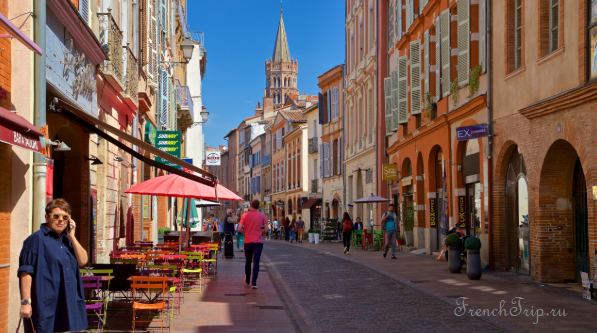
It is called la ville rose — the pink city — after the fired clay brick the old town is built from, which turns from salmon to deep rose depending on the light. In the late afternoon the effect is remarkable and worth timing a walk for.
Two things shape the city today: aerospace — Airbus is headquartered here, and the industry employs a large part of the region — and students, over 100,000 of them, which makes Toulouse noticeably younger and livelier at night than most French cities of its size.
A short history, because it explains the buildings
Toulouse sits on a Roman settlement, and some of the smaller streets still follow the Roman grid. In the Middle Ages it grew rich on pastel — the blue dye extracted from woad, which the surrounding countryside produced in quantity. The trade made merchant fortunes until the Portuguese began importing indigo from Asia and the monopoly collapsed.
That wealth is why the old town has more than fifty grand private mansions — hôtels particuliers — from the sixteenth and seventeenth centuries. The city was also a major stop on the pilgrim road to Santiago, which is why it has the churches it does.
What to see
Allow at least a full day on foot for the old town — the historic centre is compact enough to cover in one long walk past the main churches, a museum or two if you like, and one or two routes through the mansion streets. With more of an appetite for museums, two days is more comfortable.
Place du Capitole
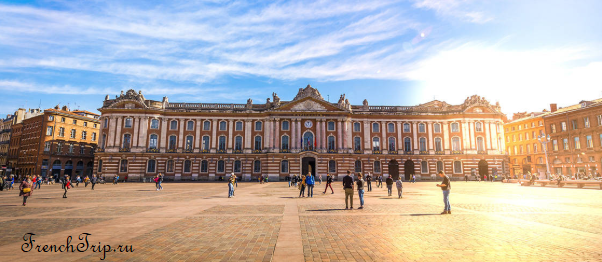
The main square and the centre of everything. The Capitole is the town hall and the opera house in one building, with a long brick and stone facade and painted state rooms open to visitors when there is no ceremony. The tourist office is round the back.
Basilique Saint-Sernin
The largest surviving Romanesque church in Europe, built from the eleventh century to hold the relics of Saint Saturnin and to receive the pilgrims heading for Santiago de Compostela. The octagonal brick bell tower is the emblem of the city. UNESCO-listed as part of the pilgrim routes.
Couvent des Jacobins
A Dominican church with a single row of columns down the middle, the last of which fans into 22 ribs — the palmier, the palm tree, one of the most photographed vaults in France. Thomas Aquinas is buried under the altar. The cloister next door is the quietest place in the city centre.
Chapelle des Carmélites
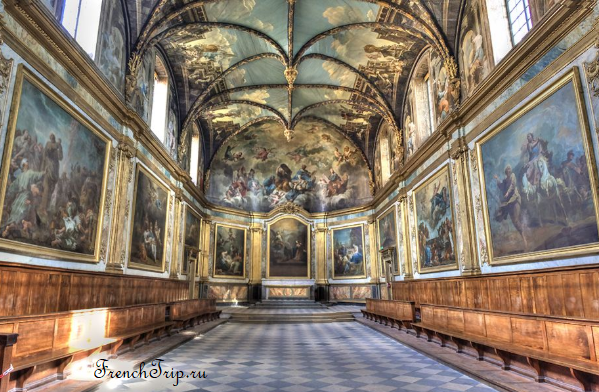
A plain door on a side street opens into a chapel painted from floor to ceiling — walls and vault entirely covered in seventeenth and eighteenth-century work. Free, usually empty, and the biggest surprise in Toulouse.
The Donjon and the mansions
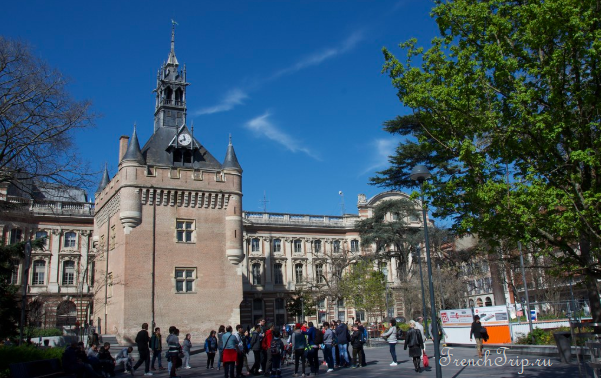
The sixteenth-century keep behind the Capitole once held the city archives. From there it is worth walking the streets of pastel mansions — the Hôtel d’Assézat is the grandest, built by a woad merchant and now housing an art collection.
Toulouse is sometimes said to be the French city richest in Renaissance-era private architecture, and mansions like this one are why. The Hôtel d’Assézat’s collection is the Fondation Bemberg, built around one collector’s paintings. The Hôtel de Bernuy has an octagonal tower rising over its courtyard, and the Hôtel du Vieux-Raisin and the Hôtel de Clary — also known as the Hôtel de Pierre — are two more worth seeking out on the streets nearby.
Along the Garonne
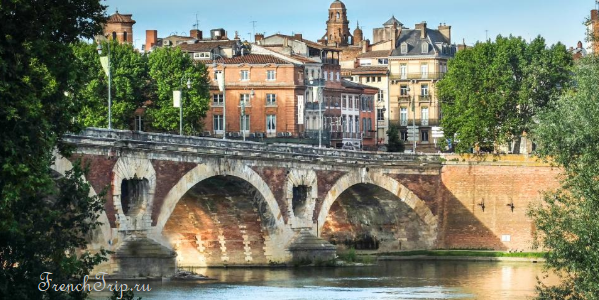
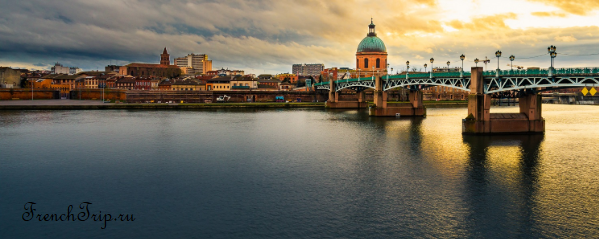
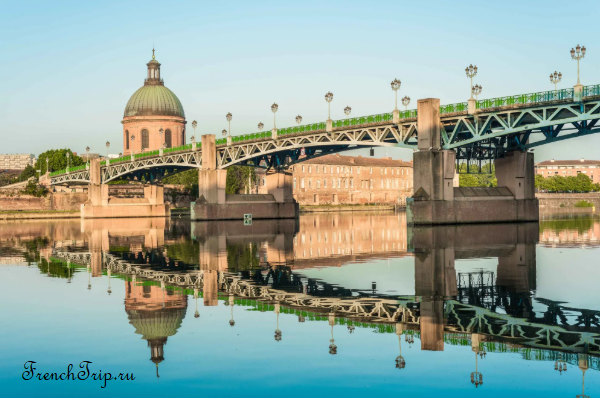
The Pont Neuf — which is the oldest bridge in the city, as usual — and the quays on the far bank give the classic view of the brick city against the water. The Canal du Midi, UNESCO-listed, begins here and runs to the Mediterranean; the towpath makes an easy walk or cycle out of town.
The pedestrian rue Henri-Martin and the Daurade quarter, both on the riverbank, are the best spots for a walk or to sit out in the sun.
Aerospace
For anyone interested: the Cité de l’Espace on the eastern edge is a serious space museum with full-size rockets, and Airbus runs factory tours at Blagnac that must be booked well in advance and require ID.
After dark
The churches, the Capitole and the old-town mansions are floodlit at night, and the historic centre is worth a second walk for that alone. It is also when the concentration of restaurants, bars, pubs and nightclubs that comes with a large student population is most obvious.
Getting to Toulouse
By air. Toulouse-Blagnac is 8 km from the centre, served by low-cost and full-service carriers. Into town: the airport shuttle bus takes 20–30 minutes, or the tram T2 with a change to the metro takes 35–45 and costs a fraction as much.
By train. Gare Matabiau is in the centre, with direct services from Paris, Bordeaux, Marseille, Montpellier and Barcelona. See trains in France.
Around the city. Two metro lines, trams and a dense bus network. The centre is compact enough to walk, and the metro covers the rest. There is a bike-share scheme along the river and the canal.
A free electric shuttle loops through the historic centre all day, every day but Sunday. It has no fixed stops — flag it down anywhere on its route — and is usually painted red and white.
By car: not useful in the centre — the old town is largely restricted and parking is expensive. See parking in France.
What to eat
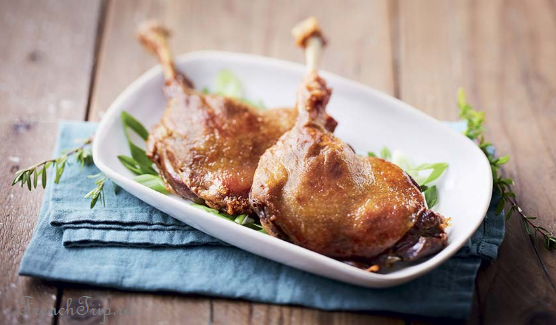
South-western cooking, and it is heavy in the best way:
- Cassoulet — white beans slow-cooked with duck confit, Toulouse sausage and pork. The version here is one of three that claim to be the original; the argument with Castelnaudary and Carcassonne is not going to be settled.
- Saucisse de Toulouse — the coarse pork sausage, coiled, that turns up in everything.
- Confit de canard and foie gras — this is duck country; see French foie gras and duck in French cooking.
The morning market at Victor Hugo is the place to see all of it in one room, with small restaurants on the floor above serving what is sold below. More in the cooking of Occitanie.
Shopping
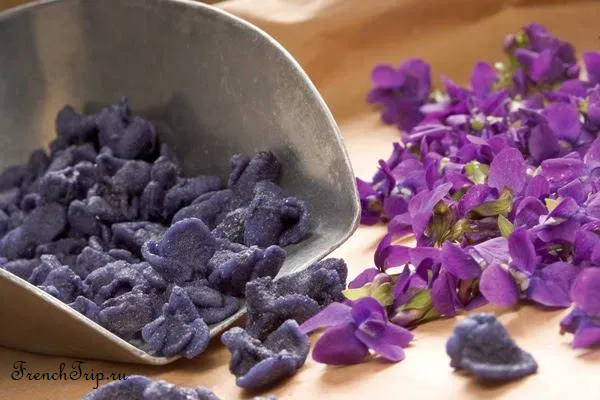
The local speciality is the violet. Toulouse grew them commercially from the nineteenth century, and they are still sold candied, as syrup, as liqueur and as perfume — the most portable souvenir the city has.
Pastel is back too: the blue dye that made the city rich is produced again on a small scale and sold as fabric and paint.
The city also has a strong market culture. A general flea market sets up around the Basilique Saint-Sernin on Sunday mornings; there is a book market on place Saint-Étienne on Saturdays, and one for books, second-hand vinyl and CDs on place Saint-Cyprien on Mondays. An organic market runs on Sunday mornings around the Basilique Saint-Aubin, and a vegetable market — reckoned the cheapest in the city — sets up on weekday mornings along boulevard de Strasbourg. The Esquirol district, once the centre of the city’s textile trade, has a cluster of second-hand shops around place de la Bourse.
Around Toulouse
- Carcassonne — the walled city, an hour by train
- Albi — the red brick cathedral and the Toulouse-Lautrec museum, an hour north
- Cordes-sur-Ciel — a hilltop bastide town
- Canal du Midi — walk or cycle a stretch from the city
- The Pyrenees — an hour and a half south, and skiable in winter
- Cahors — a further hour and a half north, with a well-known old bridge across the Lot
- Dordogne valley — beyond Cahors, dotted with villages, several of which are listed among the Most Beautiful Villages of France
The pilgrim road to Santiago de Compostela once ran through this countryside, and many of the towns and villages along it still hold Romanesque art and churches from that period. When the wars of the period cut the pilgrim traffic, some of these places are said to have been left looking much as they did then.
When to go
Spring and autumn are best: Toulouse gets genuinely hot in July and August, and the students — who give the city much of its life — are away. May, June, September and October are the months when it is at its most itself.
See Occitanie for the region.
Where to park in Toulouse
| Car park | Spaces | Fee | From centre |
|---|---|---|---|
| Capitole | 843 | 3,5 €/h, 33 €/day | 70 m |
| Victor Hugo | 420 | 3,4 €/h, 33 €/day | 310 m |
| Esquirol | 469 | 3,4 €/h, 33 €/day | 440 m |
| Jean Jaures | 1,166 | 3,4 €/h, 33 €/day | 530 m |
| Jeanne D'arc | 390 | 3,3 €/h, 26 €/day | 580 m |
| St Etienne | 563 | 3,4 €/h, 33 €/day | 630 m |
| Carnot | 346 | 3,3 €/h, 32 €/day | 740 m |
| Carmes | 488 | 3,4 €/h, 33 €/day | 750 m |
Weather in Toulouse
| Month | Day | Night | Rainfall |
|---|---|---|---|
| January | +10° | +3° | 52 mm |
| February | +11° | +3° | 37 mm |
| March | +15° | +6° | 45 mm |
| April | +18° | +8° | 65 mm |
| May | +21° | +11° | 74 mm |
| June | +26° | +15° | 64 mm |
| July | +28° | +17° | 40 mm |
| August | +29° | +17° | 45 mm |
| September | +25° | +14° | 46 mm |
| October | +20° | +11° | 54 mm |
| November | +14° | +6° | 55 mm |
| December | +10° | +4° | 49 mm |
This page in Russian: Toulouse (Тулуза)
Updated: