Transport in France
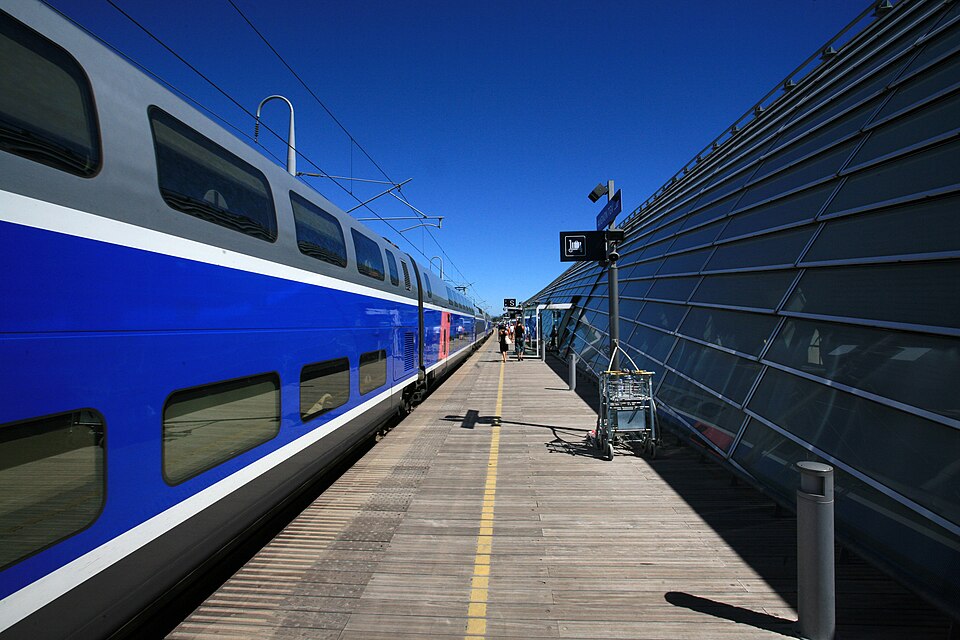
France has the densest fast-rail network in Europe, motorways that are excellent and tolled, and rural bus services that barely exist. Getting this right is the difference between a smooth trip and a wasted day.
The short version: trains between cities, car for the countryside. Almost every mistake travellers make here comes from ignoring that.
Trains
The categories
- TGV / TGV inOui — the high-speed network, up to 320 km/h. Paris to Lyon in 2 hours, Marseille in 3, Bordeaux in just over 2, Reims in 45 minutes. Reservation is compulsory and the price rises as the train fills.
- Ouigo — the low-cost TGV. Same trains, sometimes outlying stations, strict baggage rules, much cheaper if booked early.
- Intercités — classic long-distance on non-high-speed lines.
- TER — regional trains. No reservation, flat fares, and the workhorse for everything within a region.
Booking
- Book TGV early. Tickets open several months ahead and the cheapest fares go first. Same journey, same day: booked three months out versus on the day can differ by a factor of four.
- TER needs no booking. The fare is fixed, so buy it at the machine on the day.
- Rail passes pay off only on a genuinely intensive itinerary. For two or three long hops, advance point-to-point tickets are usually cheaper.
- Discount cards exist for under-27s, over-60s and families; on more than a couple of journeys they pay for themselves.
Two things that catch people out
Which station. Many cities have a central station and a TGV station out in the fields, and the ticket does not shout about it. Avignon has Avignon Centre and Avignon TGV; Reims has Reims and Champagne-Ardenne TGV; Aix-en-Provence has Aix Centre and Aix TGV 15 km out; Nîmes and Montpellier both have new outlying TGV stations. Read the station name, not just the city.
Paris has seven terminals, each serving a different direction, and they are not adjacent:
- Gare de Lyon — the south-east, the Alps, the Riviera, Italy
- Gare du Nord — the north, Britain, Belgium, the Netherlands
- Gare de l’Est — Champagne, Alsace, Germany
- Montparnasse — the west and south-west: Brittany, Bordeaux
- Saint-Lazare — Normandy
- Austerlitz — the centre, and night trains
- Bercy — Burgundy, the Auvergne, some Italian services
Crossing Paris between two of them takes 30–45 minutes on the metro with luggage. Build it into the plan.
Night trains
France has been reopening sleeper routes after nearly shutting them down — Paris to Nice, Toulouse, Briançon and the Pyrenees among them. Slow, cheap, and they save a hotel night.
Buses
Long-distance coach travel was deregulated in 2015 and is now a real option: BlaBlaCar Bus and FlixBus run between most cities at a fraction of the train fare and roughly twice the journey time. Fine for a budget trip, painful over long distances.
Note that Ouibus no longer exists — it merged into BlaBlaCar Bus in 2019, and old guides still name it.
Rural buses are the weak point of French transport. Village services often run once or twice a day, timed for schoolchildren, with nothing at weekends. Getting out to a village from a city is usually possible; getting back the same day frequently is not. Check the return before you commit — this is the mistake that strands people.
Driving
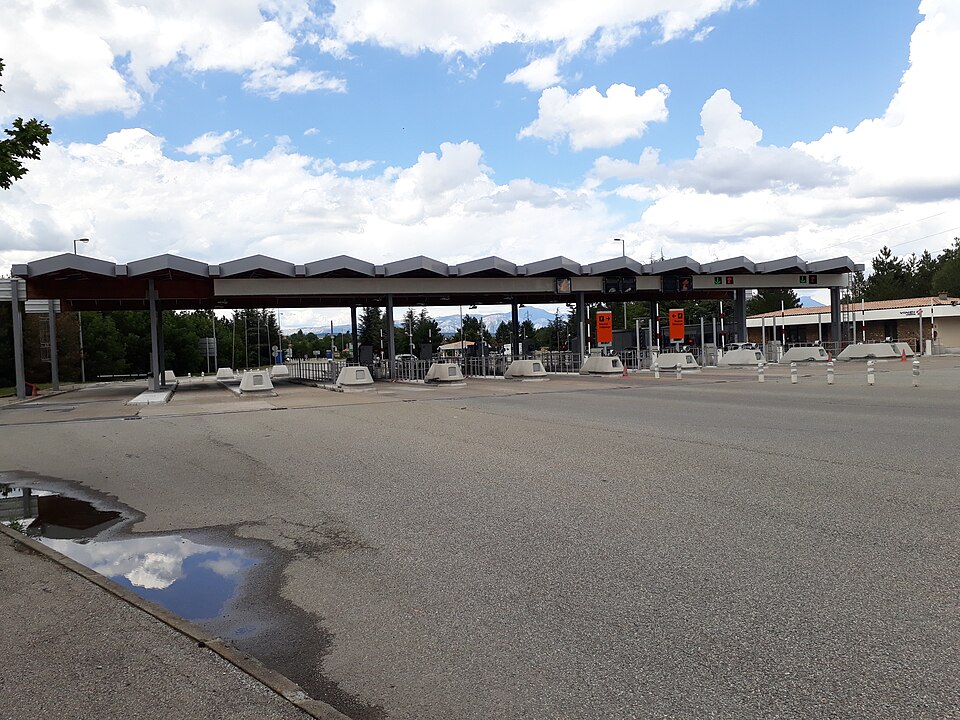
- Motorways are tolled and not cheap — Paris to the Mediterranean runs to a substantial sum in tolls plus fuel. The parallel routes nationales are free, slower and far more interesting.
- Paying: card lanes take foreign cards; the orange t lanes are for subscribers only. Newer sections use free-flow tolling with cameras, where you pay online within 72 hours — easy to forget and easy to get fined for.
- Speed limits — 130 km/h on motorways, 110 in rain, 80 or 90 on two-lane roads depending on the department, 50 in towns and 30 in a growing number of centres. Cameras are everywhere and fines follow you home.
- Priorité à droite still exists on some minor junctions: traffic entering from your right has priority unless signed otherwise.
- Low-emission zones operate in Paris, Lyon, Grenoble, Toulouse and elsewhere, and require a Crit’Air sticker on the windscreen — including on foreign cars. Order it online before you travel; there is no way to buy one at the border.
- Alcohol — the limit is 0.5 g/l, and 0.2 for drivers licensed under three years. On a wine route, that is effectively one glass.
- Car parks: historic centres are largely pedestrian. Park on the ring and walk in. See parking in France.
Flying inside France
Rarely worth it. Since 2023 domestic flights have been banned where a train does the same trip in under 2 h 30, and even where flying is allowed the train usually wins once you count the airport. The exceptions are Corsica and the far corners — Paris to Nice or Toulouse.
City transport
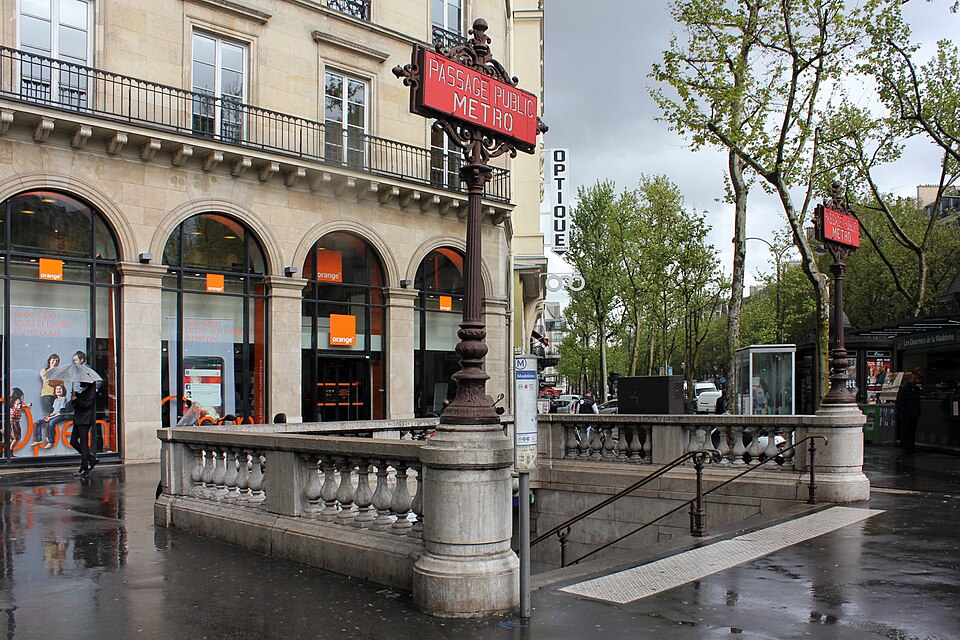
- Paris — 16 metro lines plus the RER for the suburbs. Note that an ordinary metro ticket does not cover the RER out to Versailles or the airports; you need a zoned ticket. Paper tickets have been replaced by contactless and the Navigo card.
- Trams — most large French cities rebuilt tram networks in the 2000s, and they are the easiest way around Bordeaux, Dijon, Strasbourg and Nice.
- Bicycles — nearly every city has a public bike scheme, and France now has a good long-distance network of marked cycle routes on old railway lines.
- Contactless — most networks now take a bank card straight at the gate, which removes the ticket machine problem entirely.
Ferries and the tunnel
Cross-Channel services run from Dover to Calais and Dunkirk, Portsmouth to Caen, Le Havre, Cherbourg and Saint-Malo, Newhaven to Dieppe, and Poole to Cherbourg. Eurotunnel carries cars from Folkestone to Calais in 35 minutes, and Eurostar runs Londonu2013Paris in 2 h 15. Corsica is served from Marseille, Toulon and Nice.
Some planning rules
- Cities by train, countryside by car. Provence, the Dordogne, Alsace’s villages, Normandy’s D-Day coast and Brittany’s interior all need a car; Paris, Lyon, Bordeaux and the Riviera coast emphatically do not.
- Hire the car where the countryside starts — take the train to the regional city, pick up a car there, and avoid paying for parking in Paris.
- The Riviera is the exception: the coastal railway from Cannes to Menton is frequent, cheap and faster than the road in summer. Do not hire a car for it.
- Avoid the first weekend of August. The French holiday changeover produces the worst traffic in Europe, with hundred-kilometre jams on the southbound motorways.
Photo credits
Some photographs on this page come from Wikimedia Commons under free licences:
- TGV at Avignon — Jean-Marc Rosier, CC BY-SA 3.0, via Wikimedia Commons
- Paris metro entrance — Bellomonte, CC0, via Wikimedia Commons
- Autoroute toll plaza — Niels Hoogvliet, CC BY-SA 4.0, via Wikimedia Commons


.jpg)
Updated: