Oldest restaurants in France
Sit down in one of these and the interest is not only what is on the plate. Prévert ate here; Cézanne had his table there; the room you are in has been serving food since before the Revolution. Ten French restaurants where the building, the decor and the menu have outlived everyone who made them.
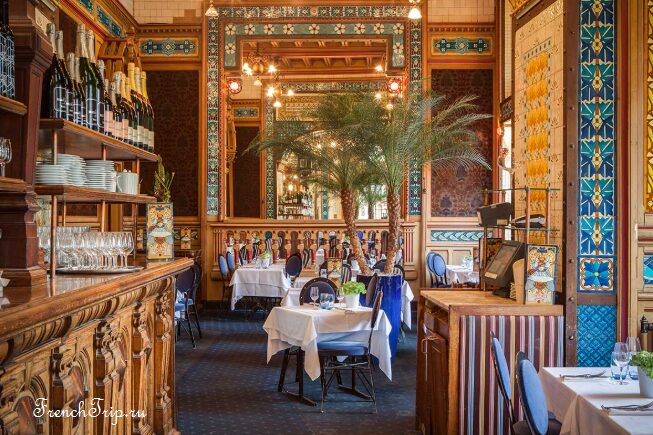
La Cigale, Nantes
Opened on 1 April 1895 on the Place de l’Opéra, and listed as a historic monument for the Art Nouveau interior by the architect Émile Libaudière. It filled from the start with people from the Graslin theatre next door; the surrealist Jacques Prévert and the writer André Breton were regulars. Jacques Demy used it as a set for Lola in 1961, and Agnès Varda filmed Jacquot de Nantes here in 1991.
In 1964 the brasserie became a fast-food restaurant, which it survived because nobody touched the decor; it emptied out in the 1970s and was brought back as a brasserie in 1982. Two minutes away is the Passage Pommeraye, the shopping arcade of 1840 that Demy also filmed — worth the detour.
Les Mille Colonnes, Draguignan
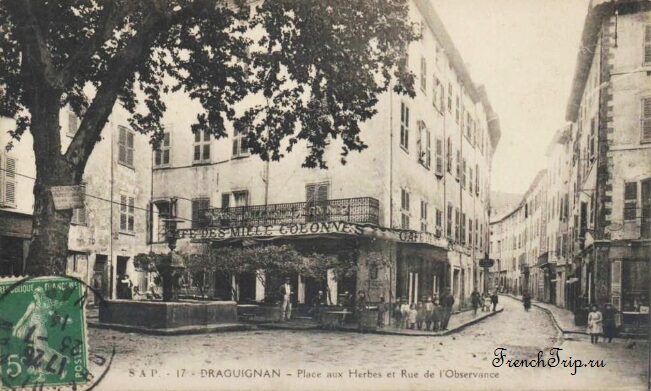
The site goes back to 1318. From the 15th century it was the auberge des Trois Rois, which for two hundred years put up travellers on the road to Grasse. The panelling and the mirrors — whose reflections of the columns gave the place its present name, «a thousand columns» — date from 1837. It is classified as a café historique et patrimonial and is now a busy tavern with a terrace on the Place aux Herbes.
Chartier, Paris
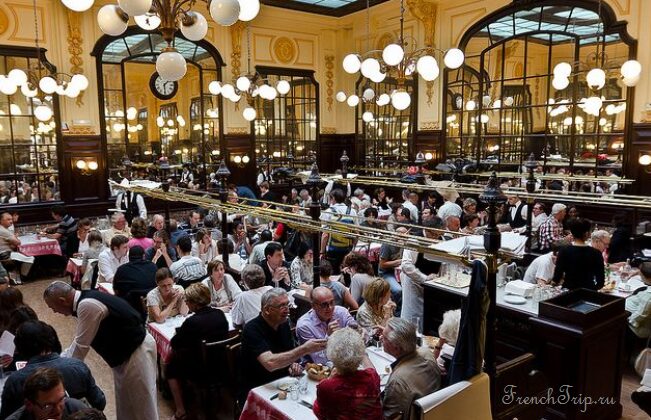
Founded in 1896 in the hall of a former station and listed as a monument, Chartier is one of the last genuine bouillons in Paris — the cheap, fast workers’ restaurants of the late 19th century. The menu has barely moved: Alsatian choucroute, tripes à la mode de Caen, veal tongue with sauce gribiche. The waiters wear long white aprons and black waistcoats and write the bill on the paper tablecloth.
Expect to queue at lunch and to share a table. It is at 7 rue du Faubourg Montmartre in the 9th, and service is brisk by design.
Miremont, Biarritz
A tearoom since 17 February 1872, opened by Étienne Singer, a young pâtissier from St Moritz, and renamed in 1880 when Joseph Miremont bought it. Its guest list belongs to the era when Biarritz was called the king of resorts and the resort of kings: Edward VII of England, Alfonso XIII of Spain, Queen Natalie of Serbia, Queen Amélie of Portugal. Come for lunch or for tea and a cake, and take a window table if one is free — they look over the bay, the municipal casino, the Hôtel du Palais and the lighthouse.
Winstub Zuem Strissel, Strasbourg
The oldest restaurant in Strasbourg, dating to 1395, between the cathedral and the Ill. It was a meeting place for the guilds — boatmen, carvers, rope-makers — and from those centuries it keeps its stained glass and the columns carved with rams’ heads, a reminder of its earlier name, zum Widderer, at the ram’s. Order the tarte flambée; the rest of the menu is the full Alsatian repertoire, on which see the cuisine of Alsace.
Café-Comptoir Abel, Lyon
In the voûte d’Ainay in the 2nd arrondissement, near the Saône, in what was once an annexe of the 12th-century basilica of Saint-Martin d’Ainay: the oldest and arguably the most authentic bouchon in Lyon. Polished floor, old panelling, painted ceilings, and furniture and objects collected by the owner. Bertrand Tavernier shot scenes of L’Horloger de Saint-Paul here. The cooking is straight Lyonnais, which in a bouchon means offal, pike quenelles and a jug of Côtes du Rhône.
La Mère Poulard, Mont-Saint-Michel
Here since 1888. The reputation rests on eggs: at the end of the 19th century the cook made her name with omelettes beaten by hand and cooked over an open fire in long-handled copper pans, served to travellers who arrived at the hotel with the tide and needed feeding at once. It was also a family hotel where pilgrims stayed.
Mont-Saint-Michel is now as touristy as anywhere in France and the warmth has gone with it, but the omelette is still made the same way, in copper, over flame — and the kitchen also does lamb from the salt meadows and lobster. See the cuisine of Normandy.
Les Deux Garçons, Aix-en-Provence
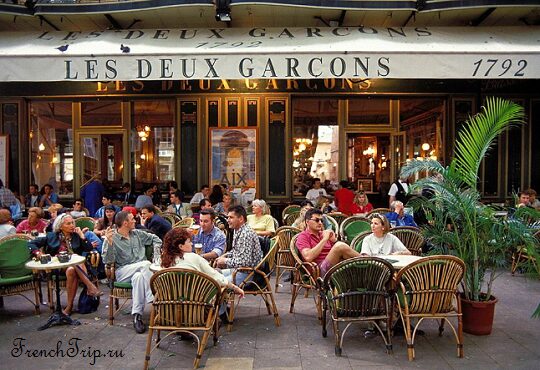
The oldest and best-known café-brasserie in Aix, on the permanently busy Cours Mirabeau. It was founded in 1792 by two waiters, became the meeting place of the town’s intellectuals, and was Cézanne’s regular haunt — a place to look and to be looked at, priced accordingly. It was badly damaged by fire in 2019, so check that it is open before making a special trip.
L’Excelsior, Nancy
Opposite the station, past its hundredth year, and a masterpiece of the École de Nancy — recognisable at once by the Art Nouveau facade. Built by the architects Weissenburger and Mienville, the brasserie has not changed its decor since 1911: stained glass by Gruber, floor mosaics by Pelerin, ceiling stucco by Galetier and Burtin, mahogany furniture by Majorelle, lamps by Daum.
It is also the best place to eat the dishes of Lorraine, the ones built on mirabelle plums and bergamot, and its set menus keep the room affordable. See the cuisine of Lorraine.
Les Vapeurs, Trouville-sur-Mer
On the quay opposite the fish market in Trouville, in Calvados, and a fixture of the Normandy coast since 1927. The Art Deco brasserie fills at lunch with people eating shellfish, shrimps and sole straight off the boats across the road. Nothing about it is refined and that is the point.
See also the best restaurants in France for how the system works, and French cuisine for what to order.
Updated: