Sélestat travel guide
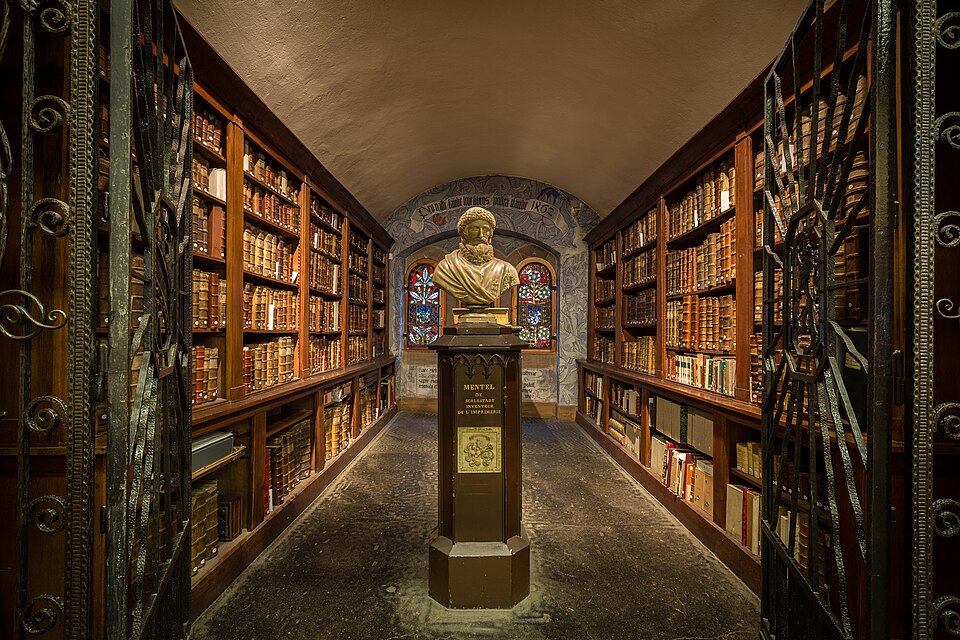
Sélestat is a town of about 19,000 between Strasbourg and Colmar, and it is the one place on this stretch that nobody stops at — which is a mistake, because it holds a library listed in UNESCO’s Memory of the World register and two of the best Romanesque churches in Alsace.
It is also the practical base for the northern half of the wine route: unlike the pretty villages, Sélestat has a proper railway station on the main line.
The Humanist Library
Sélestat had a Latin school in the fifteenth century that became one of the intellectual centres of the Rhine, and the library it produced survived intact. It holds around 550 manuscripts and incunabula, including the personal library of Beatus Rhenanus — a friend of Erasmus — which came to the town on his death in 1547 and has stayed together ever since.
Two things in it are worth the visit on their own: a seventh-century Book of Merovingian Liturgy, and the Cosmographiae Introductio of 1507, the book in which the name America was printed for the first time.
The library reopened in 2018 in a rebuilt corn hall, and the display is modern and clear. UNESCO added the Rhenanus collection to the Memory of the World register in 2011.
The churches
Sainte-Foy
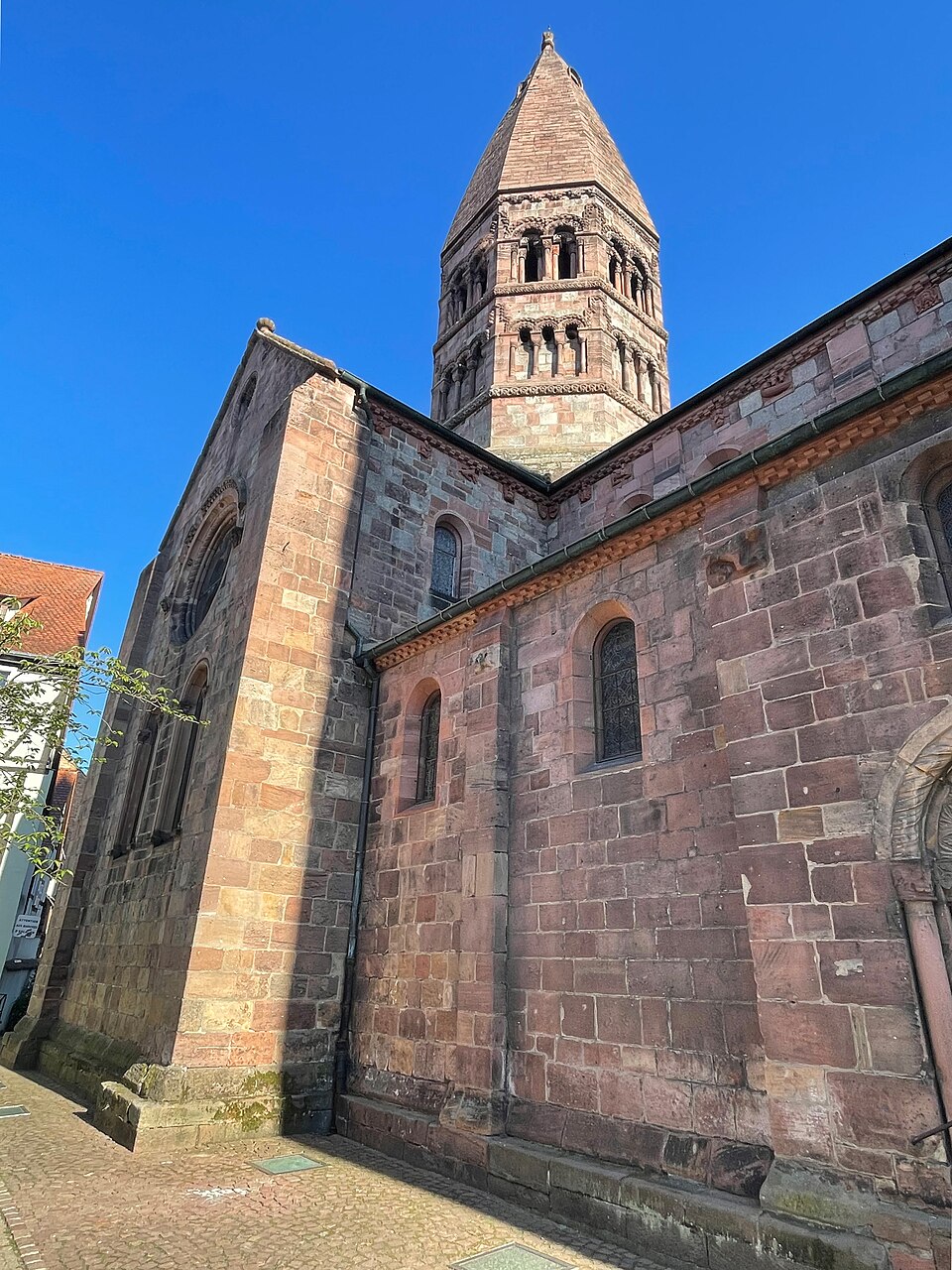
Twelfth-century Romanesque in red Vosges sandstone and grey granite, built for a Benedictine priory. Three towers, a carved west portal, and an interior that has kept its proportions through a heavy nineteenth-century restoration. One of the finest Romanesque churches in Alsace.
Saint-Georges
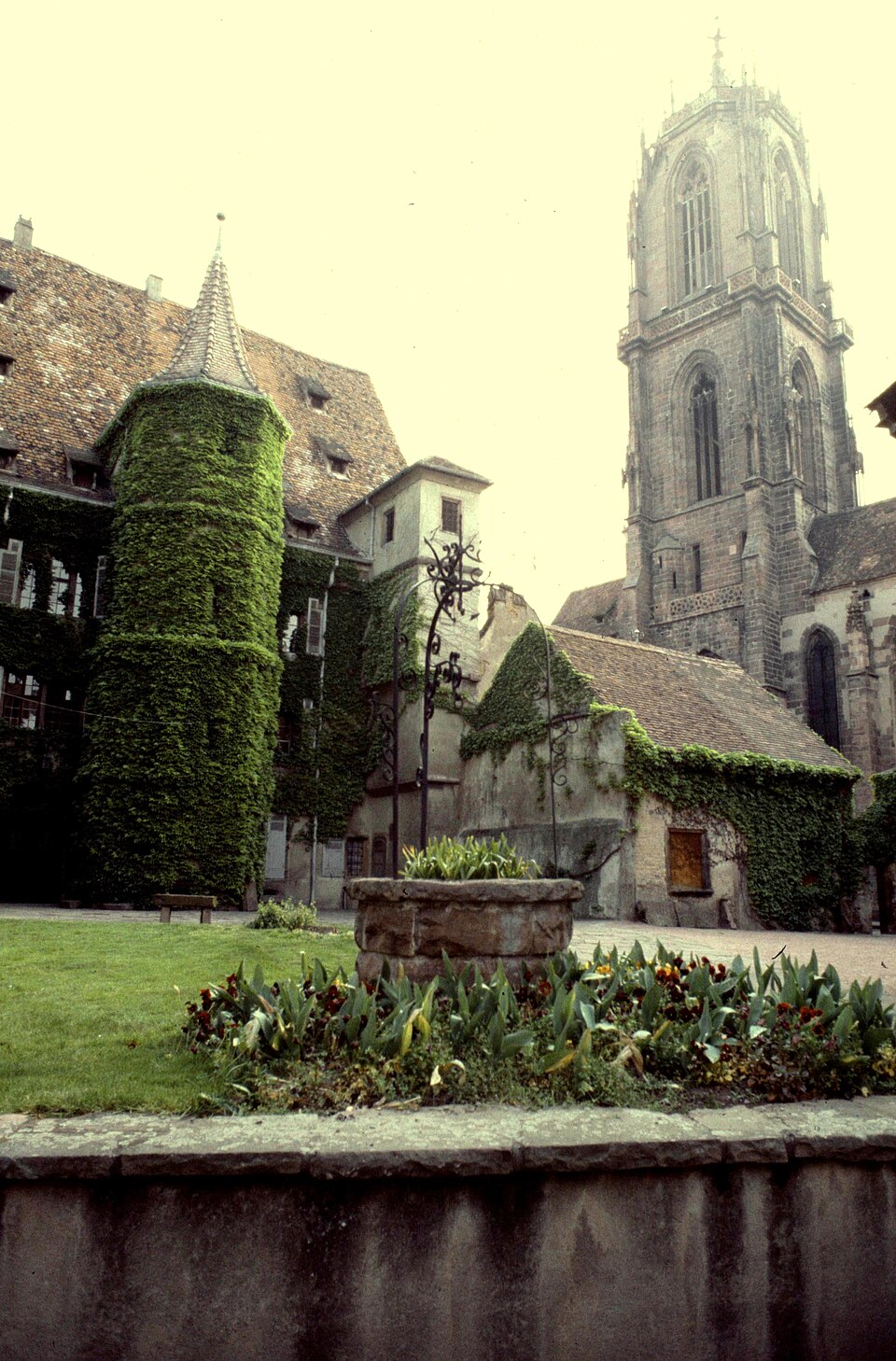
The Gothic parish church, begun in the thirteenth century and finished in the fifteenth, a hundred metres from Sainte-Foy. The contrast between the two, side by side, is the architectural point of Sélestat.
The rest of the town
- Tour des Sorcières and Tour de l’Horloge — the surviving medieval gate towers
- Maison Billex — where Louis XIV stayed in 1673
- The Vauban ramparts — Sélestat was refortified after Alsace became French, and part of the earthworks survives as a park
- Le FRAC Alsace — the regional contemporary art collection, in a converted grain store
- Maison du Pain — a bread museum in the old bakers’ guildhall, with a working oven
The Christmas tree
Sélestat’s claim, and it is documented: the town archives contain an entry from 1521 recording payment to foresters guarding the woods against people cutting maien — May trees — for Christmas. It is the oldest written record of the Christmas tree anywhere, and the town builds an annual exhibition around it in December.
Getting to Sélestat
- By train — this is the point. Sélestat is on the main Strasbourg–Basel line, about 20 minutes from Strasbourg and 12 from Colmar, with frequent services. The station is a few minutes from the centre.
- By bus — the connection up to Ribeauvillé and the wine villages, and the shuttle to Haut-Kœnigsbourg in season.
- By car — on the A35. See parking in France.
Around Sélestat
- Château du Haut-Kœnigsbourg — 15 km west and 750 m up: the great red sandstone castle rebuilt for Kaiser Wilhelm II between 1900 and 1908, and the most visited monument in Alsace. A shuttle runs from Sélestat station in season.
- Montagne des Singes and Volerie des Aigles — a Barbary macaque park and a birds-of-prey centre, both near the castle and both good with children
- Riquewihr and Hunawihr — the wine villages south-west
- Ried nature reserve — the wet forest along the Ill, east of town
- Obernai — 30 km north on the wine route
When to go
Any time — the main attractions are indoors, which makes Sélestat useful on a wet day when the villages are miserable. December for the Christmas tree exhibition, and the Corso Fleuri flower parade in August.
See Alsace and the cooking of Alsace.
Photo credits
Photographs on this page come from Wikimedia Commons under free licences:
- The Humanist Library — Claude Truong-Ngoc, CC BY-SA 3.0, via Wikimedia Commons
- Église Sainte-Foy — Einaz80, CC BY-SA 4.0, via Wikimedia Commons
- Église Saint-Georges — René Boulay, CC BY-SA 3.0, via Wikimedia Commons

.jpg)

Weather in Sélestat
| Month | Day | Night | Rainfall |
|---|---|---|---|
| January | +6° | 0° | 36 mm |
| February | +8° | 0° | 34 mm |
| March | +12° | +3° | 36 mm |
| April | +17° | +6° | 43 mm |
| May | +21° | +10° | 78 mm |
| June | +25° | +13° | 67 mm |
| July | +26° | +15° | 70 mm |
| August | +26° | +14° | 64 mm |
| September | +22° | +10° | 50 mm |
| October | +16° | +7° | 58 mm |
| November | +9° | +3° | 44 mm |
| December | +6° | +1° | 42 mm |
Updated: