Mont Ventoux
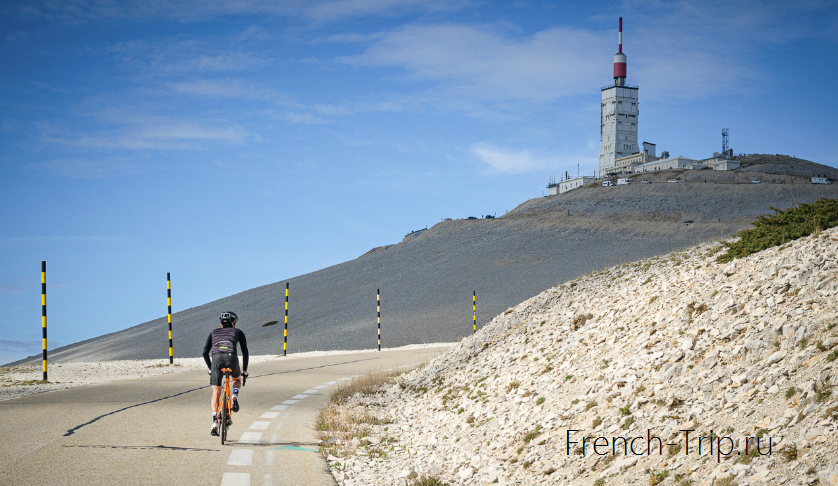
Mont Ventoux, often referred to as the “Giant of Provence,” is a majestic mountain in the Provence region of southeastern France. Known for its towering peak and unique climate, it’s a destination that attracts both nature enthusiasts and cyclists seeking a challenging ascent. This travel guide will provide you with essential information on how to get to Mont Ventoux, what to see and do, as well as nearby attractions.
Getting There:
- By Car: Mont Ventoux is accessible by car from various nearby towns and cities. Avignon, Carpentras, and Orange are some of the major towns that offer easy access to the mountain. Simply follow the signs for “Mont Ventoux” or “Bedoin” if you’re approaching from the south.
- By Train: The nearest train station to Mont Ventoux is Avignon’s TGV station. From there, you can rent a car or take a bus to reach the mountain.
What to See and Do:
- Cycling: Mont Ventoux is a legendary climb for cyclists. The challenging ascent to its summit is a bucket-list item for many. Cyclists can choose from three main routes: Bedoin, Malaucène, and Sault. Each route offers a different level of difficulty and scenery.
- Hiking: If cycling isn’t your thing, there are hiking trails that lead to the summit. The trails take you through beautiful landscapes, including forests and rocky terrain. Be sure to check the weather conditions and come prepared, as temperatures can vary greatly.
- Observatory: At the summit, you’ll find an astronomical observatory, a notable feature of Mont Ventoux. It’s a great place for stargazing, and there’s a visitor center that provides information about the mountain’s geological history and climate.
- Views: The panoramic views from the summit are breathtaking. On a clear day, you can see the Alps to the east and the Mediterranean Sea to the south. It’s an excellent spot for photography.
Mont Ventoux: A Closer Look
Geography: Mont Ventoux, often referred to as the “Giant of Provence,” is a prominent mountain located in the Vaucluse department in the Provence region of southeastern France. It stands at an impressive elevation of 1,912 meters (6,273 feet) above sea level, making it the highest peak in the region and a distinctive feature of the Provençal landscape.
Climate: Mont Ventoux has its own microclimate. As you ascend, you’ll notice a significant drop in temperature, which can be quite dramatic even during the summer. It’s not uncommon for the summit to be considerably cooler than the base, so dressing in layers is advisable.
Observatory: At the summit of Mont Ventoux, you’ll find the Mont Ventoux Astronomical Observatory. The observatory conducts astronomical research and is equipped with telescopes for stargazing. It’s an excellent spot for astronomy enthusiasts.
Flora and Fauna: Despite its barren appearance at higher altitudes, Mont Ventoux is home to a variety of flora and fauna. Lower slopes are covered in oak and pine forests, while higher up, you’ll encounter rugged limestone terrain and hardy alpine plants. Wildlife includes eagles, vultures, and wild boars.
Historical Significance: Mont Ventoux has a rich historical background. It was famously ascended by the 14th-century Italian poet Petrarch, who climbed it for inspiration. The mountain has also played a role in the Tour de France, with numerous stages concluding at its summit.
Overall, Mont Ventoux is not only a physical challenge for cyclists but also a natural wonder with diverse landscapes and historical importance. Whether you’re a cyclist, hiker, or nature enthusiast, this iconic mountain offers an unforgettable experience in the heart of Provence.
Climbing Routes
Mont Ventoux is renowned for its challenging cycling routes, attracting cyclists from around the world. There are three main routes to the summit:
- Bedoin Route: This is considered the most iconic and toughest route, favored by professional cyclists. The climb from Bedoin is approximately 21.5 kilometers long, with an average gradient of 7.5%. The route includes iconic landmarks such as the Forest of Cedars and the Chalet Reynard.
- Malaucène Route: The Malaucène ascent is about 21.1 kilometers in length, with an average gradient of 7.6%. It offers a different perspective of the mountain, passing through vineyards and offering beautiful vistas along the way.
- Sault Route: The Sault route is the longest but also the least steep. It covers approximately 26 kilometers with an average gradient of 4.4%. This route is known for its stunning lavender fields, especially when they bloom in July.
Hiking Trails
For hikers, Mont Ventoux offers a network of trails that vary in difficulty. Some of the popular hiking paths include the GR4 trail that approaches the summit from the north and the GR91 trail that approaches from the south. Hiking allows you to explore the diverse flora and fauna of the mountain.
Nearby Attractions:
- Sault: A charming Provençal town known for its lavender fields. If you visit in July, you’ll witness the lavender in full bloom.
- Vaison-la-Romaine: An ancient Roman town with well-preserved ruins, including a Roman bridge and a theater.
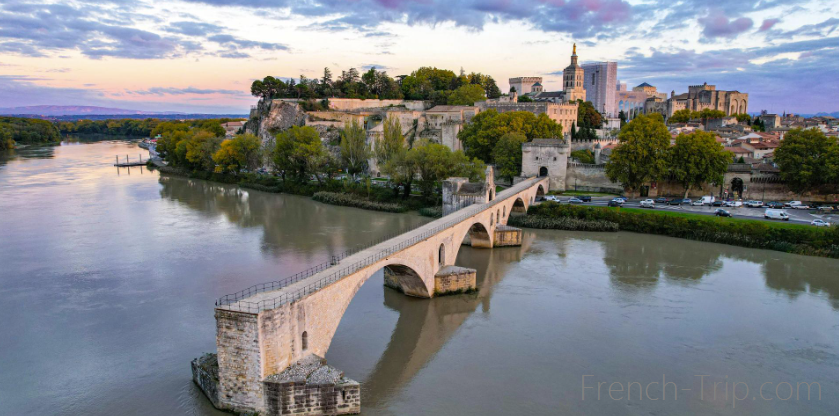
- Avignon: Known for its stunning papal palace, the Palais des Papes, and its famous bridge, the Pont Saint-Bénézet.
- Carpentras: A lovely town with a rich history, known for its truffle markets in the winter months.
Tips:
- Check the weather conditions before attempting the ascent, as it can be extreme at the summit.
- Carry enough water and snacks, especially if you plan to hike or cycle.
- Respect the local environment and wildlife.
- Mont Ventoux is a year-round destination, but it’s most popular in the summer for cycling and in the winter for skiing.
Mont Ventoux offers a unique blend of natural beauty, outdoor activities, and cultural experiences. Whether you’re conquering its slopes on a bike or simply enjoying the stunning vistas, a visit to this iconic mountain is sure to be a memorable adventure.
Mont Ventoux on map
Nearby
Other places on this site within easy reach, as the crow flies:
- Sault — 16 km
- Vaison-la-Romaine — 18 km
- Venasque — 22 km
- Carpentras — 23 km
- Pernes-les-Fontaines — 26 km
- Saint-Saturnin-lès-Apt — 27 km
Weather in Mont Ventoux
| Month | Day | Night | Rainfall |
|---|---|---|---|
| January | -1° | -10° | 54 mm |
| February | 0° | -10° | 36 mm |
| March | +4° | -7° | 40 mm |
| April | +7° | -4° | 61 mm |
| May | +12° | 0° | 56 mm |
| June | +17° | +4° | 40 mm |
| July | +21° | +7° | 26 mm |
| August | +20° | +7° | 34 mm |
| September | +15° | +3° | 75 mm |
| October | +9° | -1° | 85 mm |
| November | +3° | -6° | 91 mm |
| December | -1° | -9° | 53 mm |
Updated: