Cuisine of Normandy
Normandy cooks with what the land and the sea hand it: rich pasture on one side, a long coast on the other. Five things carry the whole regional repertoire — apples, butter, cream, cider and calvados — and once you notice them, every dish on a Normandy menu starts to make sense.
Butter and cream, as a matter of history
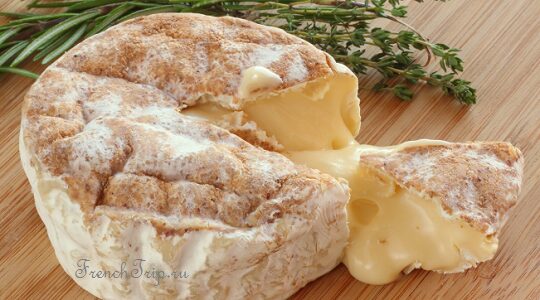
Norman cows are famous for their milk, and dairy sits at the centre of the local table. It was the Normans who pushed butter into French cooking in place of bacon fat at the end of the Renaissance, and by 1651 La Varenne was noting in Le Cuisinier françois that they used cream in most of their dishes — including with cod and prunes. The habit never went away: sauce normande, cream reduced with cider, still comes with fish, chicken and veal alike.
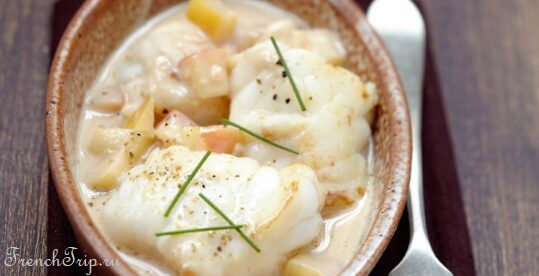
Cheese follows from the same cows. Camembert is the best-known French cheese in the world, and the region adds livarot, pont-l’évêque and neufchâtel to it — see French cheeses for the rest of the country.
Meat
Normandy, and the Orne in particular, eats a lot of meat. The speciality is agneau de pré-salé, lamb grazed on the salt meadows of the bay of Mont Saint-Michel and the Cotentin, which gives the meat a delicate iodised taste you will not find inland.
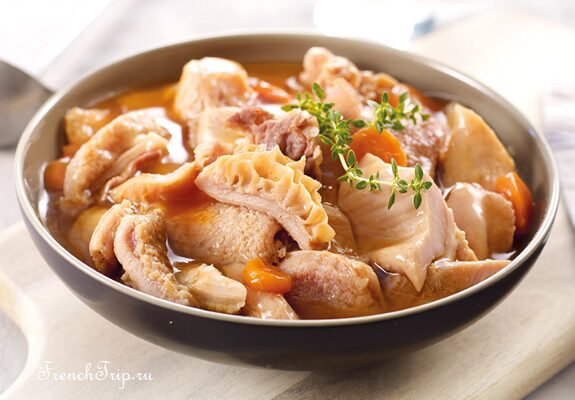
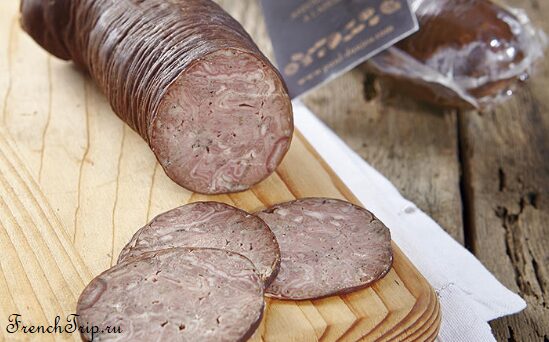
The famous dish, though, is offal. Tripes à la mode de Caen turned beef tripe into something with an international reputation, and the region knows several other ways to do it: wrapped in caul at La Ferté-Macé, cooked with cream at Coutances, with bacon at Authon-du-Perche. Andouille de Vire, the smoked tripe sausage, is the portable version of the same idea.
Fish and shellfish
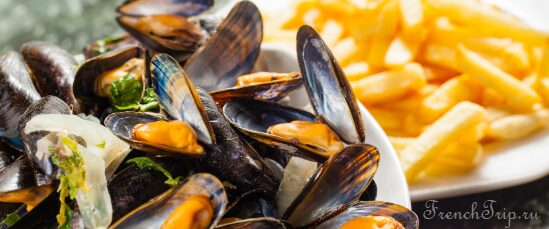
Normandy is the leading French region for oysters, mussels and scallops. Oyster farms line the coast and most of them will sell to you directly, which is the best way to eat them: outdoors, an hour after they leave the water. See French oysters and French mussels.
Apples: cider, calvados and the trou normand
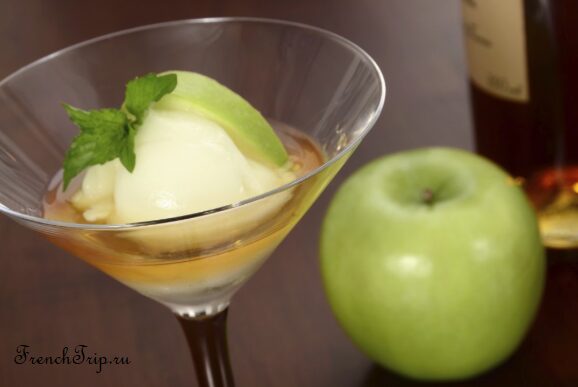
Normandy was wine country long before it was apple country. The first orchards appeared around the 11th century and had displaced the vines by the 13th — apple trees need far less attention than vines. The two lived side by side for a few decades, then cider won. It spread across the region in the middle of the 15th century, became the local emblem in the 16th, and by the 18th century taverns were selling forty times more cider than wine.
Cider itself arrived with Basque sailors, who had worked out that it kept scurvy away; the Bretons took it up later. Distil it and you get calvados, the apple brandy. The trou normand — literally the Norman hole — is a small glass of it downed in the middle of a long meal to make room for what follows. Pommeau, calvados blended with fresh cider, is drunk as an aperitif and is increasingly exported. Pears get the same treatment as poiré and pear spirit.
Desserts
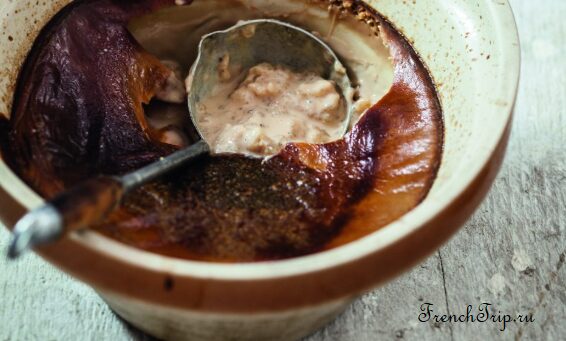
Teurgoule is the one dessert that belongs to Normandy alone: a 17th-century rice and cinnamon pudding, baked for five hours in a very low oven in its own ceramic dish. The story has Norman privateers bringing it back from Spanish ships.
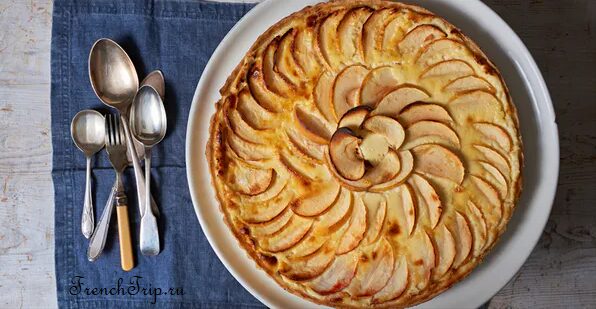
Tarte normande is the apple tart, made with cream and a dash of calvados. Bourdelet wraps a whole cored apple in pastry with sugar, butter and a teaspoon of calvados in the middle, eaten hot or cold with crème fraîche and cider, or flambéed; douillon is the same with a pear.
Croûtes normandes take stale brioche, soak the slices in sweet cider vinegar, dip them in beaten egg, fry them in butter, sprinkle calvados over and serve hot with thick cream. Brasillé du Calvados is a puff-pastry bun fried in fat and dusted with sugar. La falue, a bun from the Bessin, Saint-Lô and Coutances, was the Epiphany cake before the galette des rois took over. Soufflé normand combines a souflé with apple flan and apple charlotte, and is the most refined thing in the regional book. Sablé normand is shortbread in the plainest possible proportion: a third butter, a third flour, a third sugar.
Where to eat what
The cities have their own dishes. Caen has the tripe; Rouen its duck; Dieppe marinated lisettes, small mackerel, and the mussels that turn up on every menu along that stretch of coast. Inland, Orne and the Pays d’Auge are the places for lamb, cheese and cider.
For the region itself, see Normandy; for the rest of the country’s regional cooking, French cuisine.
Updated: